
Daniel Herriges
Daniel Herriges has been a regular contributor to Strong Towns since 2015 and is a founding member of the Strong Towns movement. He is the co-author of Escaping the Housing Trap: The Strong Towns Response to the Housing Crisis, with Charles Marohn. Daniel now works as the Policy Director at the Parking Reform Network, an organization which seeks to accelerate the reform of harmful parking policies by educating the public about these policies and serving as a connecting hub for advocates and policy makers. Daniel’s work reflects a lifelong fascination with cities and how they work. When he’s not perusing maps (for work or pleasure), he can be found exploring out-of-the-way neighborhoods on foot or bicycle. Daniel has lived in Northern California and Southwest Florida, and he now resides back in his hometown of St. Paul, Minnesota, along with his wife and two children. Daniel has a Masters in Urban and Regional Planning from the University of Minnesota.

One thing is clear: if it's going to be our rallying cry, we need to define "affordable."
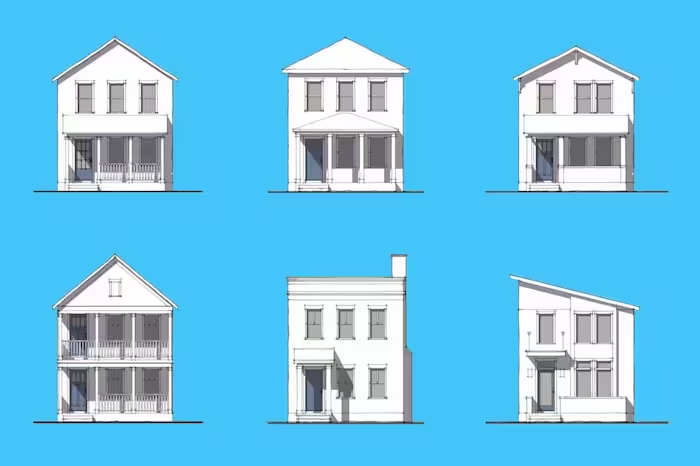
While other places keep finding ways to say “no” to new housing, this Indiana city is offering pre-approved development templates to small-scale developers at no cost.

“Who is the first, or next, person, business, or entity that is going to come in and make something of this place? What does that wave of succession look like? And are we allowing that action to occur?”
.webp)
It's not just about what its being built, but who is doing the building.
.webp)
What does it take to do small-scale development successfully today?

Rural places can be walkable. But we shouldn’t have to go on vacation to find a walkable town.
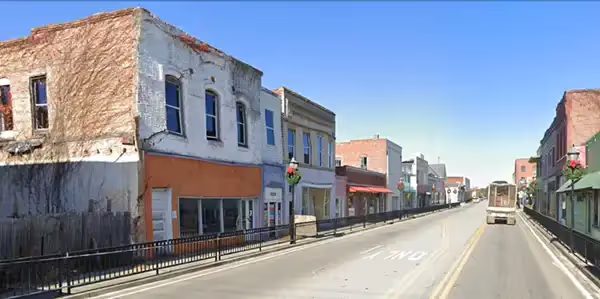
How one small town in South Carolina destroyed everything that makes their downtown...a downtown.
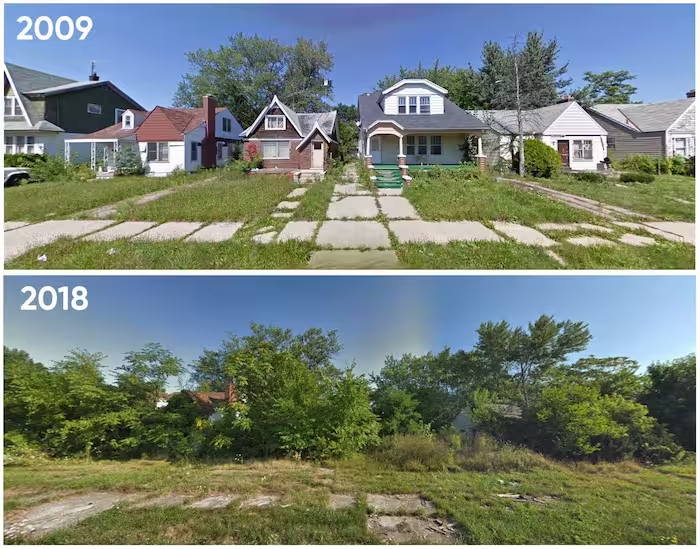
How one Detroit resident used Google Maps to chronicle the accelerating disappearance of its neighborhoods.

The choice to carve up Kansas City with freeways ranks among the worst planning mistakes in the region's history. Many decades later, the city is still is suffering the consequences.
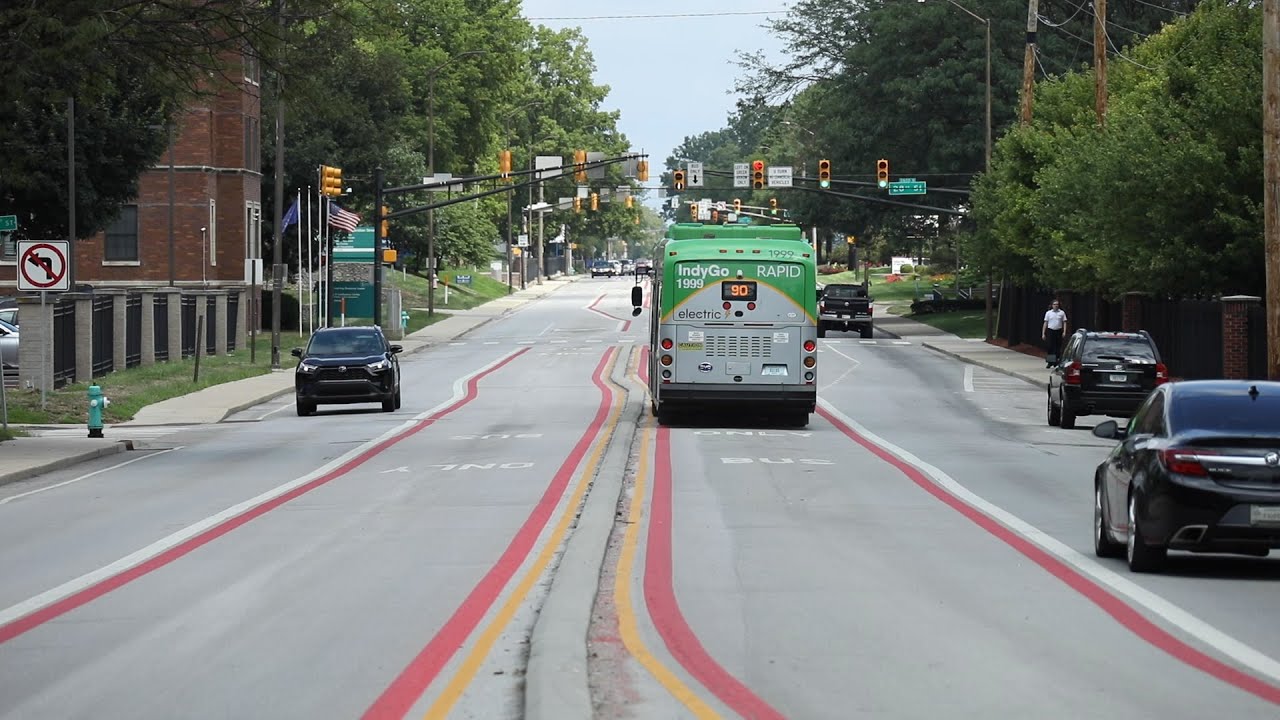
Indianapolis proves you don’t need billions—or rail—to build transit people actually use.

Connected streets + varied houses = better trick-or-treating and financially stronger neighborhoods.

For most of history, "tiny houses" were simply houses—a low-cost way for people to put down roots and begin to grow some wealth for themselves and the neighborhood.