The Gutenberg Moment

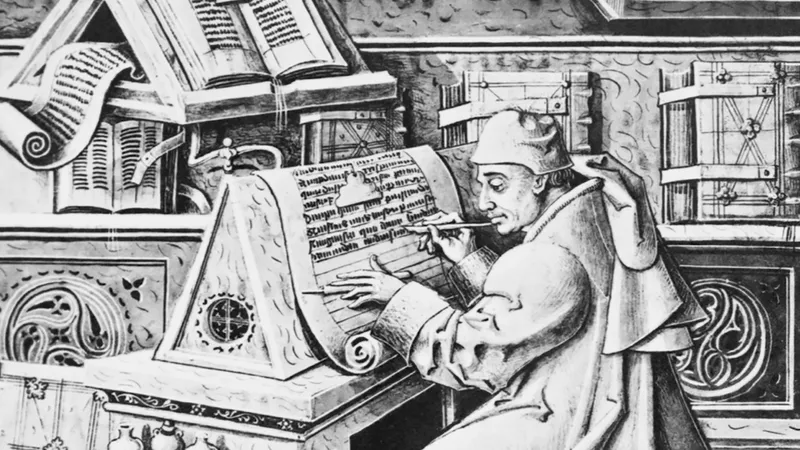
Johannes Gutenberg's 15th century innovation forever changed how information is recorded an disseminated.
%20(1).avif)
%20(1).avif)
%20(1).avif)
.avif)
I’ve admired Ben Hunt and Rusty Guinn’s work for a long time. They have a rare ability to cut through noise and get to the heart of how narratives shape our lives. They know — intuitively but also analytically — how the stories we tell about ourselves, our communities, and our country end up guiding what we build, tolerate, or abandon. When they invited me to contribute to Stories of America, I didn’t hesitate. Their approach has always felt honest and unafraid, and this project is no exception.
Stories of America isn’t sentimental and it isn’t cynical. It’s an invitation to look closely at the ideas we’ve inherited — some battered, some cherished -— and to ask what still holds us together. That’s a difficult question in any era, essential in this one.
My contribution to the series starts, as my work often does, at the scale of the local: with people trying to make their places a little better, a little safer, a little more worth rooting for. That’s the America I know best. The excerpt below is a portion of what I shared. If it resonates, you can read the rest on the Epsilon Theory site.
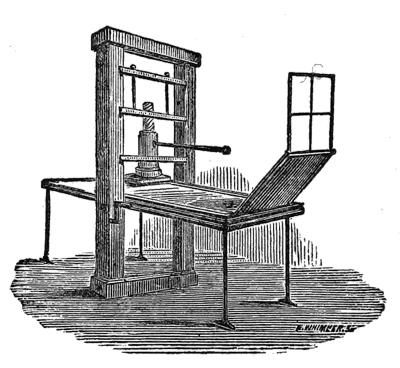
When Johannes Gutenberg perfected the printing press in the fifteenth century, he didn’t just change how people communicated. He changed how they thought, how they organized themselves, and how they understood authority. The press collapsed the monopoly on knowledge that had belonged to the church and the crown. It scattered power into thousands of hands, for better and worse.
We nostalgize this moment as the foundation of Western civilization. History textbooks connect the dots: Gutenberg led to the Renaissance, the Reformation, the Enlightenment, and eventually the democratic ideals that shaped the modern age. It’s a neat story, a comforting one, but also a trite one. It skips the messy part.
Revolutions followed the invention of the printing press. And war. Millions were killed. Many more were uprooted and dislocated, their places in ruins. Entire systems of belief and governance were torn down before anyone knew how to replace them. The printing press didn’t create order; it created possibility, and with it, chaos.
It took centuries for new institutions to emerge that could manage this new world of ideas. Universities, newspapers, parliaments, scientific societies; all were inventions of necessity, built to give structure to a conversation that had suddenly become too big for the old rules to hold.
We’re living through our own Gutenberg moment now. The internet, the smartphone, and social media have again collapsed the gatekeepers of knowledge. Anyone can publish, broadcast, or mobilize. Everyone has a printing press in their pocket.
And just like the fifteenth century, the result isn’t a sudden leap into enlightenment; it’s a flood. A flood of voices, yes, but also of noise. Of certainty without understanding. The old institutions of coherence — newsrooms, universities, churches, governments — were built for a slower, more stable flow of information. They weren’t designed for the torrent we live in now, where attention moves faster than comprehension and trust erodes faster than truth can form.
We tell ourselves that this upheaval is new, but it follows an old pattern. Every communication revolution begins with a burst of freedom, followed by disorientation. The established order loses its grip before a new one takes shape. What we’re experiencing is not decline; it’s a transition. The chaos, the outrage, the mistrust of authority, the feeling that everything is coming apart: this is what it looks like when a culture’s operating system is being rewritten in real time.
As we live through our own Gutenberg moment, it’s worth remembering that the first one didn’t land on stable ground. When Gutenberg’s press spread across Europe, the Catholic Church — the institution that had held the continent’s social and moral order together for centuries — was already under strain. Corruption was rampant. Trust was fraying. People could see the gap between what the Church claimed to be and how it actually behaved. The printing press didn’t create that crisis of legitimacy; it exposed it. It gave people the means to see hypocrisy in print, to organize dissent, and to build new movements outside the old hierarchy.
That’s the real lesson of Gutenberg. The technology didn’t destroy the system; it revealed its rot and accelerated the change that was already underway. And that’s where the parallel to our own time begins. The internet, the smartphone, and social media didn’t create the divisions, distrust, and exhaustion of modern America. They just stripped away the illusion that our institutions were still strong enough to hold us together.
Click here to continue reading this article on the Stories of America site.
Charles Marohn (known as “Chuck” to friends and colleagues) is the founder and president of Strong Towns and the bestselling author of “Escaping the Housing Trap: The Strong Towns Response to the Housing Crisis.” With decades of experience as a land use planner and civil engineer, Marohn is on a mission to help cities and towns become stronger and more prosperous. He spreads the Strong Towns message through in-person presentations, the Strong Towns Podcast, and his books and articles. In recognition of his efforts and impact, Planetizen named him one of the 15 Most Influential Urbanists of all time in 2017 and 2023.