When a “Complete Street” Still Resulted in Tragedy, the Crash Analysis Studio Changed the Standard
The Issue
From an Award-Winning Street to a Tragic Crash
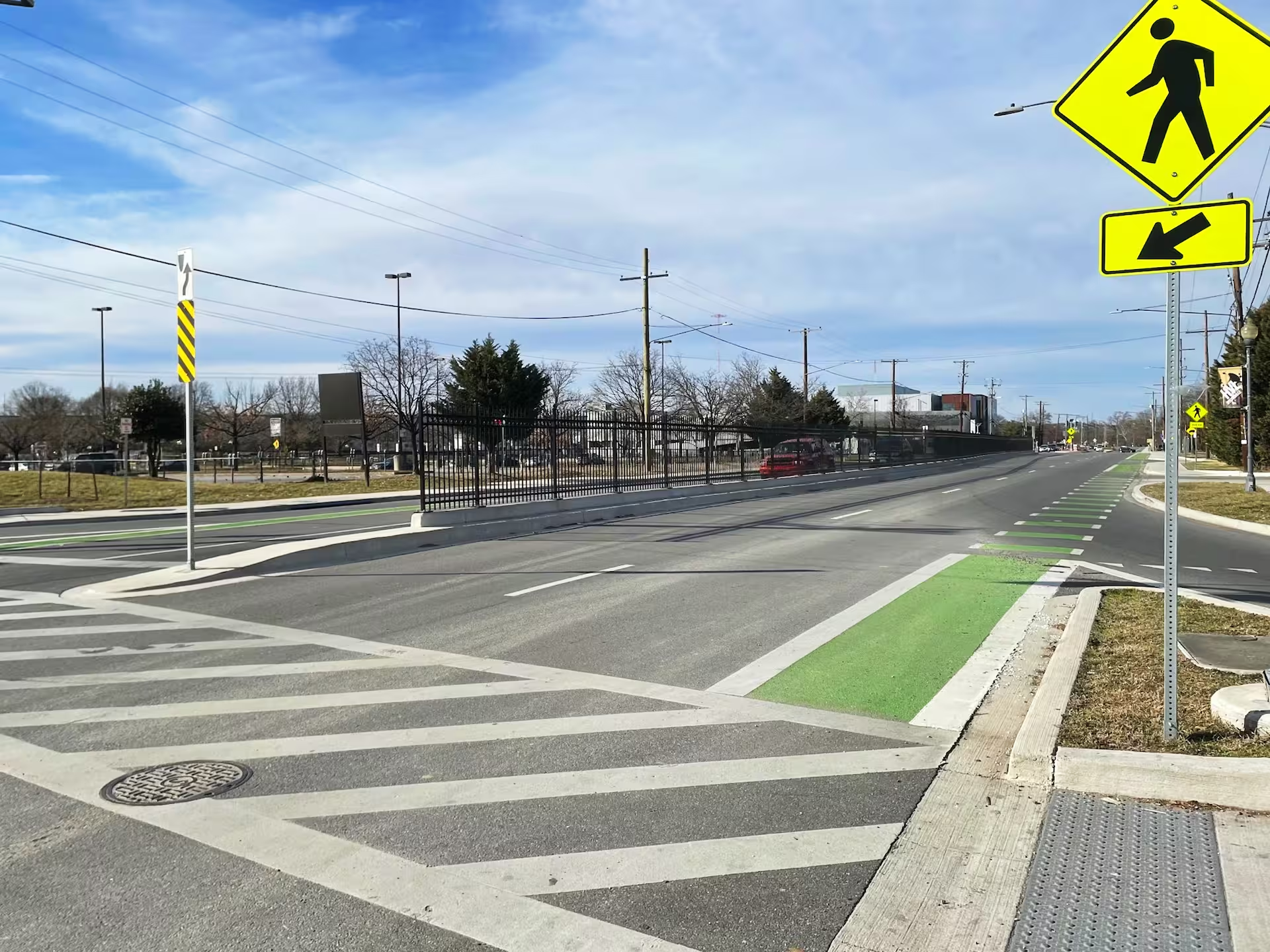
The award-winning “Green-Complete Streets” transformation of Ager Road in Hyattsville, Maryland checked all the boxes. From bike lanes, to marked crosswalks, to a pedestrian refuge and a Rectangular Rapid Flashing Beacon (RRFB), Ager Road was a certified “Complete Street.” It was built to enable safe and convenient travel for people of all ages and abilities regardless of how they get around.
Yet despite those investments, In August 2021, Hellen Jorgensen was struck and killed while using the designated pedestrian crossing on Ager Road.
That raised a difficult question. If all of these safety features were already in place, why wasn’t the street safe?
Read the full crash overview here.
The Response
Finding the Real Contributing Factors with the Crash Analysis Studio
Rather than asking who was at fault, Hyattsville turned to the Crash Analysis Studio to examined how the street itself contributed to the tragedy. Participants looked beyond the crash report and studied the corridor as a whole. Its geometry, speeds, traffic patterns, pedestrian movements, lighting, signage, and surrounding land uses.
The Studio found that the crossing wasn’t failing on its own. The entire corridor was designed to move automobiles quickly through a place where people regularly walked to homes, businesses, and one of the region’s busiest Metro stations. A dedicated slip lane encouraged drivers to accelerate before the crossing. Four wide travel lanes produced operating speeds above those considered survivable for pedestrians. Long stretches of fencing funneled people to a single crossing, while lighting, signage, and beacon placement made that crossing harder to use than intended. Even more revealing, many of these design choices weren’t unique to Ager Road. They reflected the county’s own engineering standards.
Instead of identifying one defect to fix, the Studio revealed an entire system working against the county’s safety goals.
Read the full findings and recommendations here.
The Result
Policy Changes with an Eye Toward Preventing Future Harm
The Studio produced recommendations at multiple time scales. Some could be implemented immediately, such as temporarily closing the slip lane with bollards, improving lighting, relocating pedestrian beacon signage, and narrowing travel lanes to slow vehicle speeds. Others called for redesigning Ager Road into a neighborhood street where people could comfortably walk, bike, and access transit.
Perhaps the most significant outcome, however, extended beyond Ager Road itself. During the process, staff recognized that future roadway projects would continue repeating the same design decisions unless the underlying standards changed. The findings from the Crash Analysis Studio helped build the case for updating Prince George’s County’s street design standards, removing the slip lane design so future projects would no longer reproduce the same risk.
One tragic crash became more than an investigation into the past. It became an opportunity to change how the county designs streets for the future.