
Hello,
It's Member Week at Strong Towns and we're asking you to help support this movement. We'll be direct: Strong Towns is a nonprofit organization that depends on donations from generous readers like you in order to continue the work we're doing. That includes bringing you articles like the one you're about to read! We're a small team, and we're only able to do what we do with your help. Please consider donating whatever amount is meaningful for you. Thank you so much, and keep doing what you can to build a Strong Town.

The Burden of Caring for a Place

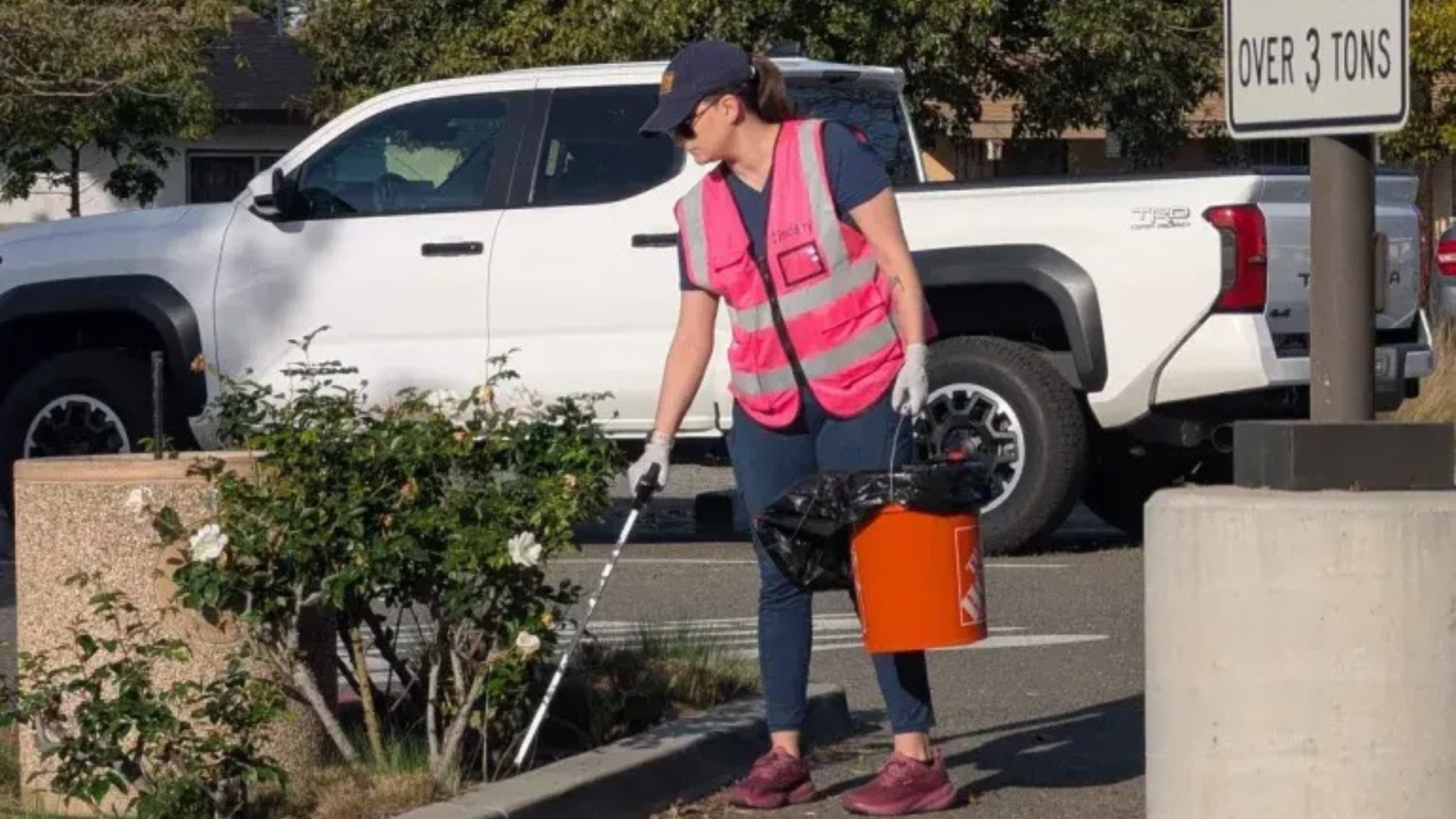
Lindsey, leader of the Local Conversations group Strong Towns Artesia, doing volunteer work in Artesia, CA. (Source: Strong Towns Artesia)
It's been a while since I've written a column here. My apologies: I've spent much of the past six weeks on the road, traveling from place to place, giving talks, and meeting with lots of people who are working to make their communities stronger. It's been a wonderful experience, but also an exhausting one. I've had more conversations than I've been able to process, let alone write about.
One of the great privileges of my work is getting to meet people who care deeply about their communities and are willing to go the extra mile to bring people together. Some serve on boards and commissions, but most have no official role at all. They just really care.
A large part of their work involves trying to change things that most people have simply come to accept. That means starting with something that is obvious to them: a blinking red light of moral urgency that everyone around them seems unable or unwilling to see. It takes a special kind of person to have the patience, empathy, and perseverance to slow down, communicate, and build consensus around doing the obvious.
So what happens when things don’t work out?
Sometimes it's a city council vote that goes the wrong way. Sometimes it's a neighbor you've spent months talking with who still doesn't see what you see. You've listened, built relationships, and tried to find common ground. Yet the decision goes against everything you've worked for. It's deeply disappointing, especially when the people involved are people you know, respect, and care about. And tomorrow, you're still going to be their neighbor.
That kind of disappointment takes a toll. I know from experience. And I think we here at Strong Towns can underestimate what we're asking of people — just how much strength and courage it takes when we encourage them to care this deeply — knowing that the path to success requires them to live with that feeling and pay that emotional toll again and again.
There is an easier emotional bargain available. When people put their energies toward some singular great breakthrough, whether that's passing transformative legislation, securing federal funding for that big project, or electing the right people, they can wake up each morning believing they're getting closer to the mountaintop. Even on a bad day, they can take comfort in imagining what life will be like once they get there and their mission is complete.The Strong Towns approach asks for something different. Day after day, you wake up in the same place, with the same problems and the same neighbors. Some days you can point to something that got better. Other days, something you've worked hard to improve gets worse. It often feels like one step forward, two steps back. You can be doing worthwhile work and still go to bed wondering whether any of it will ever amount to anything. And tomorrow you'll get up and face it all again.
I know this because I've struggled with it myself. In my own city, I've watched people I know and respect make decisions that I believe will damage the neighborhoods we share. I've argued against those decisions, lost, and gone home deeply disappointed. Over time, I've found myself pulling away from some of these local struggles, exhausted by the experience. I understand the temptation to stop caring quite so much, to want to hope that some great change — one that only requires my nominal participation and not my full heart — will someday make things better.
And yet, everywhere I travel, I see things are changing only because of people who continue to show up. They organize another gathering, have another difficult conversation, and try once more to help their neighbors see what they see. They do this while carrying all the disappointments that came before. This is really, really hard.
We tend to think of courage as something dramatic, a heroic act that everyone recognizes. The ribbon-cutting and the legislation signing ceremony mark the finish line of a long campaign. There's real work and sacrifice behind those moments, and they deserve to be celebrated. But much of what Strong Towns advocates do has no finish line.
There's a different kind of courage in getting up after another disappointment, facing the people who disappointed you with empathy, and making yourself vulnerable to being hurt again. There's no assurance that your efforts will be rewarded, no promise that another day of progress won't be followed by two steps back. You do it because you care about the people and the place.
This is the kind of courage I admire most. This is the humble heroics our cities need.
Charles Marohn (known as “Chuck” to friends and colleagues) is the founder and president of Strong Towns and the bestselling author of “Escaping the Housing Trap: The Strong Towns Response to the Housing Crisis.” With decades of experience as a land use planner and civil engineer, Marohn is on a mission to help cities and towns become stronger and more prosperous. He spreads the Strong Towns message through in-person presentations, the Strong Towns Podcast, and his books and articles. In recognition of his efforts and impact, Planetizen named him one of the 15 Most Influential Urbanists of all time in 2017 and 2023.