It Takes Just One Letter To Legalize Townhomes


Editor’s Note: This piece comes from a Strong Towns member examining how regulatory choices have shaped housing outcomes. The intent is not to prescribe a single solution, but to explore how incremental, locally grounded changes can influence affordability and neighborhood resilience—questions facing communities across North America.
[[divider]]
How big a difference could it really make if we changed just one letter in Longmont, Colorado's laws? What if that change could jumpstart meaningful progress toward housing affordability, walkability, bikeability, and the many other goals Longmont has set?
Buying a home or renting in Longmont has become dramatically more expensive over the past 15 years. The median home price in Longmont ($560,000), at current interest rates (6.15%) and with a typical five percent down payment, results in a roughly $3,600 monthly payment over 30 years. To avoid being cost-burdened by that mortgage, a married couple would need to earn around $200,000 annually—an income reached by only about 12% of Longmont residents and 16% of Americans.
Longmont is expensive in part because it’s an excellent place to live. Even at these prices, there are people willing to pay. But when only people with the highest incomes can afford to live in great places, something changes over time. Those places begin to lose the economic diversity that helped make them so attractive in the first place.
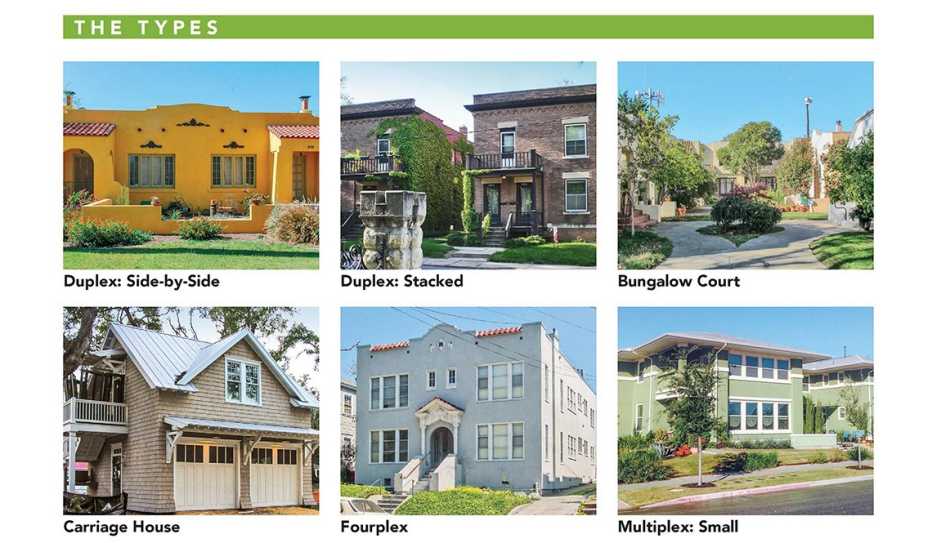
If we want to preserve a diversity of incomes in the city, we also need a diversity of housing types—single-family homes, townhomes, fourplexes, cottage courts—that use land in different ways and at different price points.
Nearby Boulder faced a similar set of choices from the 1970s through the 1990s. Rather than allowing neighborhoods to incrementally evolve over decades, the city adopted policies that significantly limited its ability to add housing as demand increased.
Over time, this has contributed to a city where many local businesses struggle to find employees who can afford to live nearby. Boulder is also experiencing a steady decline in families with young children, contributing to school closures and consolidations. Early-career households—teachers, nurses, service workers, young professionals—often find that they cannot gain a foothold, even if they hope to stay and invest in the community long term.
Some of these same dynamics now appear to be emerging in Longmont. Enrollment in the St. Vrain Valley School District has declined for three consecutive years, with Longmont accounting for much of that drop. Meanwhile, enrollment is growing in nearby Firestone, Frederick, and Erie. Those communities remain more affordable for young families, in part because they are still expanding outward—the same pattern that once kept Longmont's housing prices within reach before the city reached its greenbelt. As a consequence of this trajectory, Longmont voters are now poised to shoulder a large share of a $740 million bond to build new schools in other cities.
There's no question Longmont is at a crossroads. The question is, where do we go next?
How do we:
- Add homes while respecting our urban growth boundary?
- Create opportunities for people to own homes in Longmont, not just rent?
- Address housing shortages without relying on highly politicized large developments?
- Allow reinvestment in existing neighborhoods without triggering displacement?
- Help seniors age in place as property taxes rise and homes become harder to maintain?
One option is to continue doing what we’ve largely been doing: concentrating change in a limited number of areas. But when development is confined to just a few locations, new housing can feel disconnected from its surroundings and the stark contrast fertilizes the ground for backlash.
There’s another approach.
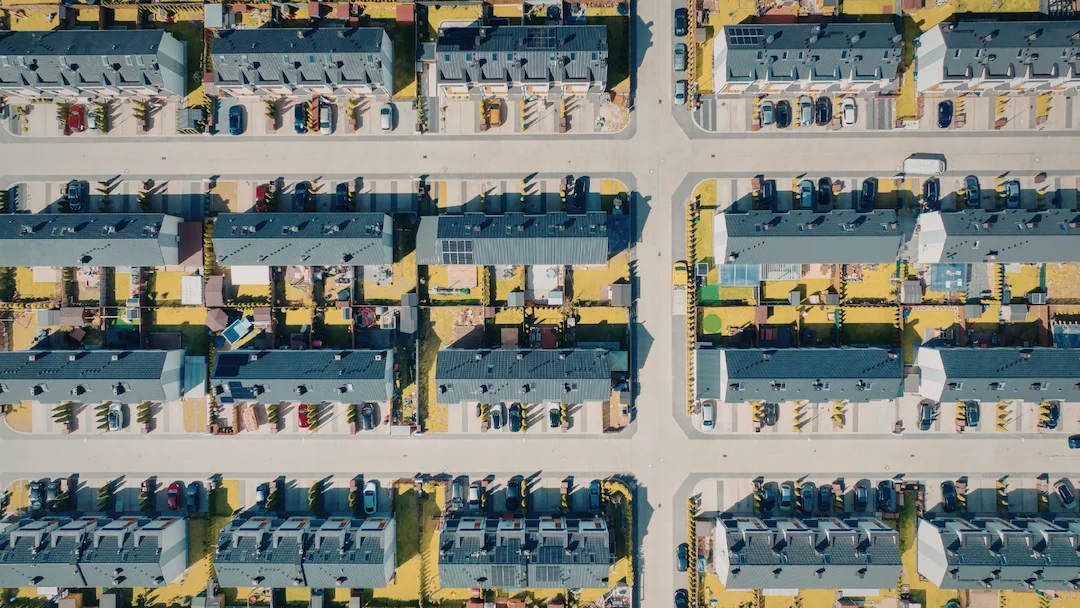
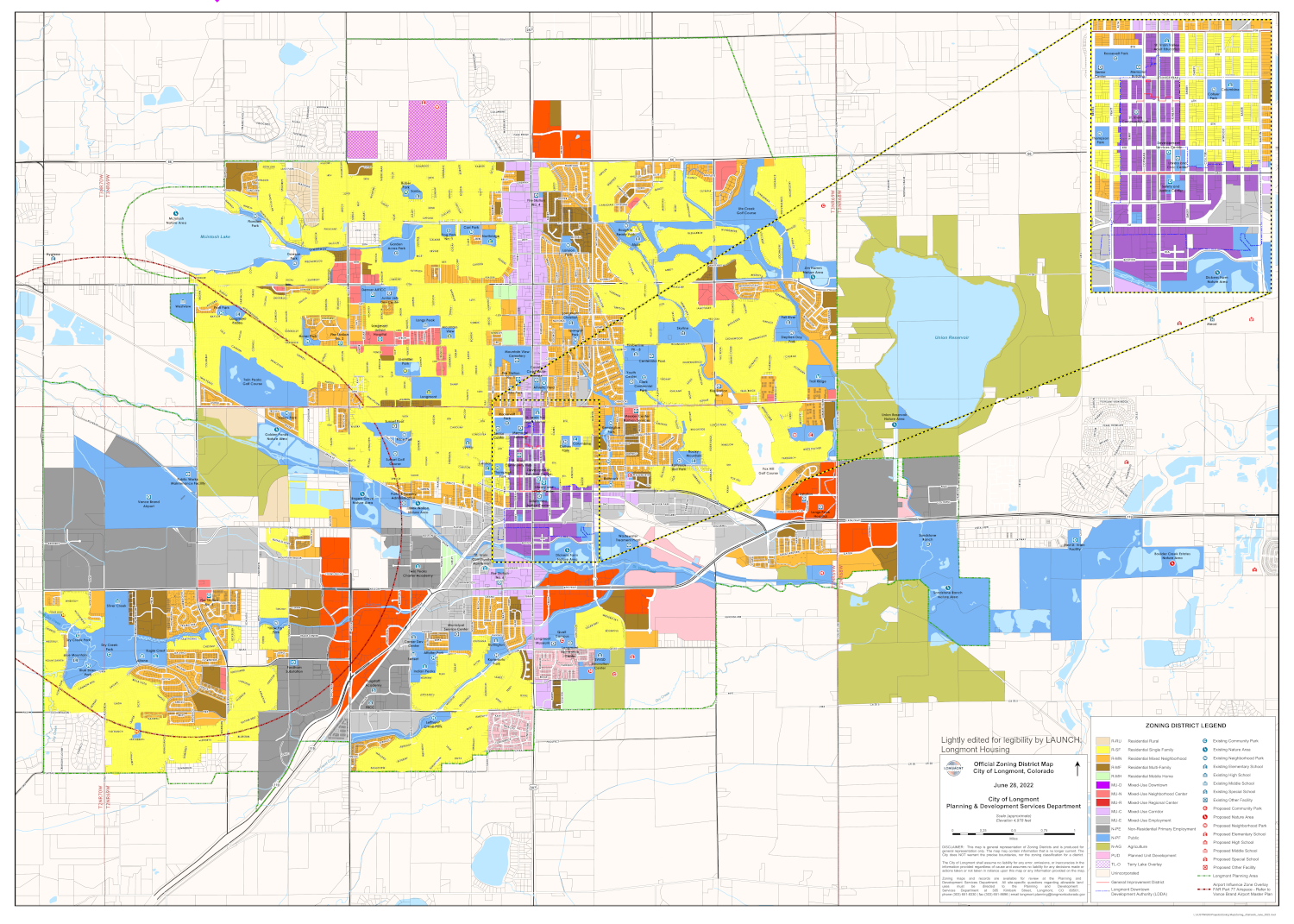
We could allow small, incremental change throughout the city. Specifically, we could legalize townhomes in neighborhoods that are currently locked into single-family zoning—areas experiencing what might be called “forced stagnation” (shown in yellow on the map below). This could be accomplished by adding the letter “P” to Table 15.04.020 of the Longmont Municipal Code.

Instead of intense development pressure on a handful of remaining vacant lots—often accompanied by long city council meetings and high-stakes debates—this approach would allow many small decisions, made by individual property owners, to shape the city gradually.
Converting an existing single-family home into a duplex or townhome can unlock opportunity across Longmont. It allows neighborhoods to evolve without dramatic change to their physical character, while avoiding the stagnation that preserves the physical appearance of neighborhoods while replacing the people who live there.
And because Longmont is a large city, the scale of change required is surprisingly modest. Roughly speaking, the city could address its housing shortage with something on the order of one fourplex every three blocks. This isn’t a boom—it’s a slow, distributed form of growth.
This kind of incremental change isn’t sexy—and that’s the point. It happens over time, spread throughout the city. But it may be the kind of change that helps Longmont remain a place where people at different stages of life and income levels can continue to put down roots. And to start, all we'd need to do is change one letter.
Shakeel Dalal is the co-founder and president of LAUNCH Longmont Housing, a grassroots organization dedicated to ensuring that as Longmont grows, it becomes an attainable community with robust walkability, bikability, and public transit.
From 2018 to 2020 he served on the Board of Advisors of the Longmont Observer, a non-profit newspaper, and then Longmont Public Media from 2020 to 2023. He has served on the board of the Longmont Community Foundation since 2021.
While professionally focused on science, Shakeel has always held a deep appreciation for the humanities and the ways they enrich the human experience. He has been interested in civics since he was young and strongly believes in the power of the written and spoken word.