Turning a Big Ship
.avif)
%20(1).avif)
%20(1).avif)
%20(1).avif)
%20(1).avif)
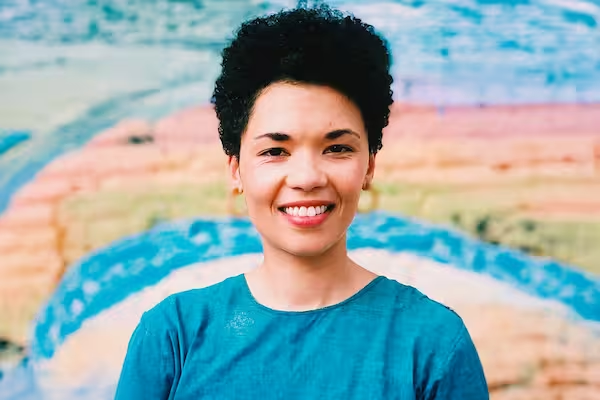
When most people think of Chicago, they likely conjure up images of skyscrapers, crowds gathered for photos in front of the Bean and steaming pans of deep dish pizza. But for Dr. Chloe Groome, one of the leaders behind Strong Towns Chicago, the city is home, a place where the owners of the charcuterie shop next door know her by name. That’s the version of Chicago she wants more residents to enjoy, but getting there will require the city to face some tough realities and make better choices.
Having banned ADUs in 1957, 75% of the city’s residential land is zoned for single-family residential development only. With a billion dollar budget deficit and home prices reaching $1–2 million in some areas, the options are clear: raise property taxes beyond what most households can afford or build more.
“We talk about the missing middle of housing types, but it's not exactly missing. We know exactly where it went. It just got banished.” Dr. Groome explained in a podcast with Norm Van Eeden Petersman. “Growth in our cities should be expected … yet we artificially constrained it in so many different ways.”
Through consistent presence and intentional conversation with neighbors and Aldermen, Strong Towns Chicago has been championing incremental housing for a while. In addition to leading walking tours to discuss the need for more housing and giving comment at public meetings, Strong Towns Chicago has also partnered with Abundant Housing Illinois, to create the “4-Flats-By-Right Campaign,” a grassroots effort to legalize the four-storey walk-ups that are common in historic cities like New York, Chicago and Philadelphia. With multi-family homes banned, many of these four-story buildings have been converted to single family, reducing housing stock in the city by nearly 12,000 units since 2013.
Getting local leaders and residents to care about this (and other) issues in a city as big as Chicago takes a focus on building relationships with residents but most strategically with local Alders. Many of the policy changes that happen in a city like Chicago are determined by the inclinations of the presiding alderman, many of whom are likely to vote in line with traditional practices. Taking time to meet with their aldermen and launch conversations about Strong Towns issues has been critical to advancing more resilient policies.
Despite typical NIMBY pushback and fears around limited parking, city leaders are starting to listen. Earlier this year, Chicago legalized incremental housing types throughout the city with a ward-by-ward opt-in process. Many alders are embracing the change. Alderman Matt Martin of the 47th Ward said he’s seen at least 120 permits for ADUs in his ward alone.
“To be clear, I don't think that we're moving quickly enough in city government when it comes to building and preserving homes, especially affordably-priced homes for our working class neighbors,” he said. “But we are picking up the pace, and I think that's due in part to the partnership with an advocacy from organizations like Strong Towns.”
Moving Chicago toward a stronger future has also been a result of city and institutional leaders participating with a uniquely creative approach to conversation and education. Earlier this year, Ellen Steinke, a city-loving writer, improv comic and co-leader at Strong Towns Chicago, organized a sketch comedy show called “Funny You Should Care,” which is designed to help ordinary residents better understand pressing municipal issues and hear from local leaders.
The first show Steinke wrote was to raise awareness about the city’s looming transportation crisis earlier this year: without essential funding, 40% of service would have been cut. It featured sketches, songs and interviews with city and institutional leaders, two of whom used information from the show to successfully argue for more funding on the floor of the state legislature and, ultimately, to save transit. In March, they launched a new run of shows focused on street safety and the benefits of quick-build infrastructure. Content from the show was used to educate state legislators and build public support for an omnibus bill that would allow quick-build projects on IDOT roads. That legislation is expected to pass in May. Shows scheduled for later this year will focus on street safety or “why it sucks to walk or drive in Chicago and how we can fix it.”
The challenges are serious and the city is complex, but this approach — building relationships, showing up consistently and using creative tactics — shows what’s possible even in a big city when you focus on relationships, education, and making things approachable and fun
“A city like Chicago is great,” Groome said. “But it could be absolutely incredible. And it's part of why I love it so much. It's like, it's when you love someone [who] just can't stop making bad decisions. Maybe one day they’ll turn a corner and then you’ll see that incredible person that you know is there.”
Tiffany Owens is the host of The Bottom-Up Revolution podcast. A graduate of The King's College and former journalist, she is a New Yorker at heart, currently living in Texas. In addition to writing for Strong Towns and freelancing as a project manager, she reads, writes, and curates content for Cities Decoded, an educational platform designed to help ordinary people understand cities. Explore free resources here and follow her on Instagram @citiesdecoded.