The Technical Brush-Off (and How To Fight It)

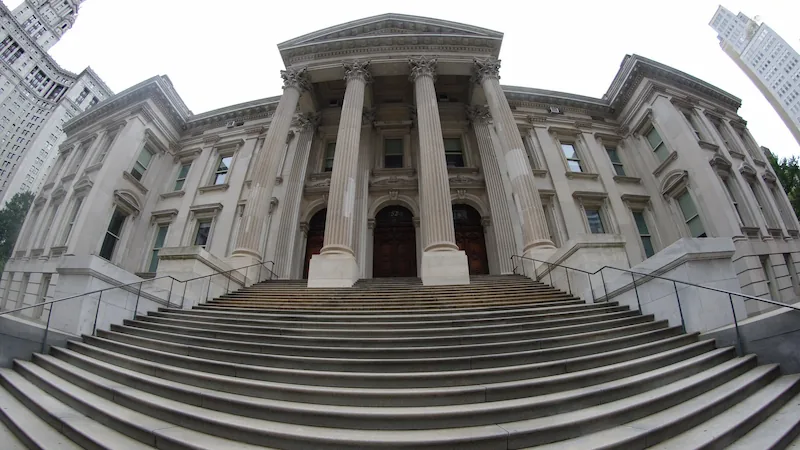
The steps of city hall. (Source: Flickr/Mike Steele.)
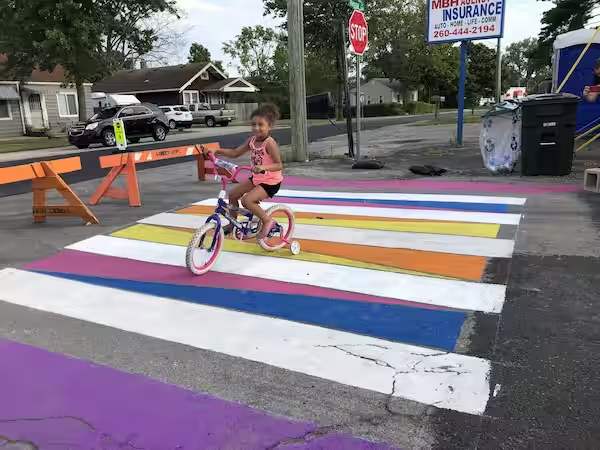
Have you ever identified a problem or place where people struggle in your community where you think your city could make an improvement to address this problem? A missing sidewalk connection between homes and a shopping center, speeding on a local residential street, or a missing crosswalk where you see the neighborhood children regularly crossing? Any citizen can identify some really simple projects that could address these issues, like adding a sidewalk, adding signage and striping on a wide street, or building a crosswalk. These are the everyday, bread-and-butter projects we rely on our local governments to undertake.
Because city staff cannot be familiar with every neighborhood issue, it’s in your interest as a concerned citizen to bring this sort of thing to their attention. This could be a phone call or email to city hall sharing your concern. You may even make suggestions as to how this concern could be addressed. Many cities make these requests easy with the ability to submit a service request through an app or website. In smaller communities, you might attend a council meeting or call your mayor to see if this is something that can be put on the list for the city to tackle.
If you have made these observations and you have made the calls, you quickly find out that what seems like a pretty simple project can hit some very complex barriers. Your concern is generally directed to municipal staff who are charged to learn more about the issue. After a call or short meeting, you leave completely confused as to why this concern now needs an act of Congress or a highly technical study to tackle a simple problem. What seems like a simple problem to address is now wrapped in technical gobbledygook and ultimately brushed off.
My friend and mentor Ian Lockwood best summarizes this response as a technical brush-off.
The technical brush-off is the act of the municipal government or staff to use technical language or technical process to abruptly dismiss a concern. This technique is utilized frequently when someone is not interested in addressing a concern or issue raised by a citizen.
The technical brush-off can be delivered in a positive, apologetic manner: “That is an issue out of the control of the municipality. We would love to address that concern, but that is a roadway the city does not maintain, so we have no authority to make any changes to it.” It can also be delivered in a very negative way where city staff flex their technical expertise: “That is not really our concern because that street is classified as a major arterial, and people should not be walking anywhere near that roadway. If we add a sidewalk or crosswalk, we would contradict the adopted engineering standards and practice.” These responses are intended to dismiss your concern through a veil of technical superiority.
The technical brush-off is intended to stop progress and appease complaints. The municipality can assert that they have heard the concern, and therefore the feedback loop is closed. The intended response is for a citizen to simply go away knowing that someone heard their complaint, and the issue is so big it cannot be fixed. This is a response, but a response without any substance.
Once you recognize you are facing a technical brush-off, here are some steps to overcome this obstacle.
- Keep your request small and direct. Be clear about the issue, such as 100 feet of missing sidewalk on Maple Street on the 200 block. This type of focused and direct request will include fewer variables compared to a broad request for sidewalks throughout the city. The municipality will not be able to make broad assertions when the scope is limited.
- Focus on the next smallest step. The Strong Towns approach encourages the next smallest step when approaching a struggle in your community. Technical municipal staff may default to giant leaps: “We would love to address your concern, but we will need to re-engineer and construct a whole street,” or “We see how that could be helpful, but we will need to complete a six-month traffic study to come up with a solution.” Encourage municipal staff to think about what they can do in 24 hours with the resources available to respond to your concern.
- Keep asking questions. The intent of the technical brush-off is to get you to stop asking. Do not be afraid to ask why or the basis for the determination provided. Learn as much as you can.
- Ask who has the authority to make this decision or take action. Generally, the responsibility rests with a person you are not talking to. Be prepared to go up the ranks to the person who has the authority.
- With every barrier, build a bigger coalition. You are probably not the only neighbor that shares your concern and desire for the municipality to respond. The intended result of dismissing your concern is torpedoed if you return and bring another person into the discussion who shares your concern.
- Share what you are learning and what you are being told. One technical brush-off is usually supported by another technical brush-off. By sharing what you are learning, it will become more evident how uninterested the municipality is in addressing your concern. This will result in people asking questions as to why a valid concern cannot be addressed.
Finally, be persistent and be patient. The technical brush-off is intended to sap your persistence and desire to continue. Knowing this, you should be inspired to put in more effort. It is easy to get discouraged and angry when your municipality dismisses a valid concern. Those emotions may result in an emotional response, but you need to stay calm and collected. Your patience will eventually pay off because it will be easier for your municipality to respond to your original concern than to deal with a coalition of angry and aware citizens.
Edward Erfurt is the Chief Technical Advisor at Strong Towns. He is a trained architect and passionate urban designer with over 20 years of public- and private-sector experience focused on the management, design, and successful implementation of development and placemaking projects that enrich the tapestry of place. He believes in community-focused processes that are founded on diverse viewpoints, a concern for equity, and guided through time-tested, traditional town-planning principles and development patterns that result in sustainable growth with the community character embraced by the communities which he serves.
.avif)
%20(1).avif)
%20(1).avif)