What We Get Right at Home and Wrong in Public


.avif)
The value of a kitchen lies in what it enables, not what it contains. (Source: Vitaly Gariev/Unsplash)
Most people are better placemakers than they realize. Consider how we think about our homes.
Designing a good kitchen doesn’t begin by asking how many countertops you need. It begins by imagining what happens on them: cooking dinner, making coffee, hosting friends, and the inevitable cleanup after every meal.
We know that counter space isn’t valuable because countertops are inherently good; it’s valuable because it makes preparing food easier. The placement of the stove or fridge matters because it shapes how people move throughout the room. Storage matters because it reflects how often certain items are used, and how easily they can be accessed.
All of this to say that when we design our own homes, we naturally think of space as an ongoing relationship between people, activities, objects, and movement. Yet, that logic tends to break down when the conversation shifts to the public realm.
For one, we often default to talking only about physical components: benches, trees, lighting, materials, and equipment. We start with what a place should contain rather than what behaviors and activities it needs to support. The result may end up being a collection of objects mistaken for a functioning environment.
If we were to carry this way of thinking into our own homes — that’s to say, start designing around objects instead of use — it would fall apart pretty quickly.
Anyone who has tried to recreate the perfection of a showroom at home knows how quickly it is undone by everyday life. No carefully staged, minimalist entryway can withstand a family coming and going all day. You can even extend this allegory to grocery shopping. Without consideration for the end recipe, for the tools and ingredients already at home, you’re at risk of buying a bunch of ingredients that don’t actually work together, leaving you with a refrigerator full of possibilities and nothing for dinner.
So, why does this happen?
Part of the answer is because public spaces are genuinely more complicated than private ones. The instincts that serve us well at home don’t scale perfectly to a neighborhood park, a public square, or a main street. A family of three can usually agree on where to put the coffee mugs, whereas a neighborhood has to accommodate thousands of people, many of whom want different things from the same place. The challenge of discerning shared desires is real and the more people a space serves, the longer it may take to understand what success looks like.
As the saying goes, “If you want to go fast, go alone. If you want to go far, go together.”
These are what we might call the “natural” challenges of placemaking — the unavoidable realities of working with other people. But many of the obstacles we encounter in placemaking don’t stem from these natural challenges, but from how we’ve chosen to manage them.
Bad Habits
Over time, we have layered on a set of institutional habits that make public spaces harder to adapt than they need to be. We’ll examine three of them: the rules that govern what can be built, the processes through which decisions are made, and the ways projects are funded.
Rules
Most of the rules governing public spaces emerged in response to legitimate concerns. We’ve decided to largely manage our public spaces through public agencies rather than cooperative commons. Within this set up, public officials must manage limited budgets, account for any liability, and ensure that public investments remain safe, durable, and attractive over time. And yet, in solving for these concerns, we sometimes lose sight of what we’re trying to build at all.
For example, a park may need to be designed around the requirements of an industrial lawn mower, making it difficult to create the smaller nooks and pathways that people love. Then there are blanket design regulations. Many communities mandate setbacks, landscaping requirements, facade treatments, or minimum amounts of green space in an effort to ensure a certain aesthetic standard. While well-intentioned, these requirements struggle to take (the always) unique contexts into consideration and can produce environments that satisfy the regulation more effectively than they serve the place.
Consider a required patch of grass along a heavily used pedestrian corridor. On paper, it fulfills a landscaping requirement and contributes to a greener streetscape. In practice, heavy foot traffic and local weather conditions may turn it into a muddy, worn-through strip that requires constant maintenance while providing little aesthetic or functional value. The issue isn’t that greenery is bad; it’s that a rule designed to produce a desirable outcome was applied without enough consideration for context.
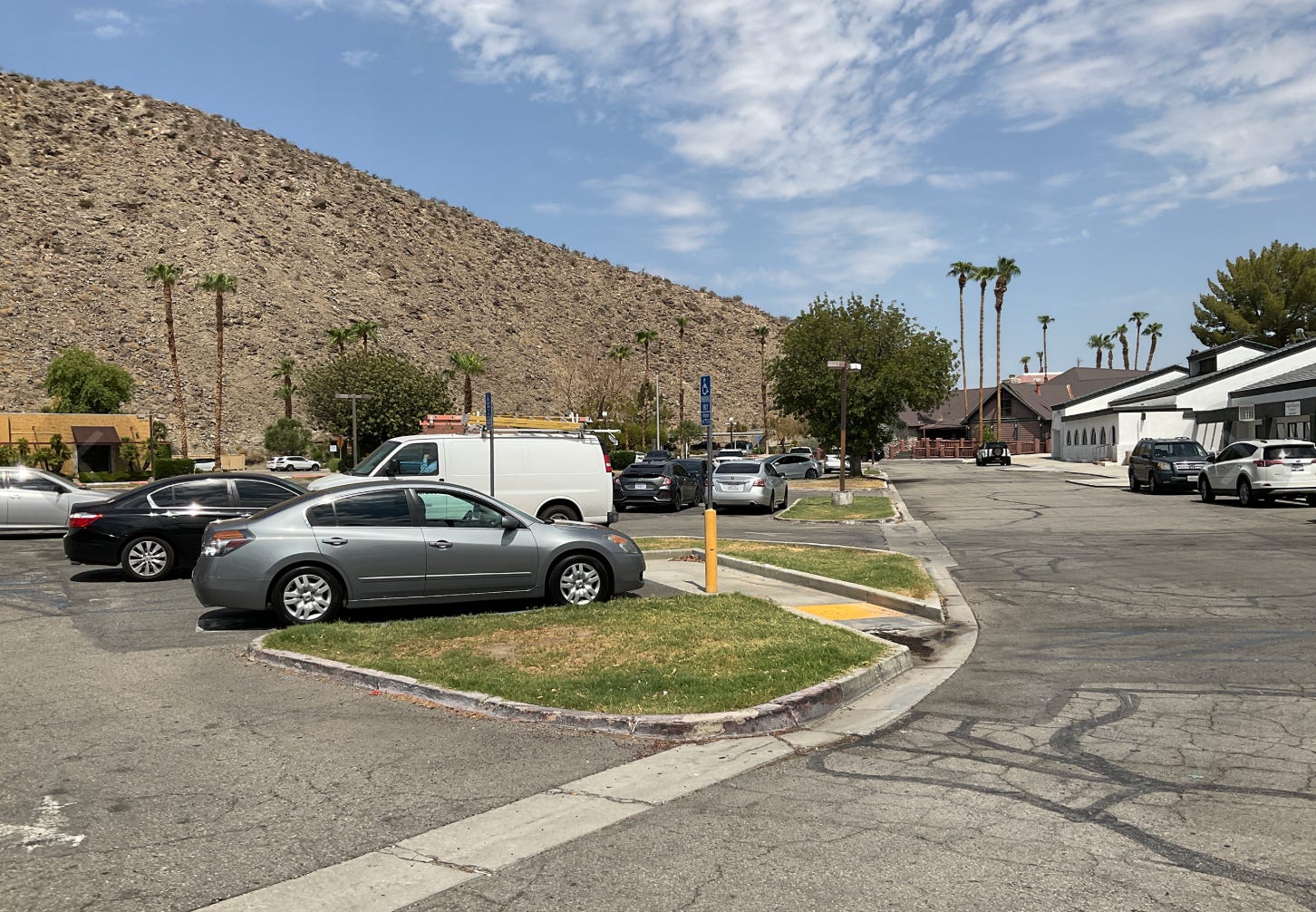
Similarly, public agencies are often expected to account for every possible thing that could go wrong.
You can see this in the preference for fixed, permanent elements over flexible ones. A bench can be anchored in place and managed predictably, whereas a moveable chair can be stolen or used in an unintended way. Yet, a movable chair allows people to seek sun or shade, join a conversation, or simply make the space their own.
You even see this dynamic extend beyond physical design, like with permitting. Temporary tents, amplified sound, food vendors, outdoor gathering, and other forms of activation often face permitting requirements that were designed for much larger events. The threshold between doing nothing and doing something can become surprisingly high.
In each case, the goal is understandable — reduce risk, simplify maintenance — but the unintended consequence is that a place becomes less responsive to the people who use it, and less usable by the people it intended to serve.
Processes
In many communities, every significant decision must be made before anyone has a chance to observe how people respond to the proposed changes. Designers, planners, engineers, and public officials are expected to determine what a place will need years in advance and then build it all at once.
Put another way, we are asked to predict an ecosystem instead of cultivate one.
The result is a strange inversion of how people actually learn. In our homes, we discover needs through experience. We live in a space, notice friction, make adjustments, and repeat. A chair gets relocated because it better serves the room. Storage is added where clutter accumulates. Small changes reveal new opportunities, which lead to further refinements.
Public projects rarely work this way. Rather than making ten one-million-dollar improvements over ten years, learning from each step along the way, we are often forced to make a single ten-million-dollar investment and hope we got everything right. The consequence is that we lose our most powerful source of information: the place itself.
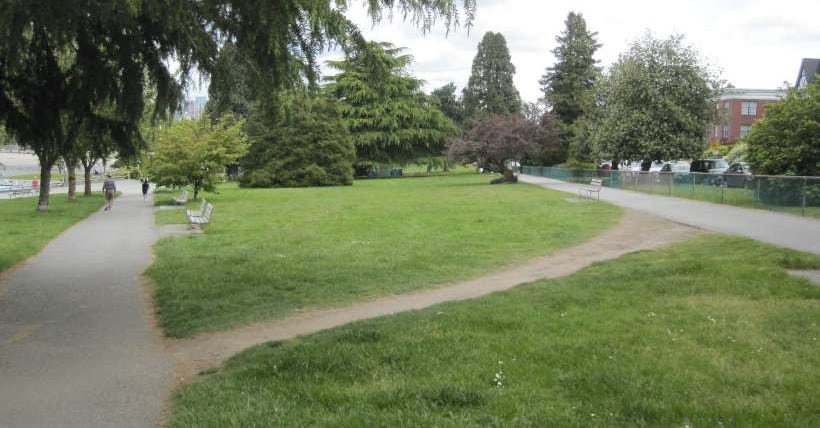
Imagine a plaza designed around the assumption that people want to sit in the center, only for visitors to consistently choose the edges where they can observe activity without being the center of attention. Similarly, a park may invest heavily in a large event lawn, only to discover that its most valued feature is a small grove of trees. A public square may spend thousands of dollars on permanent furniture on the periphery only for people to bring their own chairs.
We may end up interpreting these as failures of design, but in reality, they’re just as much failures of prediction.
Funding
Much of the above stems from how we fund the public realm.
Improvements to public space are typically financed as capital projects — large, one-time investments with clearly defined scopes, budgets, schedules, and deliverables. That type of funding favors certainty. To secure funding, we must define exactly what will be built, how much it will cost, and what success is expected to look like before construction ever begins. That need for certainty then ripples outward. It encourages rigid design decisions, front-loads decision-making, and creates rules intended to minimize surprises during construction and maintenance.
The problem is our places don’t behave like capital projects.
The success of a place depends on countless small decisions made after construction is complete: adding a few movable chairs because people consistently seek shade in one corner, permitting a coffee cart because workers have started lingering at lunchtime, or hosting a weekly market because the neighborhood demands it. These are operating decisions, not capital ones. And with how our funding currently operates, they are often the hardest to fund, approve, or even imagine within a system built around one-time investments.
We’ve sometimes referred to this as the “ribbon-cutting divide.”
The day a place opens is not the end of the work; it is in fact, when the work begins. Yet by that point, the capital funding has been spent and the project’s champions have moved on. There quite literally isn’t a comparable source of funding available for what comes next, and in the worst cases, we get a plaza that cost tens of millions that sits empty, a park that struggles to attract positive activity, or a public space that never quite lives up to its potential.
When that happens, we tend to blame the design, subjective tastes, or the people using the space. What we less often question is whether the processes we are using to shape our shared spaces ever give us a decent chance of success.
In the end, our funding infrastructure doesn’t just determine what gets built. It shapes the rules we write, the decisions we make, and the kinds of places we’re capable of creating. We have become remarkably good at delivering projects, but far less adept at cultivating places.
How might this compare to how we invest in our homes?
Imagine your child becomes obsessed with horses. Rather than buying a few books, toys, or riding lessons and seeing where the interest leads, you decide to fund their entire horse-related future in a single investment. In a single week, you purchase every horse toy, every decoration, every piece of horse-themed furniture, every book, and every accessory you think they might want over the next ten years.
A year later, they discover dinosaurs. Most parents intuitively understand why this would be a poor investment.
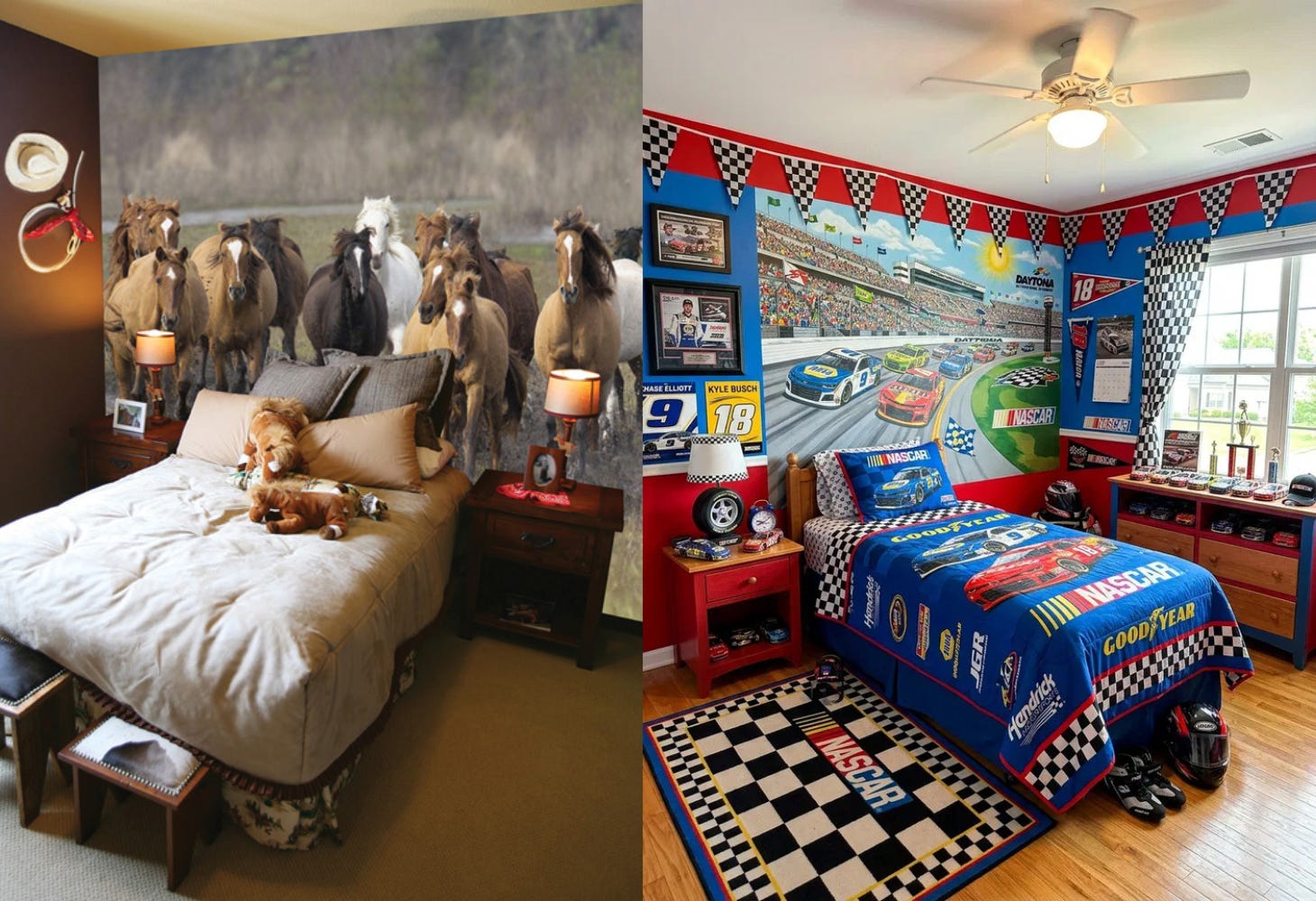
But even if their love of horses never fades, new opportunities will emerge that you couldn’t have possibly anticipated. Maybe a new toy comes out or a local riding program opens nearby. Perhaps, their interests shift from collecting horse figurines to learning how to care for real animals. Their needs evolve as they grow, but too bad! The budget has already been spent.
The problem isn’t that the child changed. It’s that no parent can possibly know everything their child will want or need at the outset.
Public spaces face the same challenge. The issue isn’t that people use a park “wrong” or that they fail to behave as designers expected. The issue is that many of the most important lessons about a place can only be learned after people begin using it. Yet our systems often ask us to commit the vast majority of our resources before that learning can take place.
[[divider]]
This article was originally published, in slightly different form, on Practice of Place. It is shared here with permission.
Max Musicant is the founder and principal of The Musicant Group, an interdisciplinary firm whose mission and service is to create places where people want to be, as well as its Practice of Place blog. Through partnering with communities, businesses and organizations of all kinds to integrate design, events, operations, communications and organizational capacity building, the firm has demonstrated that every space can and should be a great place. Musicant received an MBA from Yale and a B.A. from the University of Wisconsin–Madison.
Asia (pronounced “ah-sha”) Mieleszko’s career defies easy categorization—from researching Ukrainian folk traditions to covering infrastructure policy, from performing on the world’s biggest stages to the most cramped basements. At heart, she’s a storyteller, driven by curiosity about how people and places become what they are.
While at Strong Towns, Asia paired analytical rigor with empathy to examine the forces shaping our built environment. As host of Stacked Against Us, she guided listeners through the labyrinth of housing, finance, and local governance, revealing both the systems constraining communities and the openings for meaningful action.
Off the clock, Asia can be found behind a camera, playing the accordion, or riding the rails across the country, always curious about the places and people along the way.
%20(1).avif)

%20(1).avif)
%20(1).avif)