A Street Is a Terrible Thing to Waste

I am still learning how to see a street, and I say that not as a planner or an engineer, but as a citizen who has begun to suspect that something essential was hidden in plain sight all along.
For most of my life, I regarded streets as the spaces between meaningful things. The house was meaningful. The shop was meaningful. The church, the school, the office building. These were the places where life happened. The street was what you passed through to get there. It was an afterthought (unless it was being used for street hockey).
Only gradually have I come to understand that this way of seeing is not accidental. It is the inheritance of a particular story about what a city is and what its streets are for.
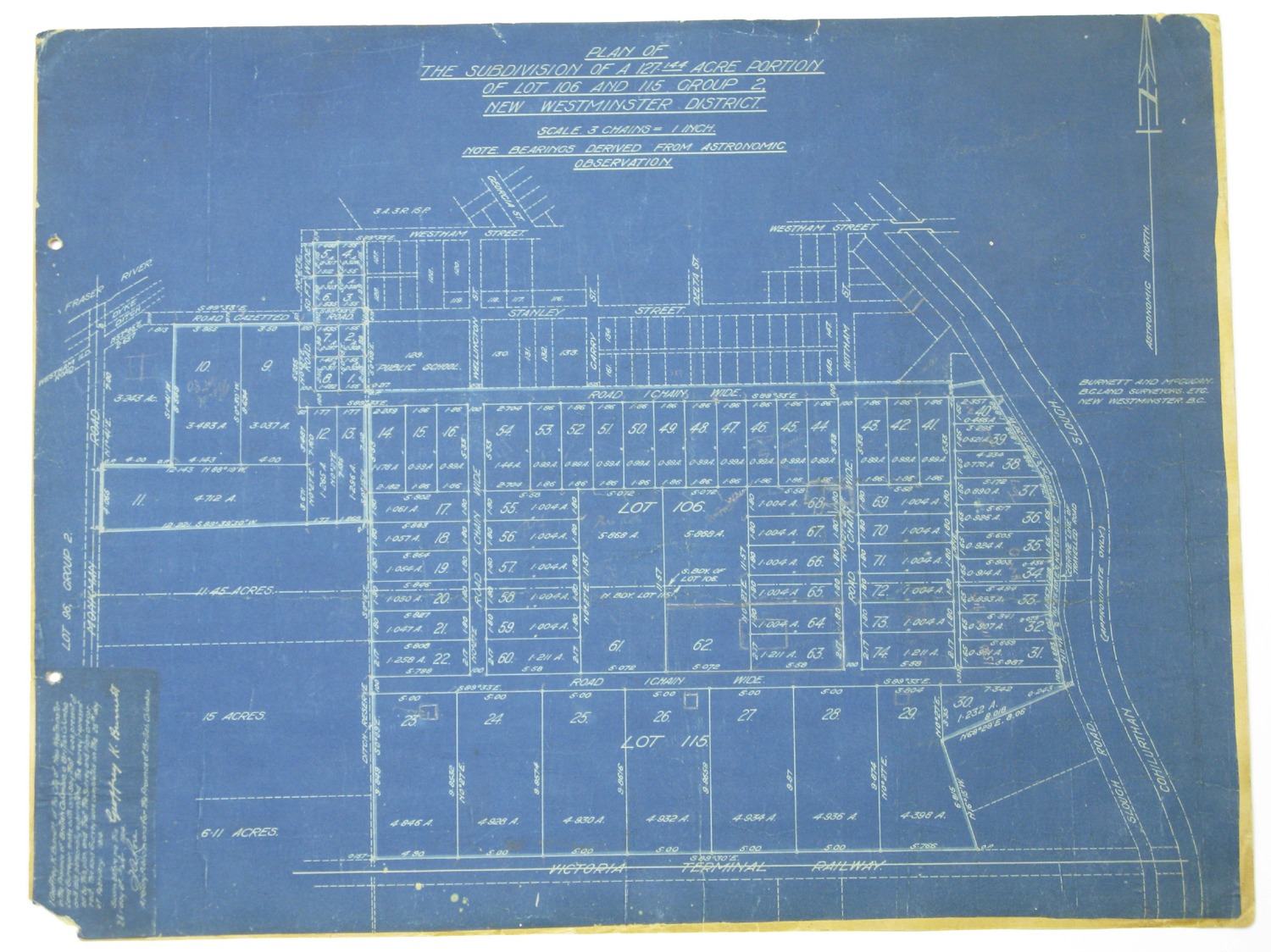
That way of seeing did not emerge by accident. In a recent and worthy essay in Public Square, David Green points to a decisive moment:
“The idea that streets aren’t the primary element of cities was precipitated by the adoption of the 1926 State Zoning Enabling Act, which described a process through which cities would be planned based on projected uses (the least permanent part of a city coincidentally), and the suppression of the 1928 City Planning Enabling Act, which simply codified a process for designing cities (starting with a master plan, which at the time was a simple projection of public rights-of-way).”
After the Second World War, this reorientation found its engine in the automobile. Access by personal car became not merely a convenience but an unquestioned good, a kind of organizing virtue. The suburban pattern of development took shape around this assumption, and it did so with remarkable consistency. Streets were widened. Turning radii enlarged. Land uses separated. Parking mandated. Each decision, taken alone, appeared rational. Together they formed a pattern that presumed, at every step, that the primary mode of transportation would be the private automobile.
When that assumption governs, the street cannot remain what it once was. It is no longer the shared ground of exchange and encounter. It becomes instead a conduit whose chief purpose is movement. And because movement, in this pattern, must always increase, no street is ever truly finished. Any one of them may someday be widened, straightened, signalized, or transformed into something larger, should traffic counts and projections demand it.
In such a system, even a modest neighborhood street lives under a quiet threat of escalation.
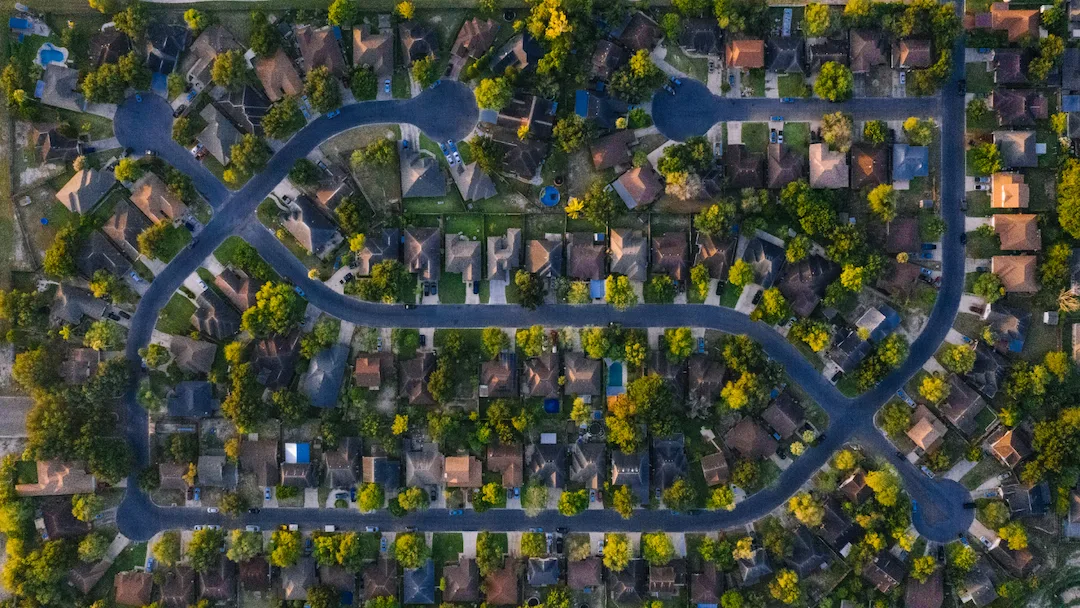
Strong Towns’ Chief Technical Advisor, Edward Erfurt, has often noted the resistance he encounters when proposing connected street grids in new developments. Simply drawing lines that join one project to another can provoke concern. There is fear of cut-through traffic, fear of congestion, fear of change. The instinct is to protect, to contain, to sever. The result is a landscape of loops and pods and collectors, each development internally orderly yet externally isolated.
In a traditional grid, traffic disperses because it has options. Many paths share the burden. Walking and cycling become plausible not because of special infrastructure but because destinations are near and routes are direct. Growth, when it comes, can be absorbed gradually.
In the disconnected suburban pattern, however, traffic concentrates on a few arterial routes, and because it concentrates, those routes must continually expand. What begins as a street risks becoming a stroad, and what becomes a stroad may, in time, be hardened into a road.
It is here that I offer an observation of my own, and I do so tentatively, aware that others may see it differently.
Within this auto-dependent system, the cul-de-sac functions as a kind of defense. We speak of it as a preference, and there is truth in that. It promises quiet. It limits through-traffic. It creates a space where children may play and neighbors may gather without the constant interruption of passing cars. Yet its deeper power may lie in what it prevents.
A cul-de-sac cannot easily be converted into a stroad. To do so would require the taking of homes, the bulldozing of yards, the cutting of a new path at extraordinary public expense. Such interventions are so rare as to be nearly unthinkable. By its very geometry, the cul-de-sac resists escalation.
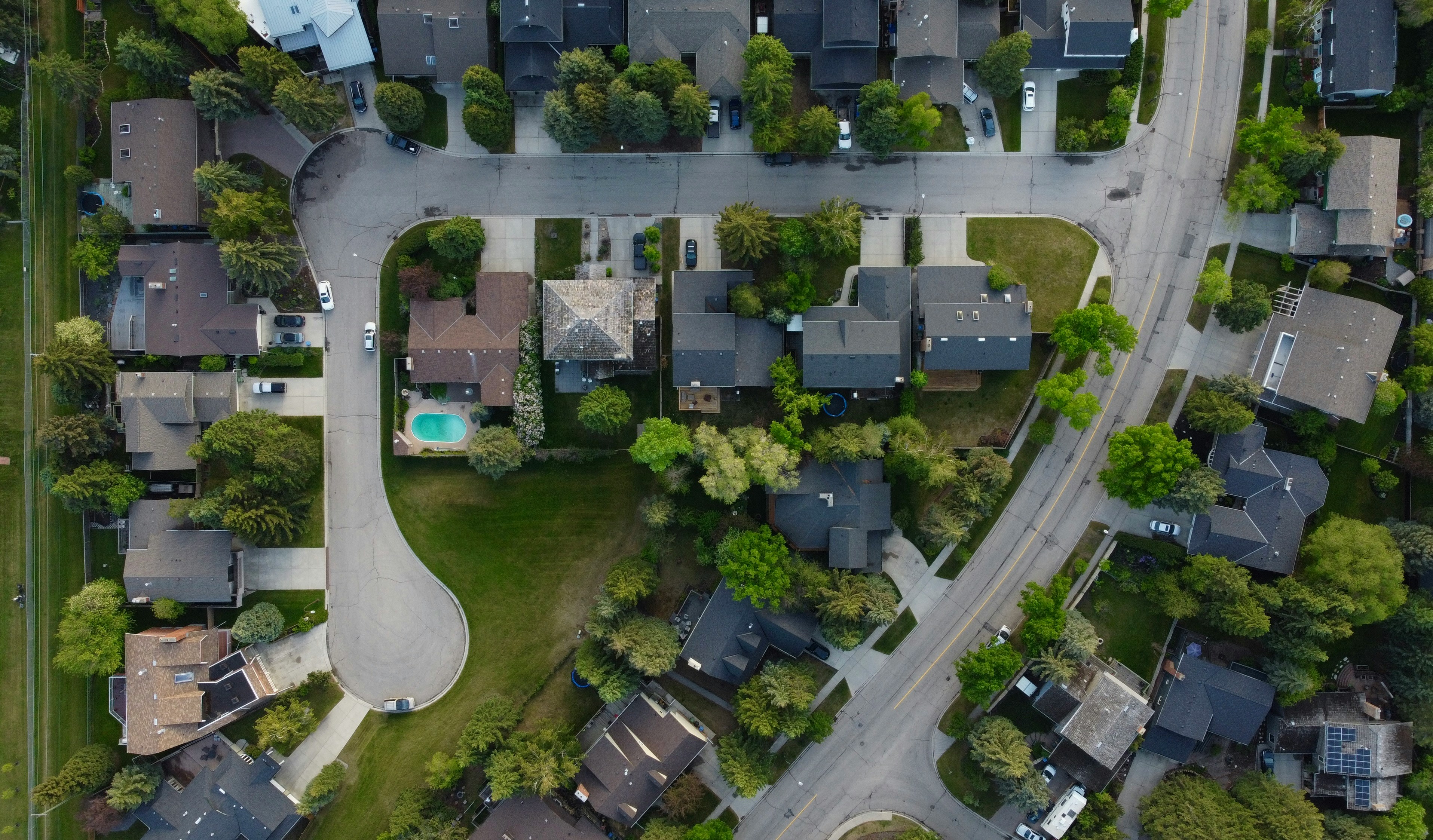
In a pattern where any connected street may be widened to serve distant demands, the only way to ensure that one’s street remains small is to make it go nowhere.
That fact should give us pause. It suggests that we have built a system in which connectivity invites vulnerability and isolation promises protection. Instead of trusting a well-designed network to distribute traffic and sustain human-scaled streets, we have relied on severance as a safeguard.
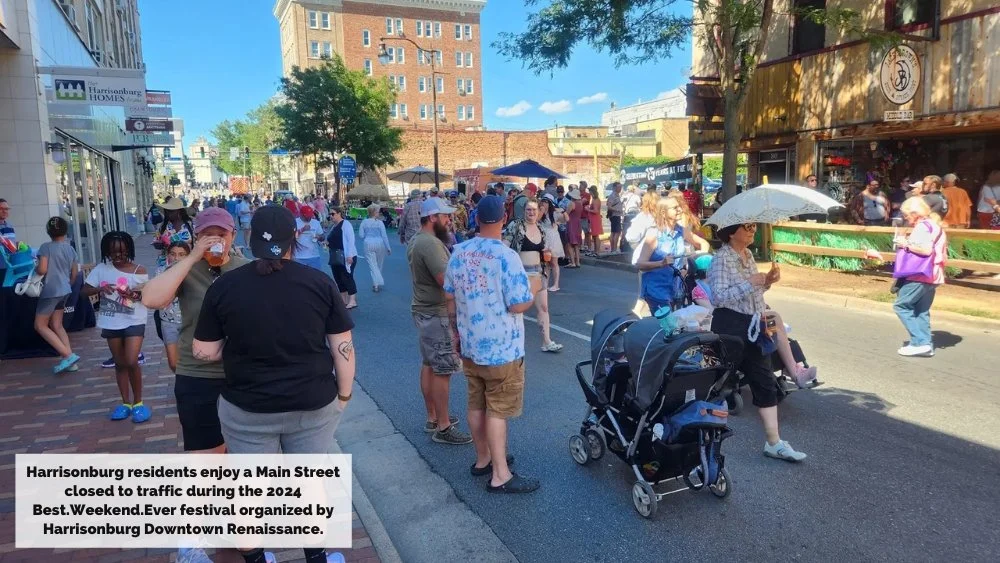
Strong Towns speaks of streets as platforms for building local prosperity, and I have come to believe this is no metaphor. A street, well proportioned and well connected, creates frontage where enterprise may take root. It fosters encounters that cannot be predicted yet often prove fruitful. It allows a place to evolve through discrete, patient adjustments rather than through sweeping interventions.
If we begin again, as Green suggests our predecessors once did, by treating public rights-of-way as the primary element of a city, we may recover a more durable wisdom. We may design streets that are neither corridors of speed nor defensive enclaves, but shared grounds of common life.
I am still learning to see a street in this way, not as a space to be hurried through or barricaded against change, but as a gift held in common, capable of bearing more life than we have lately allowed it to carry. And having glimpsed that possibility, I cannot help but think that a street, once understood, is indeed too valuable to waste.
Norm Van Eeden Petersman is the Director of Membership at Strong Towns. He is a skilled communicator of the Strong Towns message and a community builder. He leads DelPOP, a land use reform and housing advocacy group in Delta, British Columbia, and is a leader of the Strong Towns Toastmasters Club.
Norm has a Master of Divinity and a Bachelor in Political Studies. He spent 10 years pastoring churches in Canada as a preacher, teacher, and leader. He worked in communications for the second-largest city in British Columbia and carried out infrastructure-related stakeholder outreach for Canada's Minister of Health and Federal Economic Development Initiative for Northern Ontario in Ottawa, ON.
Norm has published articles on housing, transportation, faith, and culture and his writing appears regularly on the Strong Towns site. You can connect with him on Twitter at @normvep or on LinkedIn.

.avif)
%20(1).avif)
%20(1).avif)