Set the Children Free
.avif)
.avif)
Because Mrs. G works in a school district in a nearby town, our kids have the option of going to school there instead of here in Fairhaven, Massachusetts. It’s nice to have options! Every year, we check in with our youngest on whether she wants to stay in school here or go to school with her mom. Given that she’s a preteen, it’s not surprising that “staying where my friends are” is high on our kid’s reasons for staying in town this year (yes, she wrote a list of pros and cons). This year, there was also a new reason for staying that ranked high on the list: “the walk home.”
While she usually gets a ride in the morning, most afternoons, my daughter enjoys her meandering, one-and-a-half-mile walk home across town. She’s usually with our neighbor’s kid, a friend with whom she enjoys processing the day as they walk. Sometimes others join them. They hit Cumby’s (gas station convenience store) for snacks. They check who’s at the playground in the park. They don’t have phones, and the watch we got her so she can send us quick messages is (suspiciously) seldom charged. Sometimes they’re home right after school, sometimes they take an hour or two to get there. My favorite afternoons are when she comes home with a gaggle of friends who take over our kitchen with adventurous baking. Last week I paid them all to stack wood, which they did with surprising efficiency while cranking pop hits.
The walkable street grid of our town center gives kids like mine the freedom to roam. And this is what preteens want more than almost anything. They want to meet up with friends independently, without adults acting as intermediaries. They want to be able to go places without too much planning and without the nagging presence of parents. They want to form various groups and test different permutations of friends, sometimes within the course of one afternoon. Developmentally, this is their job! They’re learning how to be social creatures. And, despite the occasional challenge, it’s all good stuff for them to be doing.
Living in a place where kids have the freedom to roam is great for us parents, as well. We’re learning to let go and showing our kid we trust her. And we get more time to ourselves while spending less time as unpaid Uber drivers for Olivia Rodrigo fans.
In some neighborhoods, the best way for pre- (and young) teens to get together without having to rely on the grownups is bicycles.
A regular bike (in my family, we call them acoustics) gives you about five times the travel range of walking. And bikes are cheap and relatively easy to maintain. When it comes to getting together with your friends in a relatively compact suburb, bikes are the right tool for the job.
E-bikes. And kids. Sigh. This is not that post. E-motos are to preteen boys what iPhones are to preteen girls. Please do not buy one for your kid to use on the street.
In addition to complaints about kids on e-motos, I hear a lot of complaints here and elsewhere about kids riding bikes in the street. Someone sent me a news report from Milford, Massachusetts, where the story of a teen riding an e-moto into oncoming traffic was lumped in with complaints about a group of middle school kids riding in the street. This is from the clip shown on the news:
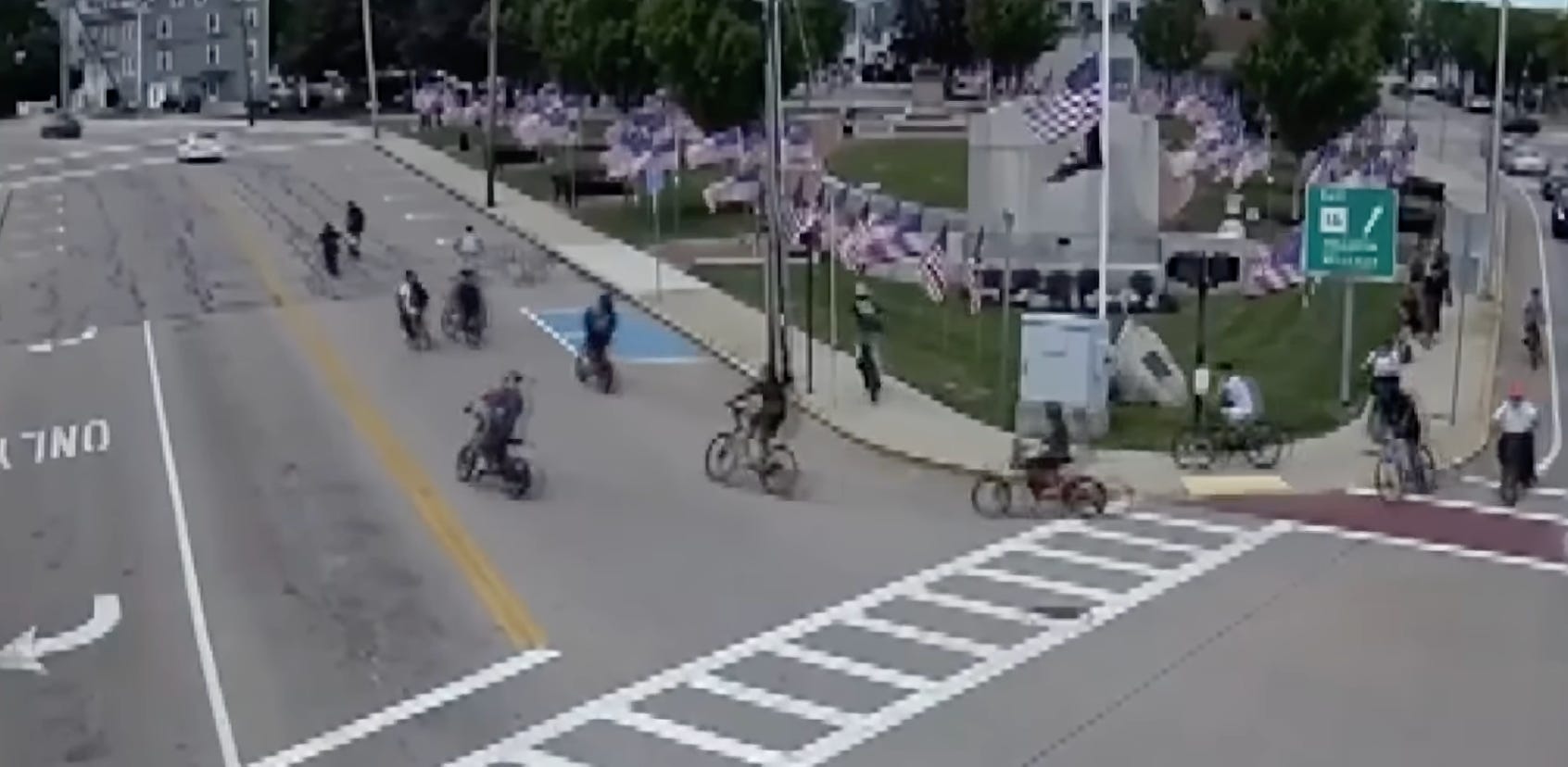
We should, of course, teach our kids the rules of the road and ensure they wear helmets. But in addition, I want us all to consider: what if we look at this group of kids riding bikes as an expression of natural, pent-up demand? They want the freedom to roam. If they’re like my kid, they want to be able to spend some money on snacks, ice cream, and dumb trinkets. What if instead of rushing to judgment, we took a moment to observe?
Where do you see people in your community struggling?
Here’s a group of kids. They’re not staring at screens. They’re not all hepped up on goofballs. From what I can see, they’re wearing helmets. They’re outdoors, roaming in their town. They’re doing what kids are supposed to do. But as adults, we see the struggle: their environment is not safe. Look closer at the kids on the right, riding on the shoulder. Imagine that one of those boys is your kid. Are you ok with just a line of paint between him and the fast-moving car a couple of feet away?
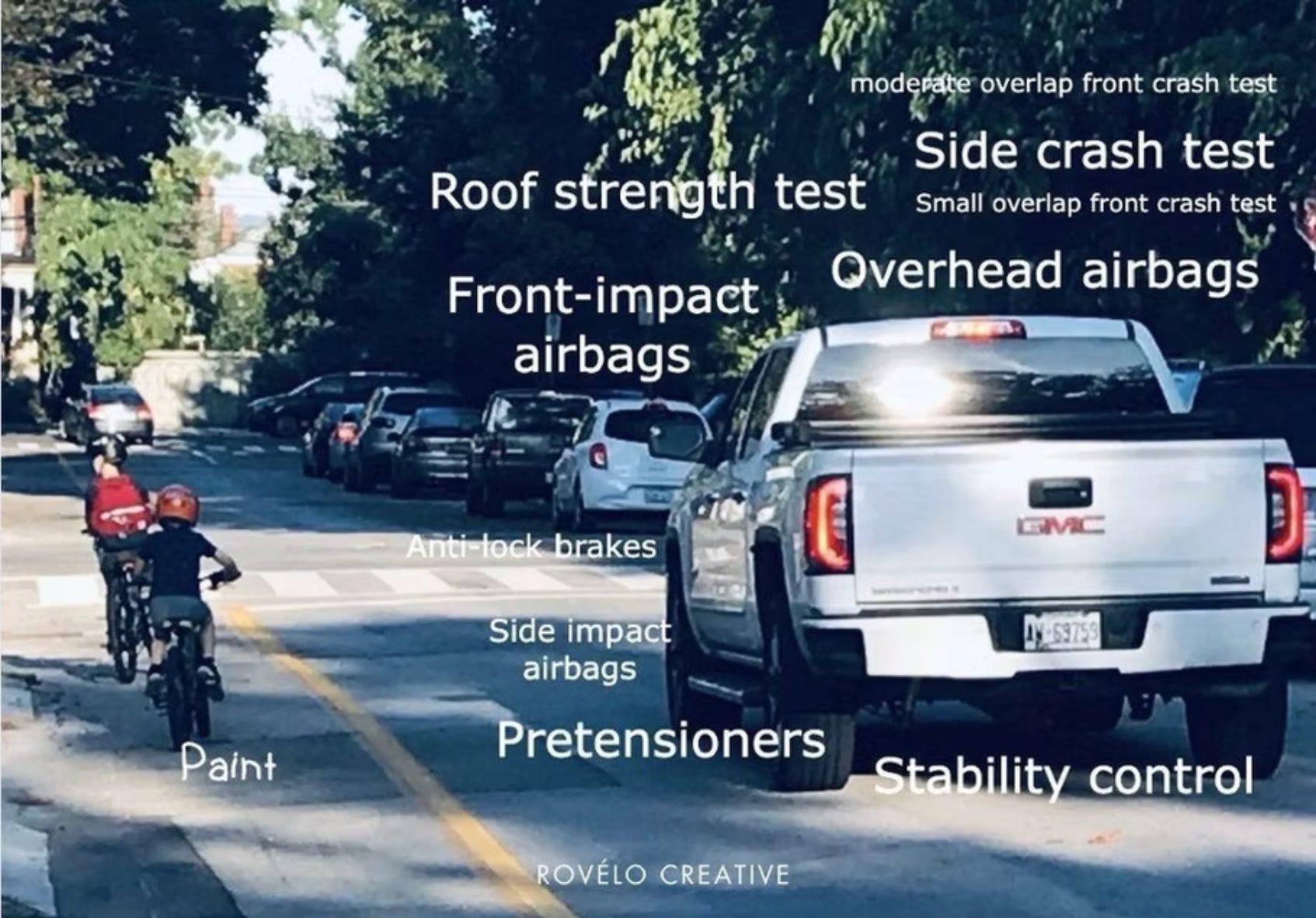
What’s the next immediate action — no grants, no studies, no multi-year wait — the town could take to make those kids riding their bikes just a little safer and more comfortable? Chances are, those same things will make the streets safer for other people, too.
I’m not saying we shouldn’t make kids wear helmets or follow the rules of the road. It’s not either/or! In fact, we as adults have more credibility if we’re actually making a good-faith effort to accommodate the needs of kids in our community before we start shaming them for being the idiots that kids sometimes are. And, maybe if we provided a more comfortable environment for our kids to get around in, we wouldn’t see groups of them riding around as such a problem.
Check out these crazy kids:
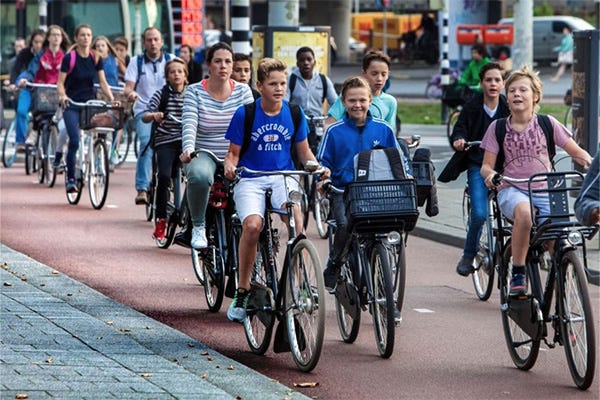
This is a similar situation to the kids in Milford — a group of kids riding together after school and socializing. But we wouldn’t cast them as degenerate scofflaws, even if, unlike the kids in Milford, they’re not wearing helmets.
What’s different? They live in a place where their needs have been prioritized. So the expression of those needs just looks like a pleasant commute, not a hormone-driven rebellion that must be suppressed.
Kids — especially teens and preteens — should have the freedom to roam. And cities and towns that support this freedom cultivate healthier, more independent kids, attract more families, and build more robust economies. In my town, the traditional development pattern grants kids like mine the freedom to walk home from school and meet up with friends. There’s more we can do to make sure kids from all of our neighborhoods enjoy the same freedom. In other towns like Milford, kids are asserting their right to roam despite infrastructure that impairs it. Instead of rushing to judgment, we should be paying attention to what these kids need and figuring out the next small way we can meet those needs.
[[divider]]
This article was originally published, in slightly different form, on StrongHaven, a Substack run by Strong Towns member Will Gardner. It is shared here with permission.
Will Gardner is a social entrepreneur and the founder of SouthCoast Places for People, a movement of people working to make Greater New Bedford more vibrant and connected by supporting awesome neighbors.
%20(1).avif)
%20(1).avif)

%20(1).avif)