I Was Angry About Housing. So I Tried to Build One.
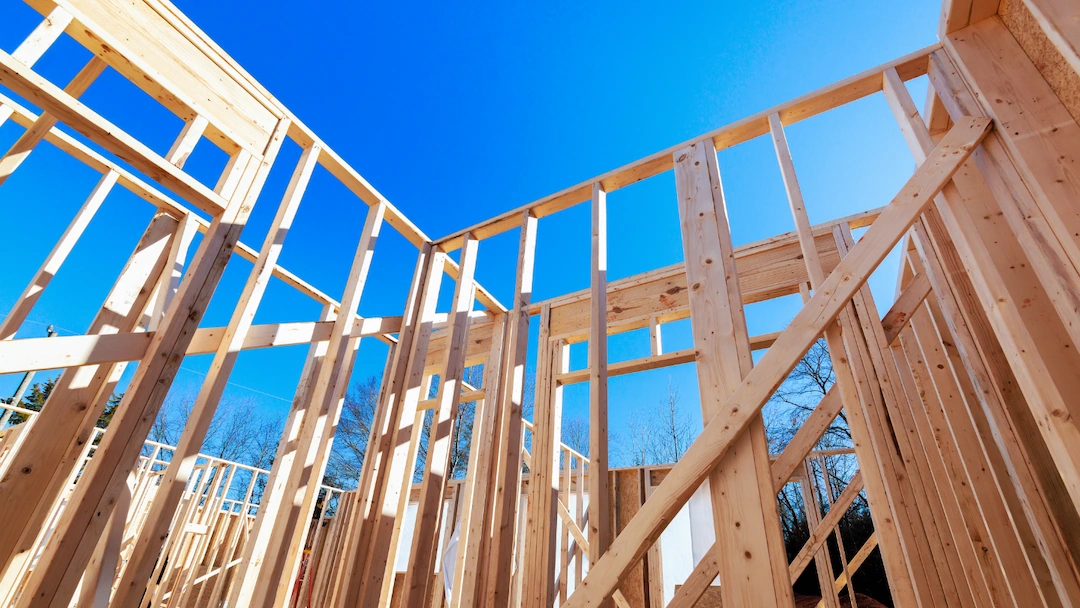
I didn’t start out wanting to build a house. I started out wanting to understand why housing felt so hard—why it was expensive, difficult, and increasingly out of reach, even in places where land sat vacant.
Like many people who care about cities, I read widely: Evicted; The Color of Law. I learned about redlining, exclusionary zoning, and how much of what we now call “market failure” was, in fact, policy working exactly as designed.
I was angry. Then overwhelmed. Then stuck.
Because once you understand the scale of the problem, it’s easy to believe the solution must live somewhere equally large—federal legislation, sweeping zoning reform, programs at a national level. I couldn’t fix those. I couldn’t even fix affordability in my own neighborhood.
Our first house in Indianapolis was a cozy 1,200-square-foot home tucked near the hospitals. We chose it because my husband would rotate at all five downtown hospitals during residency, and we were tired of the car dependency we experienced while he was in medical school in Los Angeles.
The house was only affordable to us because of a sort of financing “loophole.” When we bought it, my husband had just started residency, earning about $12 an hour. He hadn’t earned any income in the four years prior, and I was moving to Indianapolis without a job lined up. On paper, we were not strong buyers.
And yet the bank was willing to offer us 100% financing on a house worth about $250,000—at 3% interest—because my husband qualified for a physician loan.
No down payment. No private mortgage insurance. No requirement to wait until we were “ready.”
It was wild to me because it revealed how conditional access really is. We didn’t have wealth. We didn’t have stability. We had the right credential.
That house shaped our lives, connecting us to neighbors and making a walkable, one-car lifestyle possible at a moment when it otherwise wouldn’t have been. It was easy to convince co-residents to come over after their shifts for our weekly potluck, and we built community in a season that can often be lonely and difficult. But we couldn’t convince our friends to consider becoming neighbors. Even though they earned more and had more money in the bank, they didn’t “qualify.” They didn’t fit the model of acceptable risk.
This stuck with me as I became a Realtor and began helping people navigate financing options. It felt like many programs intended to expand access to homeownership came with rigid requirements that didn’t align with the realities of the buyers they were meant to serve. I also watched how Community Reinvestment Act (CRA) lending, often tied to specific census tracts with a history of exclusion, could create strange incentives. Large, well-capitalized buyers could use favorable financing to purchase in struggling neighborhoods, sometimes outbidding local residents. The intent was corrective, but the structure often favored scale and credentialed borrowers over small, local participants.
Instead of large luxury builds popping up in areas where they didn’t seem to fit, I wanted to see simple, well-built, modest houses close to working centers. I wanted to build something like what we were able to buy when we moved to Indianapolis.
So in 2021, I bought a vacant lot. It was a land bank property, offered at a price low enough that if I made mistakes—and I assumed I would—I could treat them as tuition instead of ruin.
This wasn’t a grand plan. It was an experiment.
I told myself: If I’m going to have strong opinions about housing, and if I’m aware that I have access to capital others can’t access, why don’t I use that to build one house?
Learning Requires the Ability to Fail
When toddlers learn to walk, they fall constantly. We expect this. We don’t demand certainty before movement. We also don’t ask them to take a step where one miscalculation breaks a bone.
Learning requires failure—but survivable failure.
Somewhere along the way, we stopped applying this logic to housing.
In housing, the cost of a mistake is often catastrophic, which means only those who can absorb that loss are allowed to try. And then we wonder why the system favors scale, punishes experimentation, and reproduces the same outcomes over and over again.
Building a single house didn’t give me answers. But it did give me better questions:
- Why is it so difficult to do something modest and ordinary?
- Why do systems designed for large projects apply, unchanged, to small ones?
- Why does risk concentrate upward while learning is pushed out?
I saw how access to capital smooths over inefficiencies that might otherwise halt a project. I saw how cash flow can make or break a business, and I learned directly the meaning of “holding costs.” I saw how many people are quietly excluded—not because they lack care or competence, but because they’re not allowed to be beginners.
The house is finished now.
It doesn’t solve the housing crisis. It doesn’t correct history. It doesn’t make me an expert. But it did change my relationship to the problem.
I’m no longer just reacting to housing as an idea. I’ve participated in it as a practice. I’ve made mistakes I can name, lessons I can carry, and decisions I understand differently because I’ve lived their consequences.
If the only people who can build are those who cannot afford to fail, we lose something essential. We should be asking:
- How do we create pathways where people can try and stumble without facing financial ruin?
- How do we design systems that expect learning instead of perfection?
- How do we let more people be beginners?
Because every good builder, planner, and advocate once stood where beginners stand now.
This house taught me that taking a chance isn’t reckless—it’s part of the process. But only when failure is survivable. Toddlers learn to walk because the ground is close. If we want better housing outcomes, we need to bring the ground closer again: smaller steps, lower stakes, more room to learn.
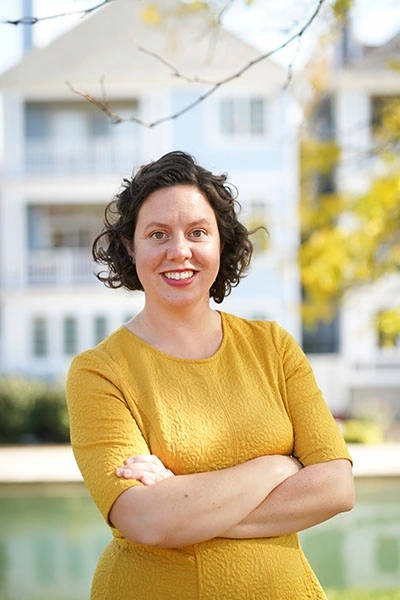
Sylva Zhang works as a real estate broker in downtown Indianapolis, helping clients find housing that supports a lifestyle with more walking, biking, and less car dependence. She enjoys helping make connections to build a green, thriving city, and is using her second chance at life after a cardiac arrest to try to leave a tangible legacy in Indy.
%20(1).avif)
%20(1).avif)
%20(1).avif)
%20(1).avif)