When Doing Everything Right Still Isn’t Enough
If you work in city hall—especially in transportation or engineering—you know the moment.
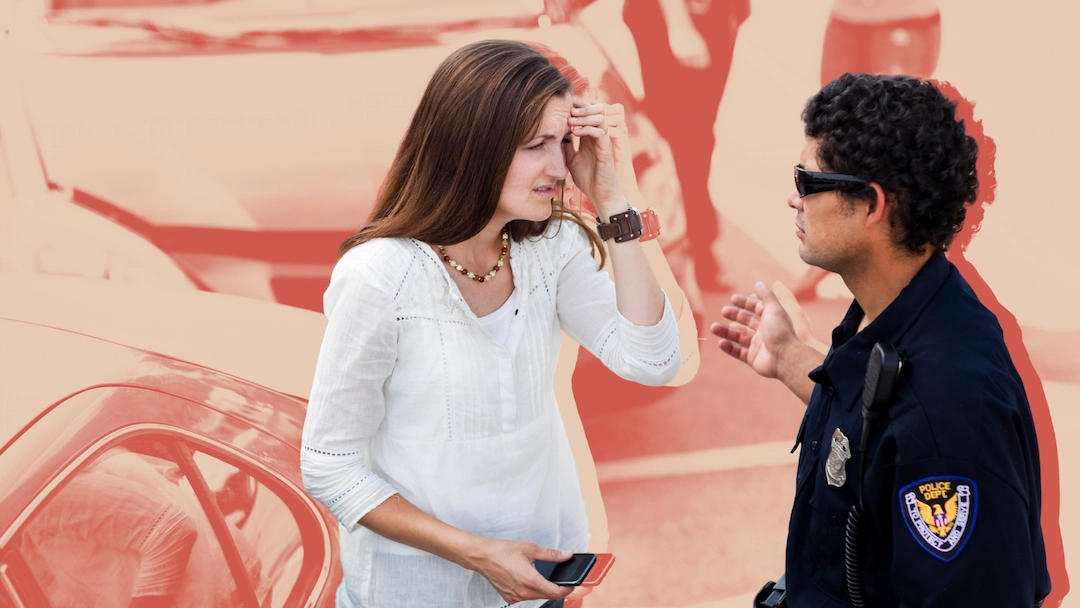
A fatal crash occurs on a city street. Media calls begin immediately. Elected officials want to know what happened and why. The community demands answers and action so it never happens again.
Outside city hall, there is great urgency. Inside city hall, everything slows down.
Police investigations are underway, and legal counsel advises caution. Engineers wait for confirmed facts before acting. The city wants to communicate something meaningful without saying too much that could impede the investigation. Everyone involved cares deeply, yet almost nothing can move.
That moment is where the limits of our current approach to traffic safety become visible.
We’re Doing the Right Things, Yet Still Falling Short
Most transportation professionals are not indifferent to safety. After working with many of them, I will assert quite the opposite. These professionals live in these communities. Their families use these streets.
Over the last decade, transportation staff across the country have led cities to adopt ambitious safety goals. They’ve formed cross-departmental crash teams and task forces. Cities have invested in culture change within engineering and operations by adopting safety plans and creating safe streets policies.
All of these cumulative efforts reflect real work, real learning, and real progress.
And yet, when a severe or fatal crash occurs, the same frustrations resurface—both inside city hall and out. The gap between intention and outcome becomes impossible to ignore.
This is not a failure of values. It’s a sign that something structural is being missed.
→ You might want to read: Analyzing Crashes Can Be Painful, but Creating Safer Streets Is Worth It
A System Built for Investigation, Not Learning
In the immediate aftermath of a fatal crash, responsibility fragments. Each part of the system does what it is designed to do. For example, police focus on determining fault. Legal teams manage liability and risk. Leadership tries to respect due process while responding to public grief.
Each of these roles is important, but taken together, they reveal that our safety systems are optimized to investigate crashes, not to learn from them in real time. No one is explicitly responsible for answering the most urgent question the public is asking:
What can the city do now to reduce the likelihood of the next fatal crash?
When that question has no clear owner, the system defaults to what it can do quickly and safely. Explanations emerge faster than actions.
When Process Overtakes Outcomes
In these moments, narratives about human behavior take center stage: impairment, distraction, speed, poor judgment. These factors are often real, and acknowledging them is not wrong. But when institutions lack the ability to act visibly in the near term, these explanations begin to carry more weight than they should—not because they fully explain what happened, but because they help explain why nothing can happen yet.
Over time, the story shifts from what could be changed to what cannot be controlled.
This isn’t about blame. It’s about recognizing how procedures meant to protect institutions can easily overtake the safety outcomes those institutions exist to deliver. Avoiding mistakes becomes more important than preventing the next tragedy.
The result is a system that values certainty over adaptation, even when delay carries its own risks.
Why Streets Are Different From Everything Else Cities Fix
Cities act quickly all the time. Parks departments repair broken playground equipment. Public works crews fill potholes and replace damaged signs. Utilities respond immediately to failures. But streets are different.
Authority over street changes is often diffuse. The timing is unclear; the responsibility is shared across departments, each with its own constraints. Taking immediate action can feel like acknowledging fault or increasing liability—even when the intent is prevention. This is how streets become a gray zone where waiting feels safer than acting.
From the perspective of residents who use that street every day, this distinction is hard to see. What they experience is simple: a life was lost, and nothing about the place where it happened looks different. They have no insights into the system, only that it appears unable to respond.
When a serious crash occurs and visible action is delayed, a vacuum forms. In that vacuum, advocacy fills the space. Calls for action grow louder. Demands become more specific. Positions begin to harden. Inside city hall, staff find themselves caught between professional judgment, legal constraints, and an urgent public expectation that something—anything—should happen now.
Too often, this situation is interpreted as community resistance or unreasonable pressure. In reality, it is the predictable outcome of a system that has no way to act incrementally under stress.
A safety framework that only functions once plans are finalized, studies are complete, and consensus is secured will always feel inadequate in the moments that matter most. It is not designed for learning in real time or for visible, low-risk action while uncertainty still exists.
Cities can do many things right and still fail at safety if their systems prioritize process over outcomes and centralized certainty over local, timely action.
If we want safer streets, we need institutions capable of learning before everything is known and acting before tragedy fades from view.
Edward Erfurt is the Chief Technical Advisor at Strong Towns. He is a trained architect and passionate urban designer with over 20 years of public- and private-sector experience focused on the management, design, and successful implementation of development and placemaking projects that enrich the tapestry of place. He believes in community-focused processes that are founded on diverse viewpoints, a concern for equity, and guided through time-tested, traditional town-planning principles and development patterns that result in sustainable growth with the community character embraced by the communities which he serves.