What if There Had Been No Interstates?
.avif)

I recently spent nearly a week in New England — and don’t you dare call it the Northeast. I’m told by the locals that you can tell the difference by who they root for. New Englanders root for the Red Socks, not the Yankees. (The rest of the country is looking at football, so the distinction may be lost on me a bit.)
My focus was on the state of New Hampshire, where I was speaking to the statewide American Council of Engineering Companies (ACEC)/New Hampshire Department of Transportation (NHDOT) Technology Transfer Conference. Travelling around New Hampshire feels surreal. The landscapes remind me of the North Carolina mountains, but without the suburbs. Sure, you can find a few Walmarts along the major highways, but not many. There is plenty of rural space, but the towns remain compact and cohesive. In many ways, it lays out like the rural portions of Europe, where compact towns are connected by a fine-grained network of roads. There are streets in town and roads outside of it, and few confusions to cause trouble between them.
There’s a good reason for this.
An Issue of Trust
The state motto for New Hampshire is, “Live free or die.” It’s a hard-earned truth that continues to resonate for them.
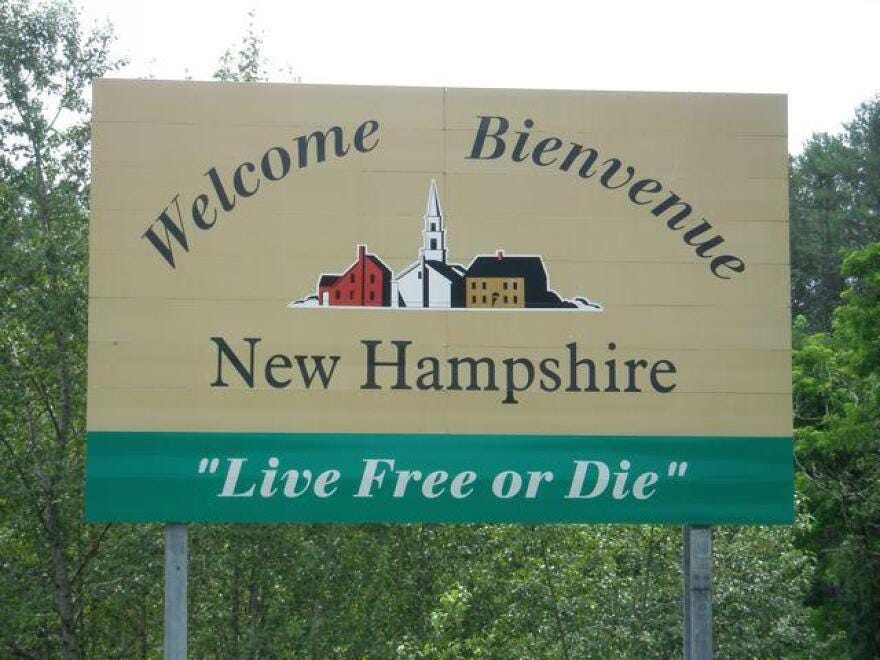
New Hampshire had long stretches of history that were unfairly controlled by outside powers — especially the Massachusetts Bay Colony, the New York colony, and the Crown. Land ownership shifted often based on global or regional political whims. That meant that you could clear a plot of land, put a house on it, and try to begin to farm the rocky soil, only to have someone from several hundred miles away claim all of your hard work as theirs.
One of their earliest industries was timber production, but the Crown claimed all of the tall, straight pine trees for ship masts. If a tree got marked with a broad arrow, the land owner couldn’t cut or sell it. Enforcing this led to the 1772 Pine Tree Riots — and centuries of distrust. You can still get shirts for it: one arm reads, “God’s will be done.” and the other, “Wise Men Company.” The Pine Tree Riots were believed to be the inspiration for the Boston Tea Party.
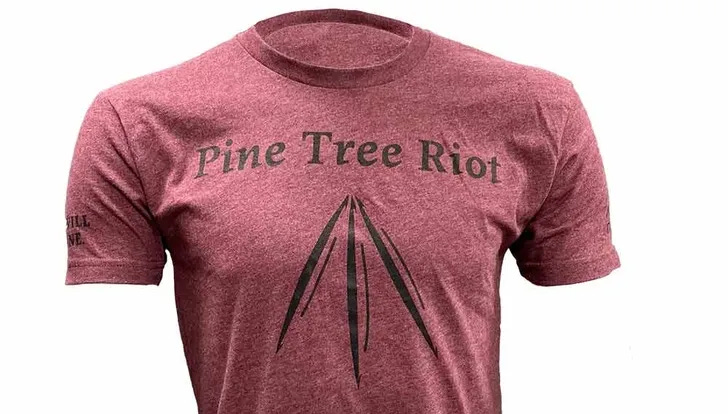
The Crown wasn’t just taxing output: it was pre-claiming the best natural resources across large areas of New Hampshire. The tallest, straightest white pines — often the most valuable asset a landowner had — were effectively off-limits. The only recourse was to circle the wagons and protect themselves locally. Is it any wonder that they had serious trust issues for anyone above the local level?
There were a few exceptions, but very few. Honest people came up from Boston and created a series of mills in Manchester that treated their people so well, they didn’t need to worry about labor unions for many decades. That external partnership created the largest city in the state — which still only has about 100,000 people. If you don’t trust folks, your circle of friends stays small and your local communities do, too. This is still true today. One of the conference attendees mentioned a public hearing where the final decisions were couched in terms of community rivalries that date back to a single football game that happened 50 years ago.
Uncle Sam and Ike Need You!
So, when it came time for Eisenhower and the Feds to offer $9 for every dollar that local agencies spend on a federal interstate system, the rest of the country took the money. There were squabbles about where the interstates should go, especially in some big cities, but the rollout was large scale and fast for such a huge project.
But not in New Hampshire.
Tip O’Neill was probably thinking of New Hampshire when he said, “All politics are local.” NHDOT has six districts, and they all run independently. Decision-making in New Hampshire happens at a community level. That means if you’re going to do anything, there is no large-scale political body that will do the job. You’re going to have to get everyone — and I mean everyone — on board. That takes time.
The first 16-mile segment got built quickly, but that was a coastline connector that reinforced existing transportation patterns. As they started pushing in toward the center of the state, progress slowed dramatically. By the time they got past Manchester and headed toward Concord, sections got built as local concerns were addressed, but it was slow-walked. The Franconia Notch project dragged out well into the 1980s. Ultimately, they stretched the implementation across nearly 50 years for a bare-bones system.
Two Roads Diverged in a Wood…
In other states, the entire community structure reorganized itself around this faster mode. Distance collapses. Trips that would have taken half a day now take an hour. Regions become markets. Movement concentrates into a few high-speed corridors and everything else reorganizes around the speed that is now possible.
- Retail scales up
- Development spreads out
- Local streets become feeders to something bigger
It’s efficient, but it also does something subtle. It disconnects people. You make housing choices based on what’s inside and in the backyard, not the community around you. You go to stores that are too large and too far away to care about what you need or make any relationships with the people who provide the stuff of your life. Your social connections become intentional choices to hang around those like you rather than serendipitous meetings of people who are wildly different. Our tolerance for each other erodes. Along the way, you’re alone. When you arrive, you’re lost in a crowd.

The Federal-Aid Highway Act of 1956 didn’t require every state to internalize the same development pattern, but once the system existed, the incentives were overwhelming: speed, scale and aggregation won over connection and community cohesiveness.
The result is not chaos. It is a highly ordered system that does exactly what it was designed to do: get people places fast. But if you’re getting somewhere fast, everything along the way becomes a blur. The trip becomes an abstraction — origin, corridor, destination — with very little in between that demands attention. Locations only matter if they are directly connected to that system. People only matter if you choose to let them in. You teeter between isolation and overwhelm.
The Road Less Taken
Spend time in parts of New Hampshire, and you can begin to see what might have happened if the national pattern had unfolded differently. The abstraction starts to break down — not everywhere, and not completely, but the fabric of the whole feels different. The interstate system exists there, too, and its influence is real, but it serves the towns rather than dominating and restructuring them. The network never fully collapsed into a single dominant corridor. Instead, movement distributes across a finer-grained web of routes, and those routes remain embedded within the towns, themselves.
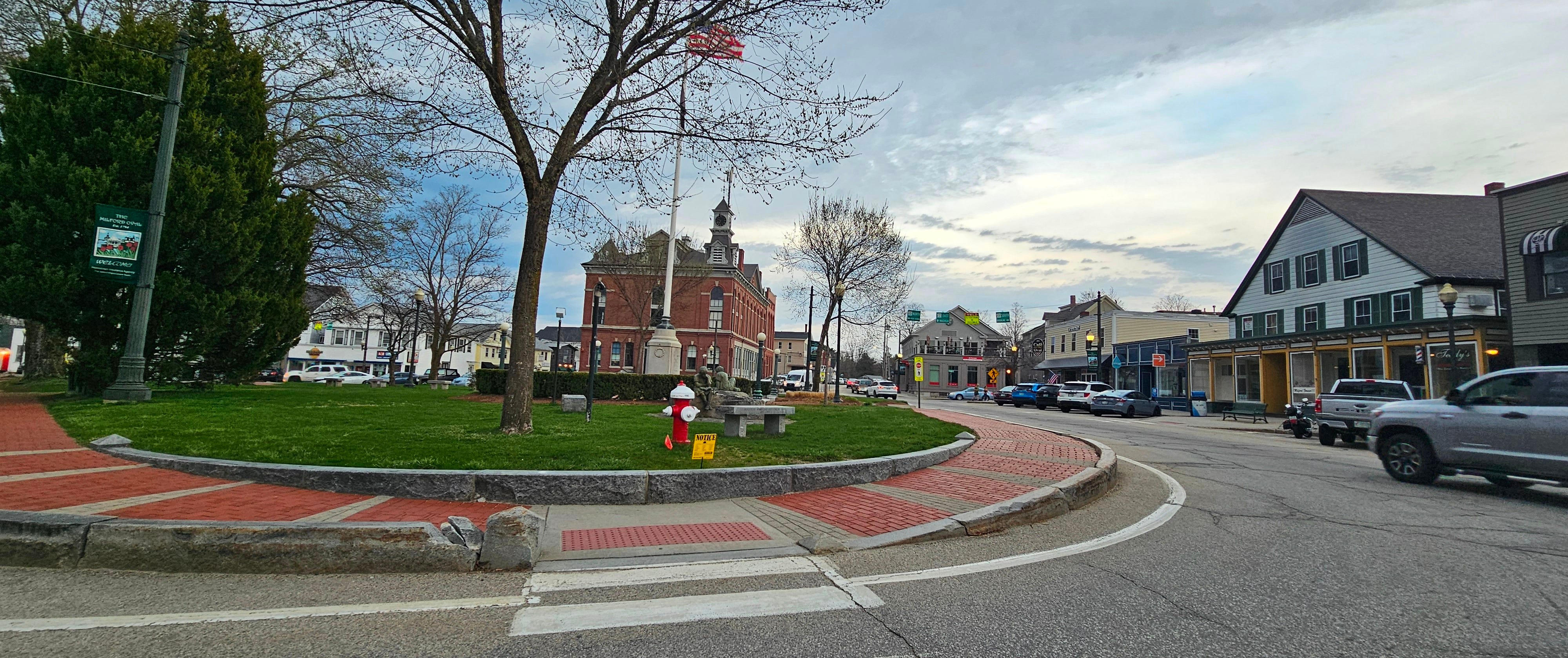
You still need a car — maybe more than we do in our suburbs, but probably not as often. Many of the people live outside of the town, but unlike the rest of middle-America, you have a town to center around. You get Goldilocks levels of attention and relationships: face-to-face town scale and neighbors you recognize, even if you don’t know them all. I was genuinely surprised at how often I’d stumble across a pre-teen on their bicycle on a roller-coaster road with no sidewalks.
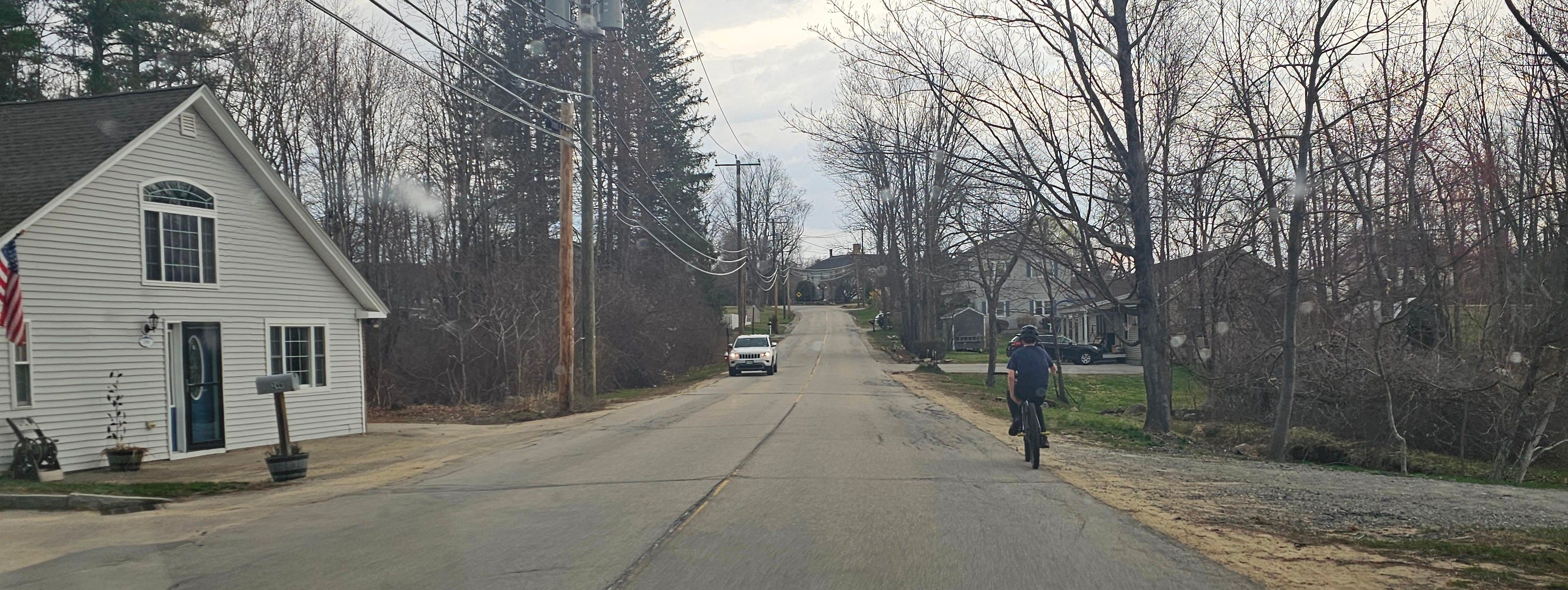
This can get insulated and stultifying. I’ve lived in cliquish rural communities. It’s not all sweetness and light. There are high barriers to trust, but the interactions that build trust are built into the daily fabric of life — a tip of the hat here, a chance meeting in a grocery store aisle, meeting each other’s kids at a tee-ball game. Retail consists of mom-and-pop stores or small chains tailored to meet the needs of their own community. The scale remains small both dimensionally and relationally, so you’re not ping-ponging between isolation and overwhelm.
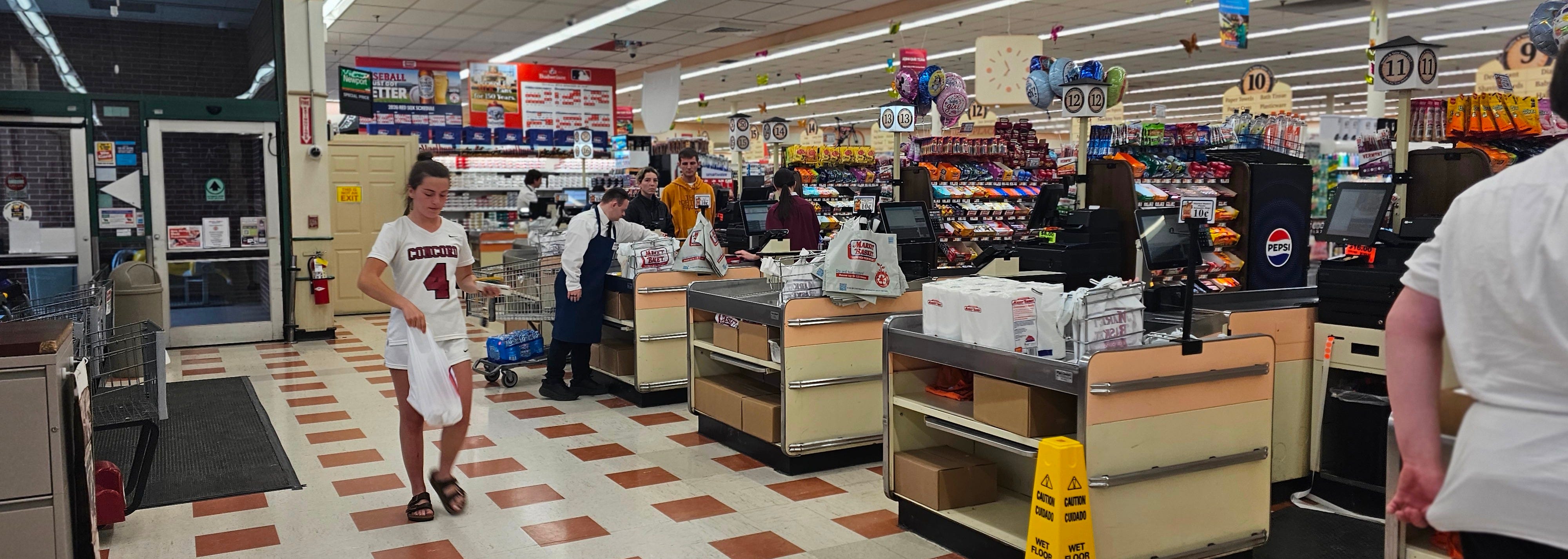
The terrain helps — and may very well create the type of trust issues that kept New Hampshire from becoming the same type of place as the rest of the country. Mountains lend themselves to cultures of honor where self-defense is a DIY affair and egos can run amok, but New England Puritan sensibilities keep the arrogance and bravado in check.
Can We Get Back to Something Like This?
Maybe.
The bar for what we deem a success is low here. We’ll put up with a lot before we want to make it better. For Americans, perfection is not a state to be attained. For us, it means death and finality. If it’s perfect, it can no longer grow or change — but we are perfectly happy if something just works and keeps working. That means Amazon and Walmart can provide functional access to goods that can always beat local networks on price because it’s “good enough.”
Working against this trend is our own national independence streak — an attitude that feels remarkably similar to the self-reliant posture that reigns in New Hampshire. We don’t like being boxed in. As systems begin to enforce control, they lose their market. Look at what happened in April with Claude. The government throws its weight around and the backlash is immediate: best advertising for Claude they ever got. We’re more like a frog in a kettle with corporations, but we will jump out on that one, too.
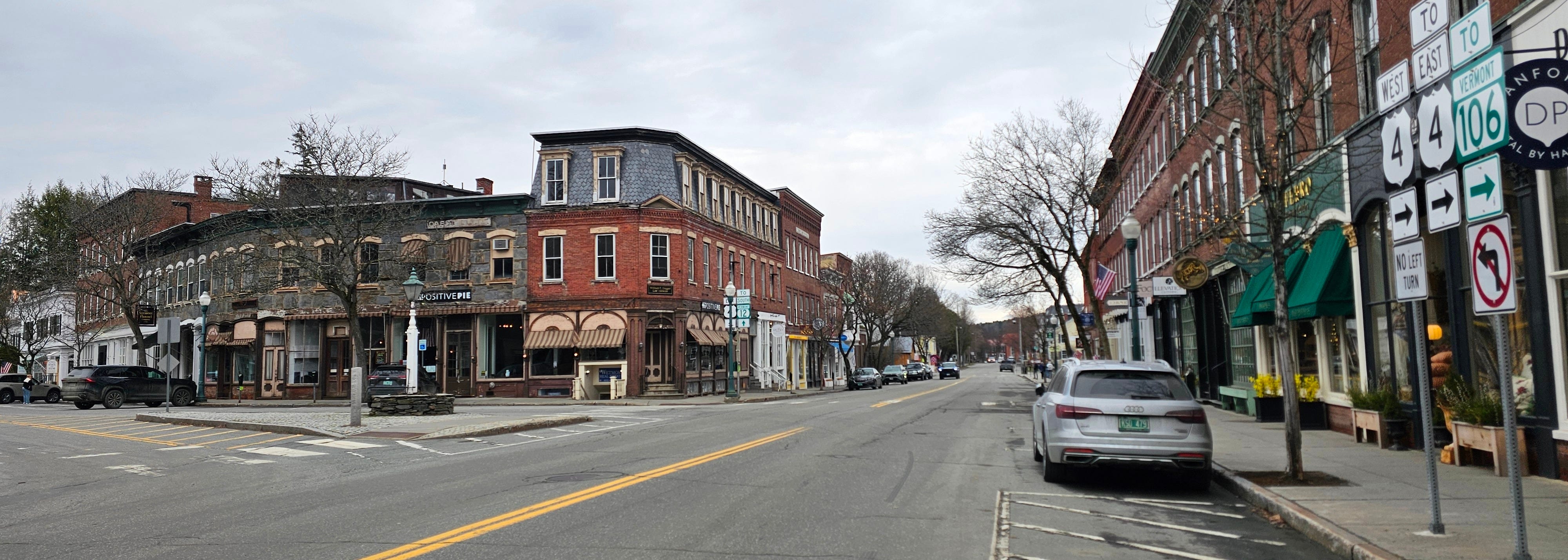
The era we’re in fits the small-scale, distributed model far better than the large-scale systems we’ve created in the last century. Distributed networks use systems as support but aren’t controlled by them. Alignment is unforced and wildly creative. Genuine human interaction can’t be replicated by a computer and therefore becomes the rarest and most valuable of commodities — worth spending extra money on.
There’s 80 years of inertia on the big-scale, suburban model, but it’s changing fast and we’re not far from the tipping point — if we haven’t passed it already. I’m seeing titles like, “Boomers, Millennials don’t want your 3,500-square-foot McMansions.” Walkable communities have a huge price premium. Retail is scaling down in size and distributing throughout the landscape.
Roadway network is harder to transform, but the economics are in our favor. It’s a heck of a lot cheaper to provide snippets of connectivity that create a network than to buy up a bunch of property along an existing roadway — and better for the long-term health of the community. Politically, it’s still a hard sell, but we really can’t afford that much roadway construction, anyway. The better we get at keeping things closer to home, the less we need to deal with congestion. People who walk and bike are healthier, happier, and live longer. They find social networks that give them a reason to live.
If you want to see a better world — one more like the world we could have had — "live local" has to become the theme of our work going forward:
- Improving connectivity
- Scaling down
- Connecting face to face
- Choosing a purchase in person over digital convenience
Can we do this? I don’t know that the old way will continue to work, so we’re going to have to figure it out. I’m seeing it change all the time.
[[divider]]
This article was originally published, in slightly different form, on ProFound City Insights, a Substack run by long-time Strong Towns member Dr. Patricia Tice. It is shared here with permission.
Dr. Patricia Tice has been a transportation engineer, planner, researcher, and speaker for the last 30 years. She is the chief Change Shepherd for the think tank, ProFound Insights, which focuses on incorporating livable transportation ideas into practice. Her research focuses on how urban scale and interaction changes driver behavior, which has far-reaching implications at every scale from face-to-face conflict management on the street to the design of cities, regions, and their transportation systems. She can occasionally be caught at LEGO conventions or be found using LEGO buildings to teach engineers how to design city streets.
%20(1).avif)
%20(1).avif)
%20(1).avif)
%20(1).avif)