What Do Bugs on Bicycles, Vacant Storefronts, and the Loneliness Epidemic Have in Common?

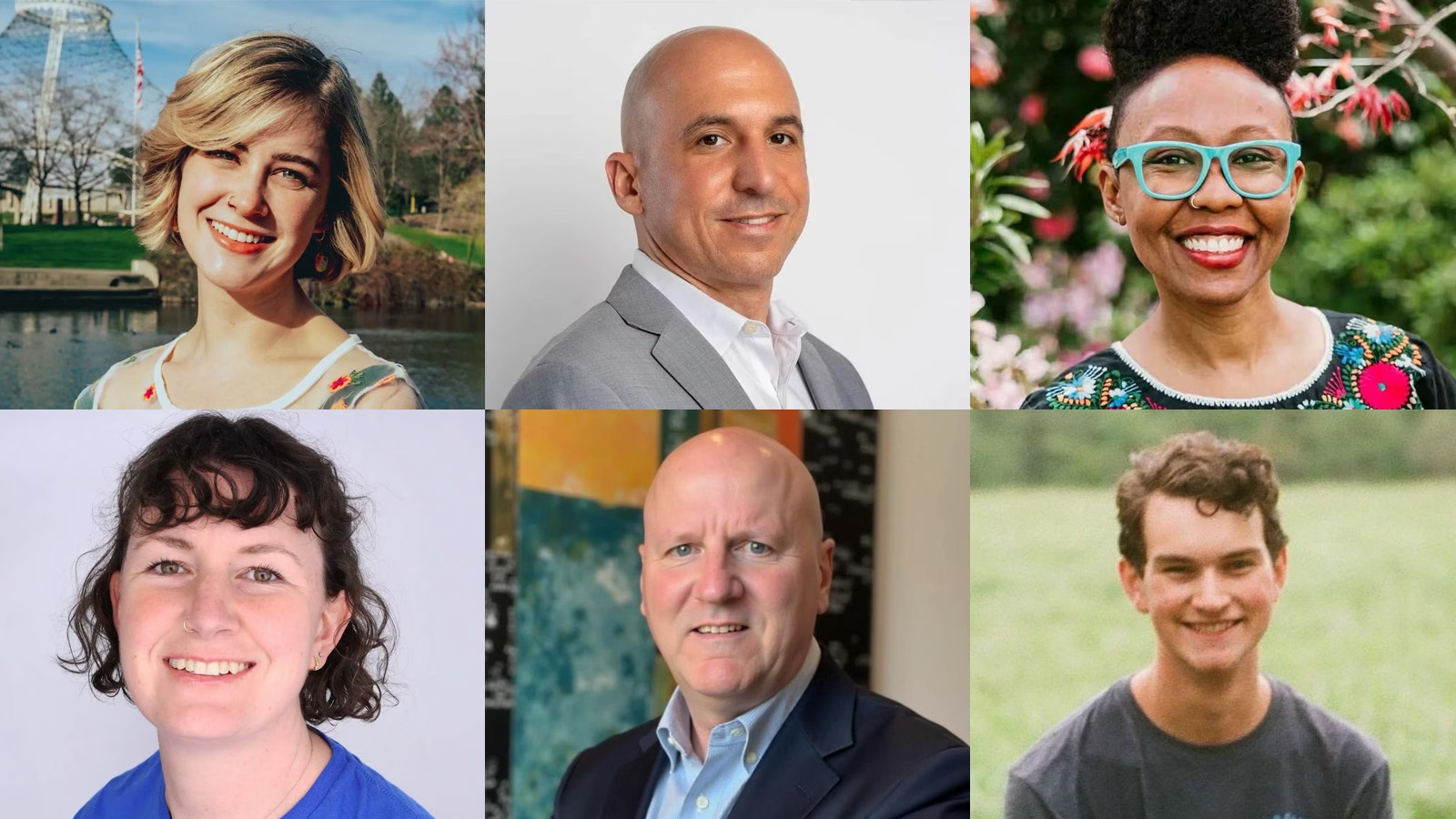
This year's speakers for the Local-Motive Tour.
What do bugs on bicycles, vacant storefronts, pickleball courts, church parking lots and the loneliness epidemic have in common? They’re all part of a bigger conversation about what makes a place work, and what ordinary people can do when it doesn’t.
We've rounded up six podcast episodes featuring Strong Towns experts and practitioners who are approaching that conversation from many different directions. They’re working on problems that don't seem similar on the surface, but often come back to the same fundamental questions: How do we create places where people can flourish? And what can we do today to move them in that direction?
Each of these podcast guests have answers that will help you tackle those questions in your own community. And if you like what they have to say in these episodes, then consider this a preview of the 2026 Local-Motive Tour: a series of online workshops featuring these very same speakers. They'll be diving even deeper into foundational Strong Towns concepts, helping you discover practical strategies to empower local action and invest your community's resources where they’ll have the greatest impact.
Enjoy!
[[divider]]
Sarah Rose: Using Art To Advocate for Street Safety
Sarah Rose is an artist from Spokane, Washington, who uses her art to raise awareness about street safety and the protection of native insects. She is active in her city’s Local Conversation, Spokane Reimagined, and often speaks with local reporters and at city council meetings. She joins this episode of The Bottom-Up Revolution to talk about how the intersection of advocacy and art is driving change in Spokane.
Learn more here about Sarah Rose's Local-Motive session, "Beyond the Bus Stop: Transportation, Organizing, and Storytelling in Spokane."
The Vacancy Problem Artists Can Help Solve
Vacant commercial space can drag down a street, but Evan Snow sees something else: a chance to make room for local artists, small businesses, and community life. As co-founder of Zero Empty Spaces, Snow helps transform empty properties into affordable artist studios and cultural hubs. He explains why closed doors do not help property owners, downtowns, or neighborhoods, and why a temporary use can still give artists a lasting foothold outside the home studio. The model works because it keeps the first step small, giving artists affordable space while helping property owners show what a vacant storefront could become.
Learn more here about Evan Snow's Local-Motive session (where he'll also be joined by Andrew Martineau (co-founder of Zero Empty Spaces), "From Empty to Energized: Turning Vacant Spaces Into Creative Community Assets."
Beating the Loneliness Epidemic, One Step at a Time
Adult friendships are difficult. A big part of that is our built environment, which is often designed in a way that stifles social connection instead of supporting it. Kat Vellos is an author, facilitator, and connection coach who’s working to change that. In this episode of The Bottom-Up Revolution, she discusses the importance of community building, ways to redesign our built environment, and other steps residents and local leaders can take to help their community thrive.
Learn more here about Kat Vellos's Local-Motive session, "4 Ways to Turn an Anonymous Neighborhood Into a Village."
Fighting for Safe Streets in America’s Most Dangerous City
Memphis, Tennessee, was ranked the #1 most dangerous metro area by Smart Growth America in 2024. That’s not stopping Kelsey Huse, a safe streets advocate and grad student studying city and regional planning. She’s tackling the problem head-on by analyzing car crash sites, helping launch a city-wide advocacy coalition, and raising awareness for safer infrastructure online. In this episode of The Bottom-Up Revolution, Huse shares the inside scoop on Memphis’s dangerous design and how she’s working to change it.
Learn more here about Kelsey Huse's Local-Motive session, "Making Mobility Visible: Transportation Advocacy, Social Media, and Organizing in Memphis."
What Pickleball Revealed in a Rural Town
Van Buren, Maine, had a problem no town wants: it owned more than half of its downtown buildings through tax acquisition. When Luke Dyer became town manager after a long career in law enforcement, he was facing vacant storefronts, deteriorating buildings, flood-damaged land, and a downtown that had lost traffic after the port of entry moved away from Main Street. In this episode, Dyer shares how Van Buren began putting buildings back into productive use, turning an underused ice rink into pickleball courts, growing trees for Main Street in a community greenhouse, and converting its old town office into a business incubator.
Learn more here about Luke Dyer's Local-Motive session, "Doing More With What You Have: Lessons from Van Buren, Maine."
Building Community On Church Land Again
Eli Smith, director of the Faith-Based Housing Initiative, joins the show to talk about churches turning underused land and aging buildings into housing and everyday community spaces. He explains how his team helps congregations understand their property, imagine specific projects, and gain the language and tools they need to work with developers, lenders, and local officials. On this episode of The Bottom-Up Revolution, Smith digs into the tension between commuter churches and a more rooted parish model, and why thoughtful design often leads congregations beyond a standard apartment block toward pocket neighborhoods and shared spaces.
Learn more here about Eli Smith's Local-Motive session, "Strong Churches, Strong Towns: Faith-Based Housing as Incremental Development."