Crystal City and the Limits of Master-Planned Urbanism
.avif)
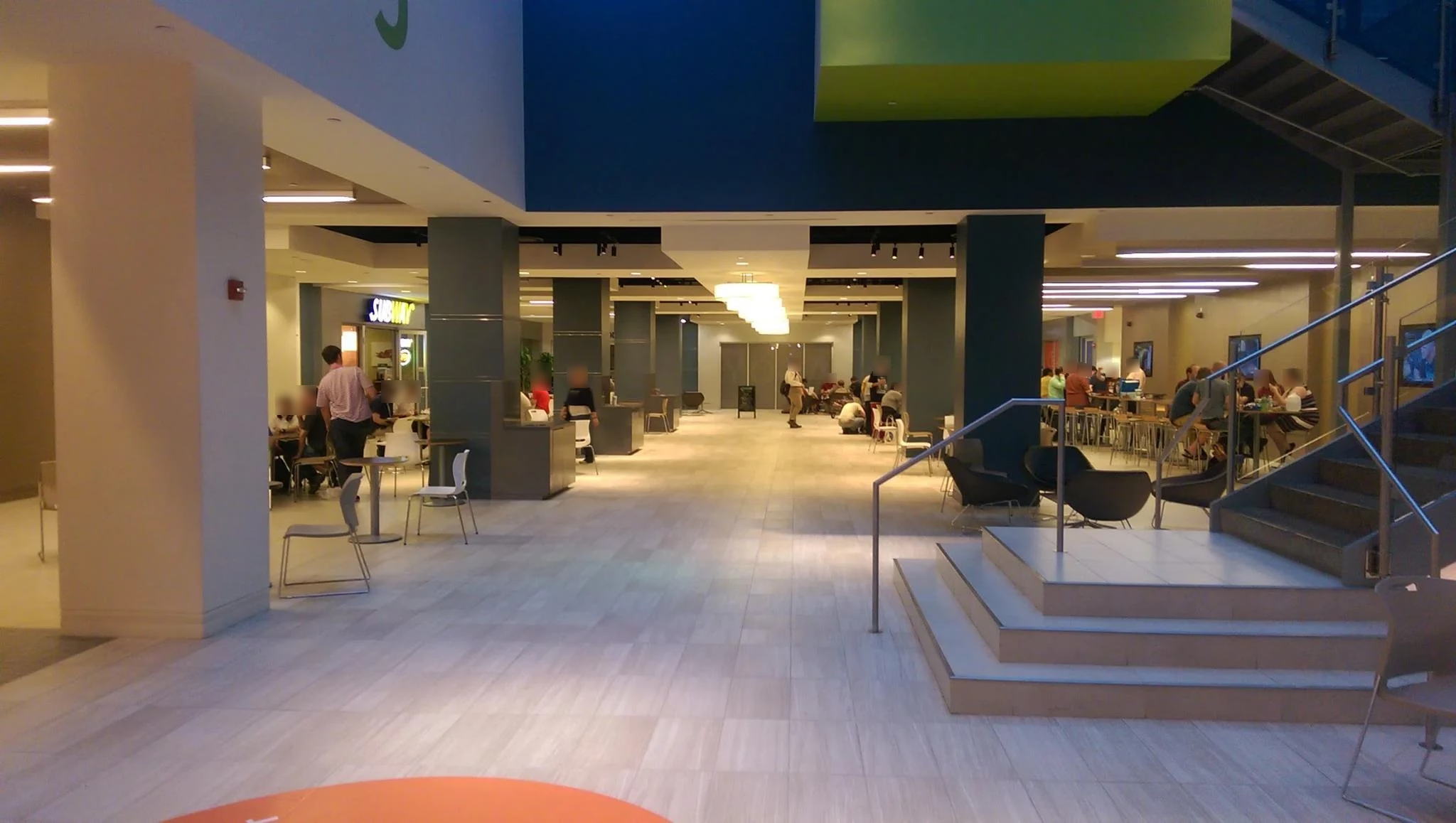
The Landing: a popular Crystal City gathering place back when this photo was taken in 2016. (Photo by Bharat Ponnaluri)
%20(1).avif)
%20(1).avif)
%20(1).avif)
%20(1).avif)
Crystal City, Virginia, is often held up as a model of large-scale, transit-oriented development. But despite billions in investment and decades of planning, it has struggled to produce something essential: places where people actually want to gather.
This isn’t an accident. It’s the predictable result of how we approach development. Crystal City shows how even well-intentioned master-planned projects can fail to create true “public spaces,” and why bottom-up action is important for creating and maintaining local public spaces.
Locked Into a 40-Year Plan
Large-scale development started in Crystal City in the 1960s by the Charles E. Smith company. Eventually, that landlord would end up owning most of the nonresidential property in Crystal City. They were quoted as saying, "How many men get to start with a blank sheet of paper and create a city?" It took years for the landlord to realize they had built a community, not just a city, and attempt to make community amenities.
In the 1970s, the landlord built a large underground mall known as the Crystal City Underground (or “the Underground”), with over a hundred retailers and a variety of restaurants. While the mall did support small business tenants, their existence was based on a shaky foundation of traffic from office workers. In the early 2000s, however, Crystal City started to lose many large office tenants that employed more than a third of its workforce. Stores in the Underground consequently started to close as they did not have enough foot traffic from remaining office workers and residents.
Arlington County hired an urban planning firm to create an updated plan for Crystal City. The plan was adopted in 2010 as the Crystal City Sector Plan, and was seen as a 40-year blueprint for how Crystal City would be developed.
This sector plan emphasized a focus on large developments with buildings up to 300 feet tall, 20,000 jobs, and 14,000 new residents in an area that is approximately 0.4 square miles. Recent high rise developments have demonstrated that the plan is being followed. At the same time, input from locals has been ignored, and empty space remains undeveloped.
The requirements of the sector plan incentivize compact developments that cost millions of dollars. Also, there is no process to modify the 40-year sector plan. These two factors have caused significant challenges for bottom-up, incremental change.
When Community Emerges … and Gets Pushed Out
Although Arlington County prioritized large-scale, top-down developments for Crystal City, bottom-up action has created public spaces in the Crystal City Underground that residents actually want to spend time in. Interference from the landlord, however, has threatened the success of these spaces.
One of my personal favorite third spaces in the Underground was The Landing, a space where locals hosted informal events. Over time, around 100 people began gathering at The Landing on Friday nights between the board game nights I hosted and other groups. People would also often meet there on evenings and weekends.
Unfortunately, when the landlord removed the tables and chairs in 2024, we didn't have any recourse. The landlord did not communicate clear plans for the Underground and was unwilling to work with community members to support alternative public spaces in Crystal City. Small businesses in the Underground were also forced to close around the same time.
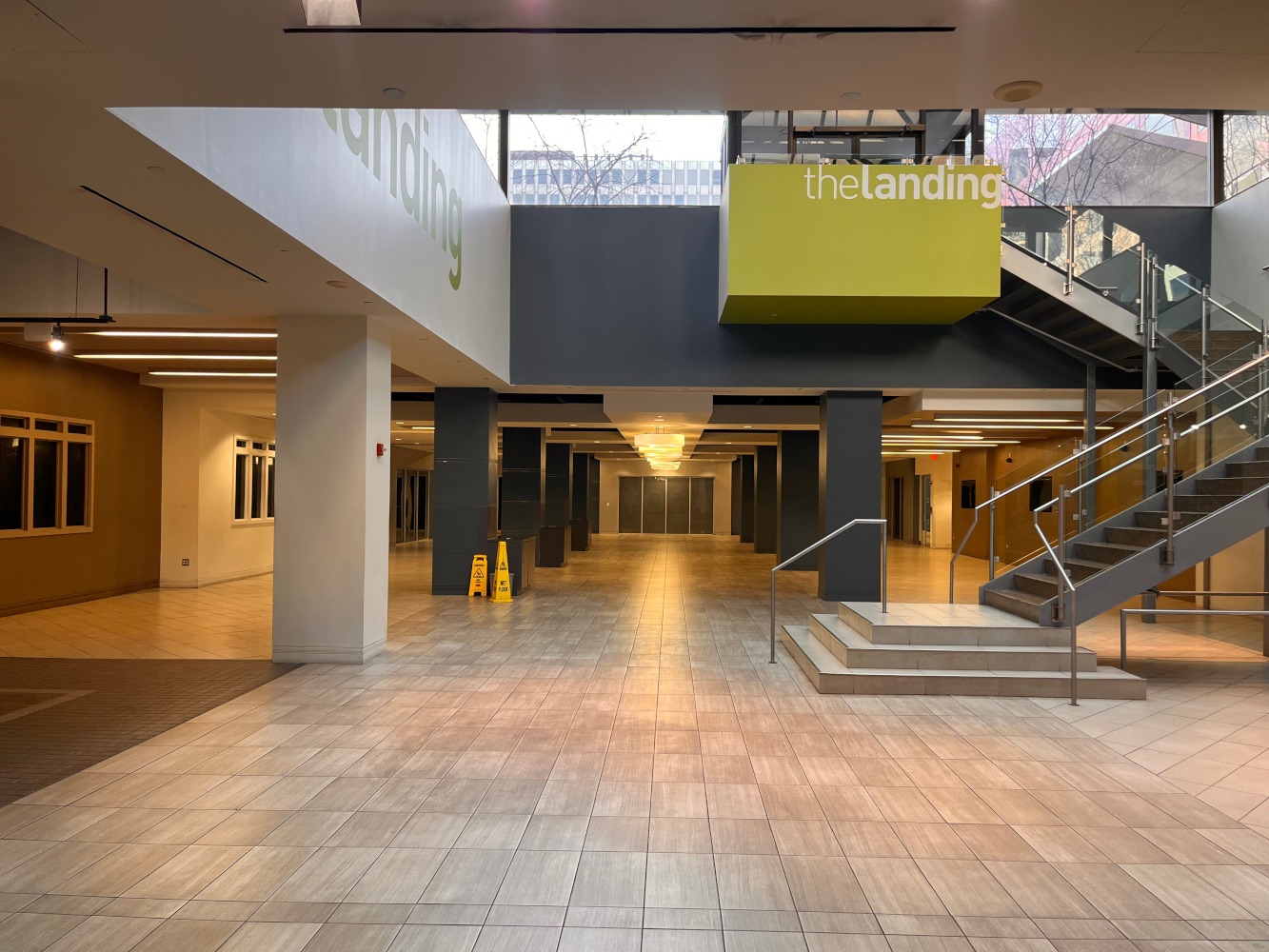
When I lived in Crystal City, I enjoyed being able to walk to The Landing and meet people there. The Landing also encouraged a culture of self-organizing and community ownership, which was reflected in the board game events I attended there. When an official host wasn't able to be there, other regulars, including myself, made sure things ran smoothly.
In 2016, Arlington County opened a pop-up library, called Connection Library, in the Underground after getting input from local residents. Local advocacy contributed to Connection staying open until 2019, although the original plan was to keep it open for nine months. This included the Crystal City Civic Association making a formal request to the county, and individuals reaching out to the Arlington County Board.
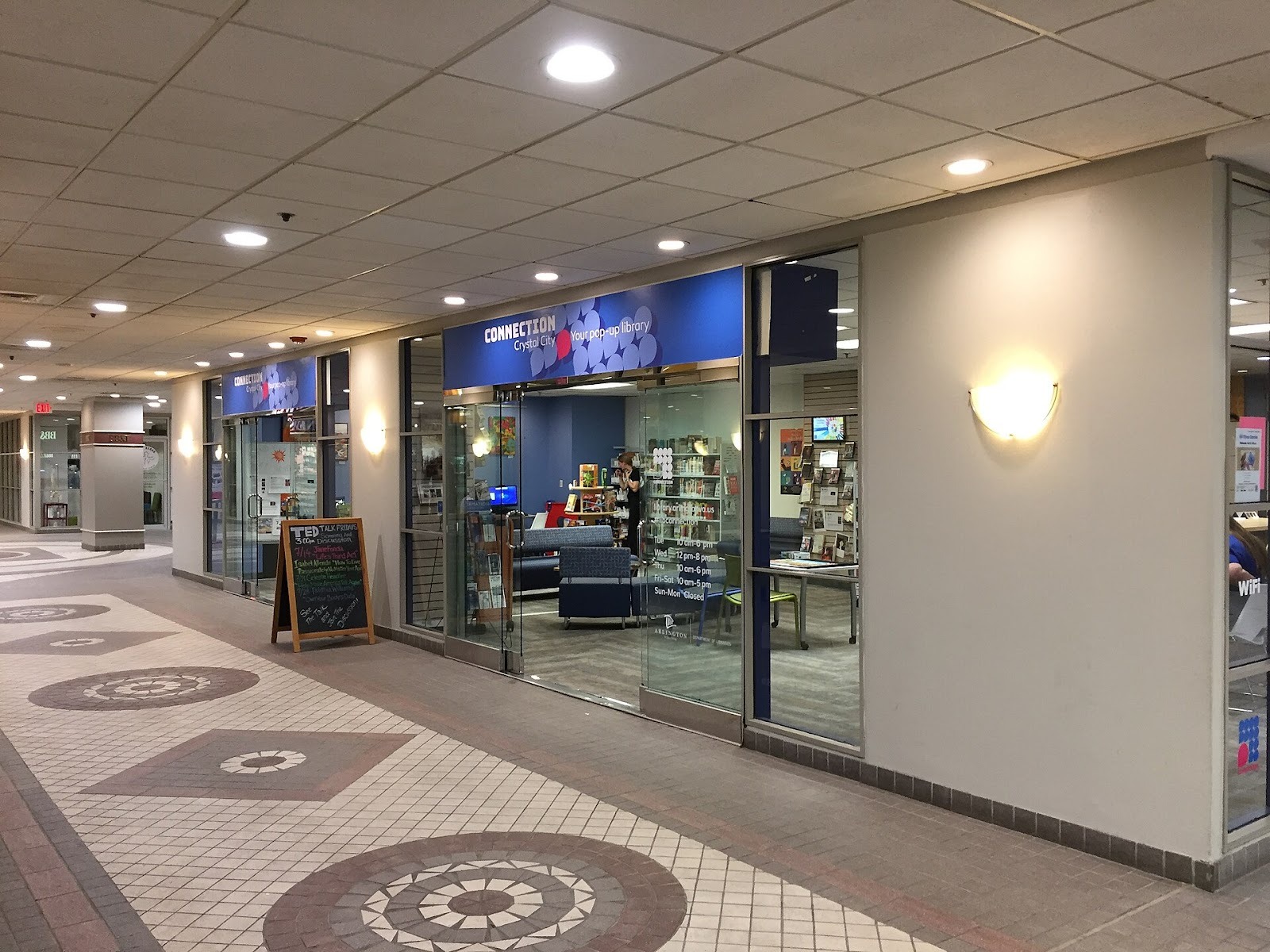
But then Connection closed in December 2019, because decreased attendance caused Arlington County to decide paying for library staffing was not a priority. A restaurant and makerspace nearby closed, which caused foot traffic to decrease. The landlord did not work with Connection staff to draw additional foot traffic or move the library to another available space for rent.
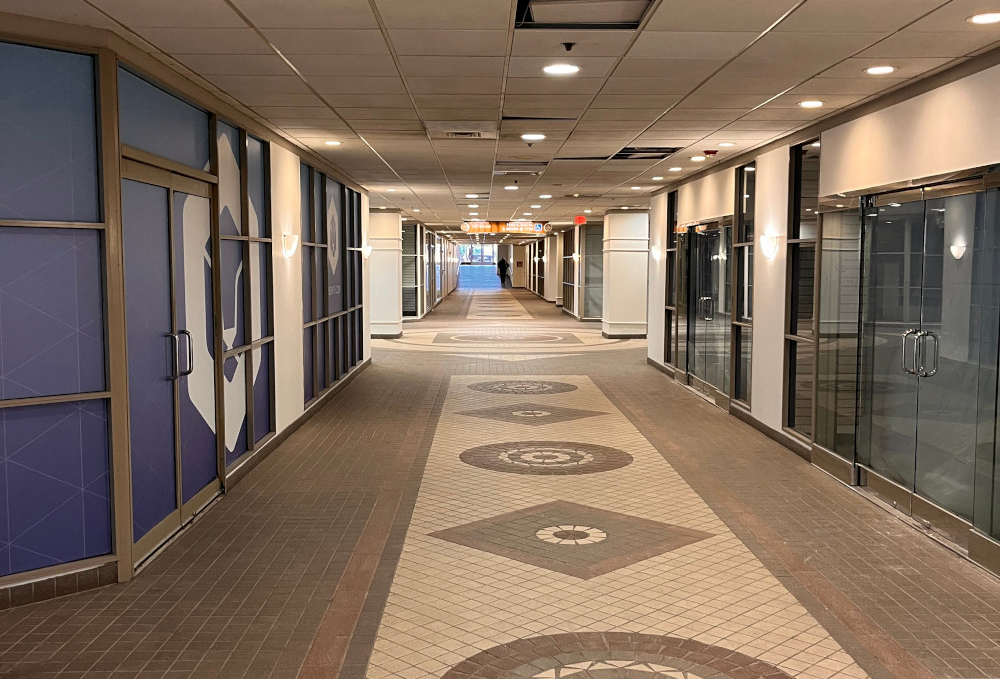
In 2022, the landlord agreed to build a new library as part of another development. However, the landlord was able to cancel the library plans by paying Arlington $5.8 million.
The Financial Case for Bottom-Up Growth
Community spaces make people more invested in the quality of their neighborhoods. They bring people together, helping form partnerships that lead to small, incremental improvements. Those same relationships can support the creation of small businesses, which generate jobs and build local wealth.
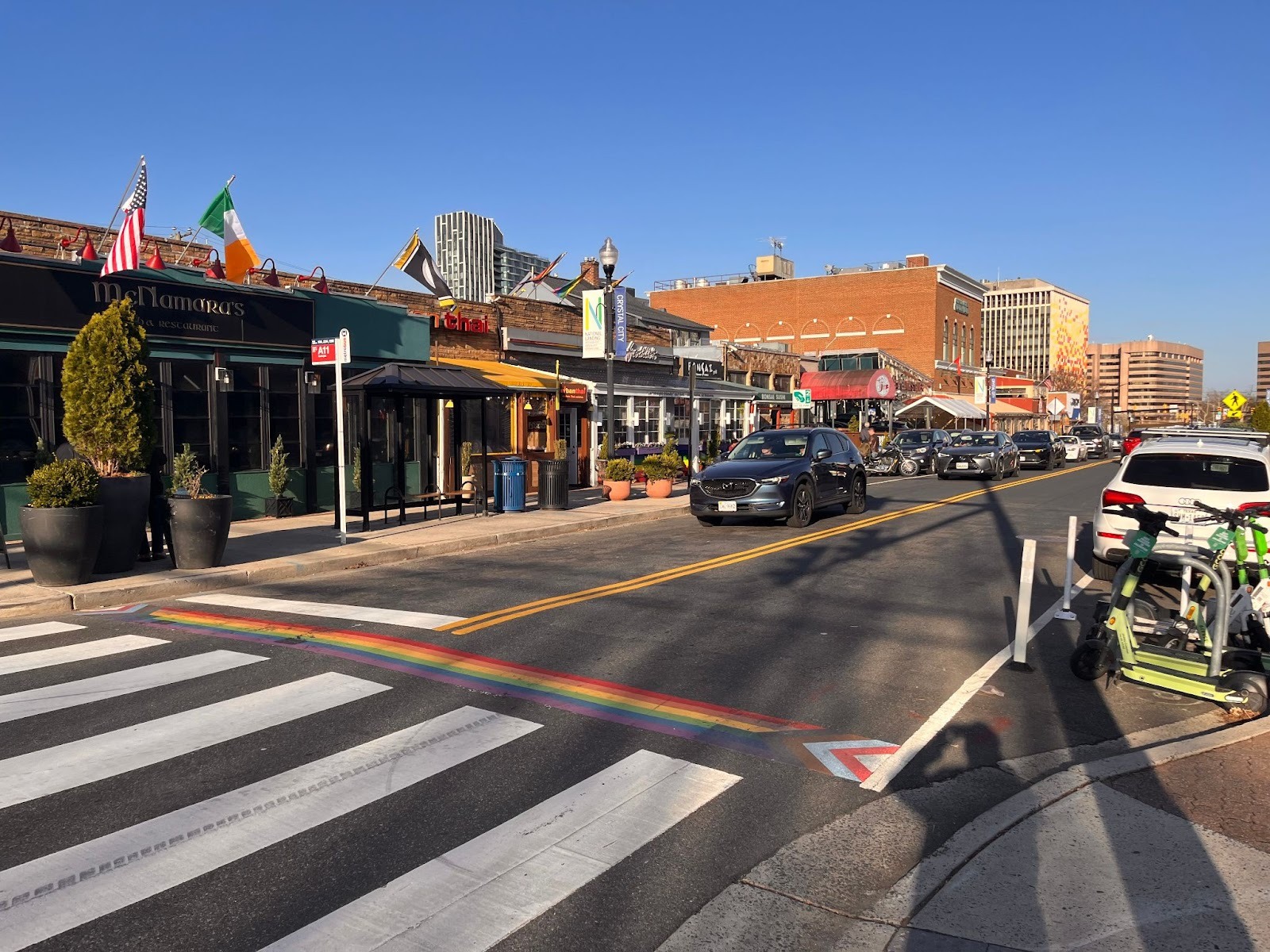
This kind of localized investment tends to be more stable than relying on a single large landlord, especially one that doesn’t live nearby. You can see this in the long-running success of the locally owned businesses along Crystal City’s 23rd Street.
By contrast, Arlington County has become increasingly dependent on large-scale development for its tax base, and that’s caused revenue challenges. In fiscal year (FY) 2025 and FY 2026, 56% of Arlington County's tax revenue came from property taxes, and that number is forecasted to go up to 57%. At the same time, the county’s proposed $1.69 billion FY 2027 budget is slightly smaller than the previous year, reflecting rising costs and slow revenue growth.
Recent assessments highlight the challenge. Property values increased by just 1.1% in January 2026 (the third consecutive year of slowing growth) while inflation reached 2.7%, with many services rising even faster. Meanwhile, homeowners are paying more: the average tax and fee burden is projected to reach $9,253 in FY 2027, up 55% from FY 2017.
Taken together, these trends point to a fragile model. When local governments rely heavily on large developments for revenue, they become vulnerable to slowdowns and rising costs, while missing the more resilient returns that come from widespread, small-scale investment.
Crystal City should move away from this overreliance on top-down development and toward a pattern that supports bottom-up growth. At the same time, any shift will need to account for the county’s current dependence on property tax revenue.
Concluding Thoughts: Recommendations for Local Officials and Residents
If Crystal City is going to become a place where people actually want to spend time, both local officials and residents have a role to play. Small, incremental changes can make a big difference, but only if the system allows them.
1. Reconsider how taxes are structured to encourage productive use of land.
Crystal City has indoor spaces that have been vacant for years, empty plots of land, and underutilized parking lots.
In Arlington County, property taxes are based on assessed market value. In practice, this penalizes owners who create, improve or maintain their buildings. Property owners may leave spaces vacant or hold out for higher rents, since potential rental income is reflected in property values. Maintaining a high value is important to protect the property’s value as collateral and prevent banks from foreclosing.
Arlington County should move to decrease tax rates on privately-created building values while increasing the rate on publicly-created land values. Increasing taxes on land while reducing taxes on improvements would encourage property owners to either put their spaces to productive use or sell them to someone who will. Arlington County already assesses land and building values separately, so this change would build on an existing system.
Over time, this approach could lower rents and reduce the need for large public spending on housing affordability. The proposed FY 2027 budget includes $98.1 million for housing affordability — an indication of how costly the current system has become.
(This article by Rick Rybeck gives some additional suggestions on how to advocate for changing the tax system!)
2. Use public spaces, and make that use visible.
Regular activity in public spaces signals demand. When people gather consistently, it becomes harder for property owners and local officials to ignore the need for places to meet, linger, and connect.
3. Advocate for local community spaces in conversations.
Advocacy helps people realize that spaces they walk by are community spaces. I learned The Landing in the Crystal City Underground was a community space through a conversation with a friend. I had walked by The Landing earlier in the year, and did not realize it was a popular site because it was almost empty at that time of day.
Word of mouth is a powerful force here: conversations help people see what’s possible, and help build support for keeping these spaces active and accessible.
4. Support community pop-ups and parks in empty spaces.
Pop-ups, temporary parks, and informal gathering spaces can turn underused areas into something meaningful with relatively little investment.
These small interventions create opportunities for people to test ideas, build relationships, and gradually improve their neighborhood without waiting for large-scale redevelopment.
[[divider]]
This article was originally published, in slightly different form, on Create Third Places. It is shared here with permission.
Bharat Ponnaluri is a former software engineer and public space advocate who lives in Washington, DC. He has been running regular board game events since 2021. He started createthirdplaces.org to promote bottom-up public space advocacy.