When the County Asks the City to Take Over a Road
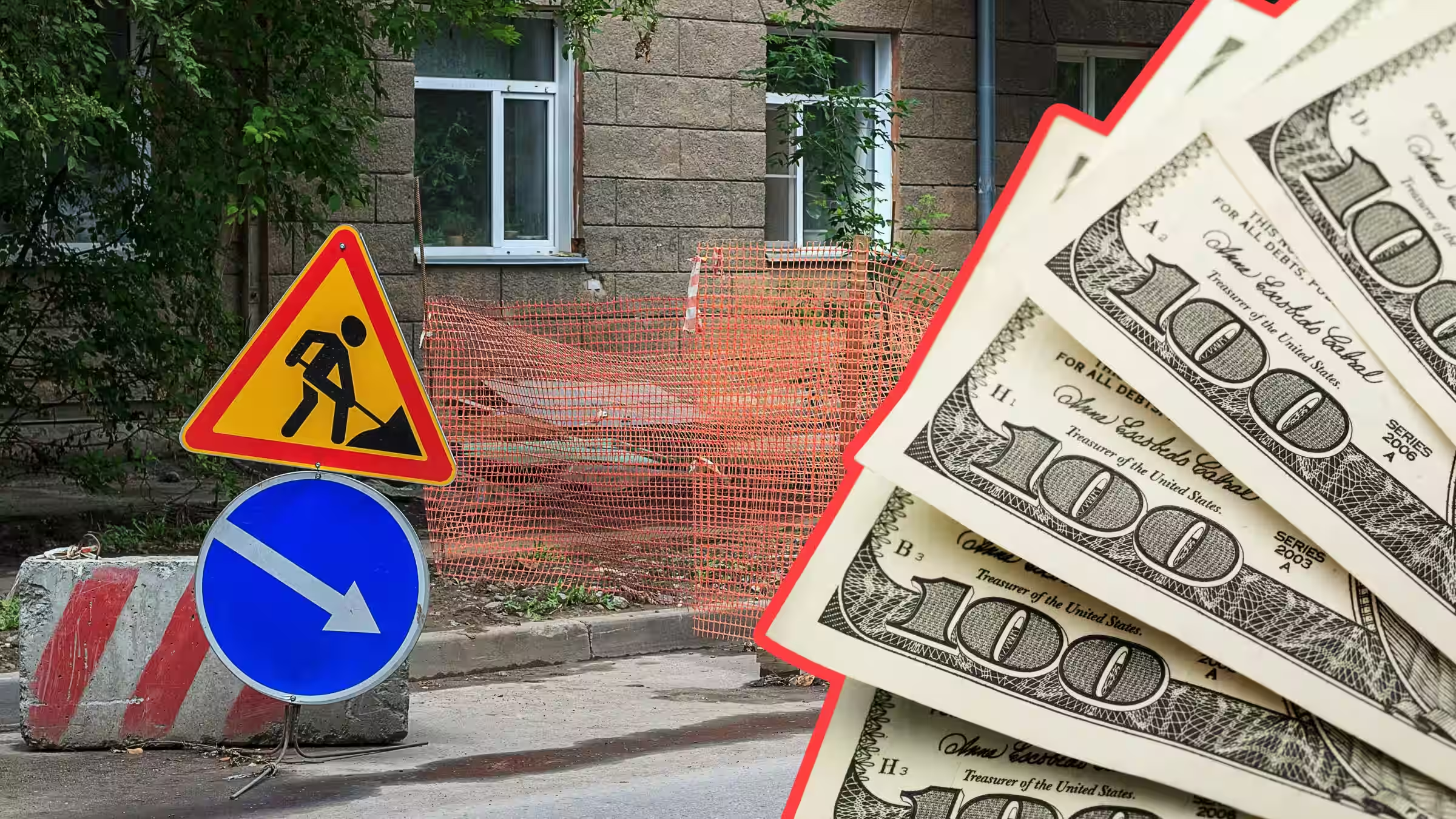
City leaders occasionally receive a proposal that sounds simple on the surface: the county would like the city to take over maintenance of a road within city limits.
Sometimes the request grows out of frustration. The city wants to slow traffic, add crosswalks, narrow lanes, or plant street trees, but the county owns the road and controls its design standards. Other times, the motivation is administrative. A road inside city limits, the thinking goes, probably belongs under city jurisdiction.
Either way, the question eventually appears on a council agenda:
Should the city accept the right-of-way transfer?
The answer often feels obvious. But accepting a road is not just an administrative decision; it’s a long-term promise to maintain that infrastructure for decades to come.
Why Cities Want the Transfer
For many communities, gaining control of a road can feel like progress.
When a county owns the roadway, the city may have limited influence over lane widths, speed targets or intersection design. Counties often treat these corridors primarily as transportation routes designed to move vehicles efficiently between destinations.
Cities tend to see the same corridor differently. The road may run through downtown, past local businesses or alongside homes and schools. It’s designed like a highway and less like a street, which is a place where people walk, park, gather and do business.
Taking ownership can allow a city to align the design of the street with the surrounding land uses and community goals. Crosswalks, narrower lanes, street trees, on-street parking and other design choices suddenly become possible.
From that perspective, accepting the road transfer can feel like reclaiming control over an important public space.
But control is only one side of the equation.
What Ownership Actually Means
Every mile of road carries long-term obligations.
Pavement eventually fails. Stormwater systems need maintenance. Signals and lighting must be replaced. Sidewalks crack. Trees require care.
These costs rarely arrive all at once. They accumulate gradually over decades. But once a city accepts ownership of a street, those obligations become permanent.
Infrastructure isn’t simply a public service; it’s a long-term financial commitment.
A road transferred today may require major pavement replacement in 25 years. The pipes beneath it may last 50 years or more. The street design may shape development patterns for even longer.
Accepting a road means accepting responsibility for maintaining it through those cycles.
The Blind Spot in Many Road Transfers
In many cities, these decisions are made without fully understanding the long-term financial implications.
A road transfer might appear on a council agenda as a relatively routine item. Staff may frame it as a logical jurisdictional adjustment. After all, the road is already inside city limits.
But the underlying question often goes unexamined: Can the city sustainably maintain this street over time?
One way to approach that question is to look at the land the road serves.
Streets are supported by the economic activity that surrounds them. The homes, businesses and buildings along a corridor generate the tax base that ultimately pays for infrastructure maintenance.
If the adjacent land produces strong value, the community may have the financial capacity to care for the street over time. If the surrounding land produces very little value, such as large parking lots, low-density commercial strips or auto-oriented development, the long-term math becomes far more difficult.
Without examining that relationship, cities can find themselves accepting infrastructure obligations that the surrounding land cannot realistically sustain.
Control vs. Stewardship
This tension appears often in local decision-making.
Cities understandably want control over streets that run through important neighborhoods or commercial areas. Local control can unlock better design decisions and help shape more productive places.
But control alone is not the goal.
The deeper responsibility is stewardship.
Owning a street means committing future public resources to its maintenance and renewal. It means ensuring that the surrounding land and local economy are capable of supporting that obligation over time.
The decision to accept a road transfer, then, should not be driven solely by the desire for control. It should be guided by a more fundamental question:
Can this community responsibly own and sustain this street for the long haul?
The Council You’ll Never Meet
Somewhere down the line — 10, 20, maybe 40 years from now — a future city council will sit down to approve a budget.
They will look at a road that is failing. Pavement will be cracking. Pipes may be deteriorating beneath the surface. Sidewalks will be uneven and long overdue for replacement.
That council won’t remember the meeting where the road transfer was approved. They won’t know whether the decision felt routine or controversial at the time.
They will simply inherit the obligation.
Across the country, conversations about road ownership are happening quietly in council chambers and public works departments. They rarely make headlines, but they shape the financial trajectory of communities for decades. Treating these decisions with greater clarity and discipline may be one of the most important (and overlooked) steps cities can take toward building financially resilient places.
Every road a city accepts today is, in effect, a promise to that future council. A promise that the community believed it could sustain the street when the bill eventually came due. A promise that the land it serves would produce enough value to support its upkeep.
This isn’t an argument that cities should refuse road transfers. In the right circumstances, local ownership can help transform an auto-oriented corridor into a safer, more productive street.
But it does mean these decisions deserve more than a routine vote.
When a county proposes transferring a road, the real question isn’t about jurisdiction. It’s about stewardship, and whether the city can responsibly own this street for the long haul.
Edward Erfurt is the Chief Technical Advisor at Strong Towns. He is a trained architect and passionate urban designer with over 20 years of public- and private-sector experience focused on the management, design, and successful implementation of development and placemaking projects that enrich the tapestry of place. He believes in community-focused processes that are founded on diverse viewpoints, a concern for equity, and guided through time-tested, traditional town-planning principles and development patterns that result in sustainable growth with the community character embraced by the communities which he serves.
%20(1).avif)
%20(1).avif)
%20(1).avif)