Are Federal Transit Grants Hurting, Not Helping, Public Transportation?

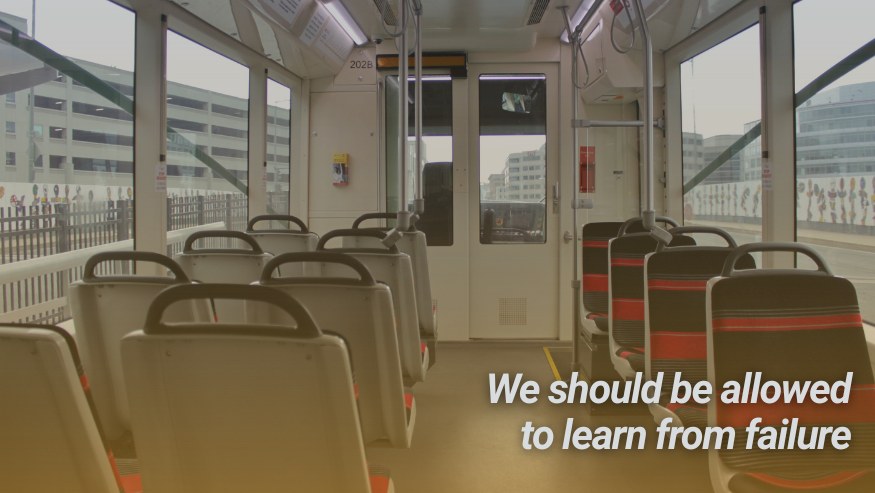
America’s transit systems are shaped by the tradeoffs inherent in top-down federal funding. The federal government offers money for big, capital-intensive transit projects, but that funding comes at a high cost in terms of flexibility and adaptability.
These programs pressure cities to make high-stakes bets on projects that can't be undone if they fail. The terms of these grants require repayment, trigger lawsuits, or spark political fallout for incomplete projects. Rather than support adaptation, this structure leaves cities stuck, locked into long-term obligations that make failure permanent and course correction impossible.
The consequence isn’t just financial inefficiency. The transit systems these projects were meant to improve often end up degraded, and the broader networks they were supposed to catalyze never materialize. Many of these projects are envisioned as the first phase of a larger, integrated transit system — intended to build ridership, support land use shifts, and justify future expansions. When the initial investment underperforms, the entire vision collapses. Instead of creating momentum, these stranded projects create drag, diminishing network effects and eroding the case for continued investment.
Compounding the harm, the public comes to associate transit with waste and dysfunction, sapping support for future investments and undermining the long-term credibility of transit as a mode of transportation.
In this case study, we examine three projects — two trapped by federal strings and one that avoided them.
Project 1: Westside Express Service (WES) — Portland, Oregon
The Sunken Cost Zombie
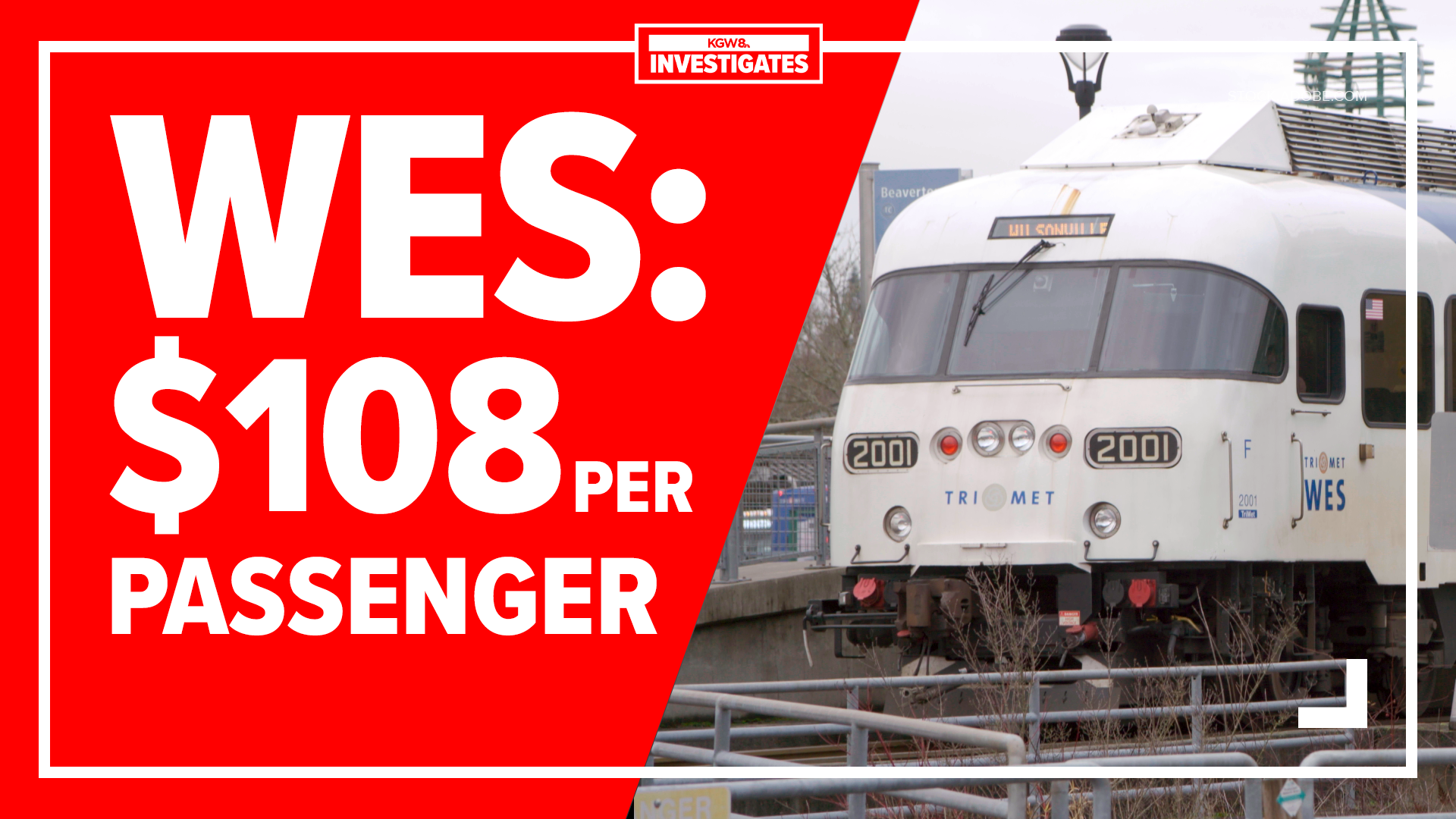
TriMet’s Westside Express Service (WES) was launched in 2009 to connect Beaverton and Wilsonville with a suburban commuter rail. It never came close to its forecasted 4,000 daily riders. In fact, even pre-pandemic, ridership stagnated. By 2020, service was cut to just five round-trips a day. By 2024, daily ridership hovered below 250 actual users.
And yet the line continues to operate, at $108 per rider — nearly 10 times more expensive than bus or light rail service. The reason? TriMet is locked into a 50-year agreement with the Portland & Western Railroad and bound by federal funding terms that would require repayment if the service were shut down.
Originally pitched as a smart reuse of existing freight lines, WES now operates through farmland, wetlands, and disconnected job centers, with service designed around where the tracks already were — not where people wanted to go.
“There’s a fallacy known as the 'Sunk Cost Fallacy,' which is that we’ve already put all this money in and we can’t stop now. My response is: yes, actually you can.” — John Charles, Cascade Policy Institute
Instead of being empowered to fix its mistake, TriMet is forced to keep it on life support. It's a federally mandated zombie.
Project 2: Northstar Commuter Rail — Minneapolis to Big Lake, Minnesota
A Subsidy to Nowhere
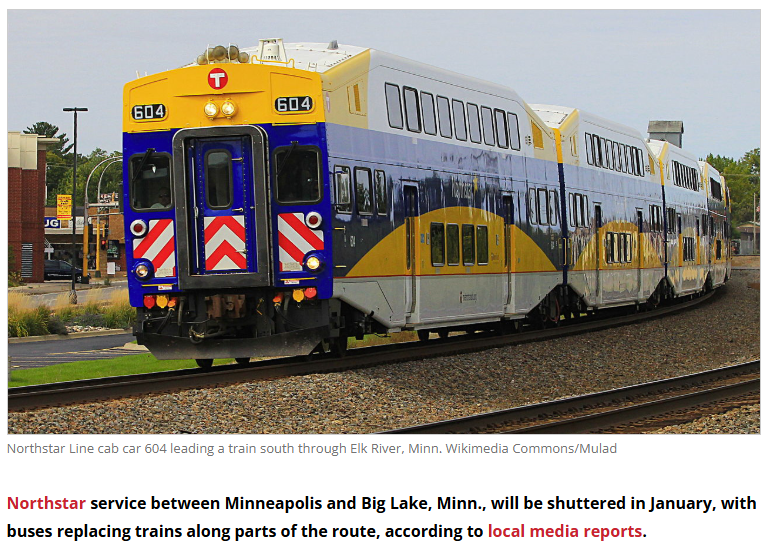
Launched in 2009 with $317 million in construction costs, the Northstar Commuter Rail was built as a compromise: Truncated to 40 miles to qualify for federal capital grants, Northstar abandoned its original goal of reaching St. Cloud. Federal grants ultimately paid $156.8 million, making up half the budget.
Even at its peak, Northstar barely reached 2,800 daily rides. By 2025, it averaged just 400 weekday riders while consuming $16 million annually, over 2.5% of Metro Transit’s total budget. Most stations are surrounded by low-density development, making access car-dependent.
The project was originally sold as a way to reduce automobile congestion and spur intense development near the stations, neither of which has occurred. Instead of fostering walkable, transit-oriented development, the line continues to serve areas built almost exclusively for automobile travel. Northstar has failed to catalyze the broader transformation it promised. In a post-pandemic, hybrid-work world, the corridor's justification has evaporated.
Worse, Northstar has become a symbol of transit inequity. It diverts resources from bus routes that serve lower-income neighborhoods in the urban core, places that not only have higher demand for transit but also concentrate more jobs, services, and riders who rely on frequent, dependable service. Yet state officials hesitate to cancel Northstar outright because it would trigger repayment of up to $85 million in federal funds.
The agency has studied bus conversion. The legislature has introduced shutdown bills. But still, Northstar rolls on, not because it works but because the federal government made quitting too costly.
Project 3: DC Streetcar — Washington, D.C.
The Ability to Admit Something Isn't Working
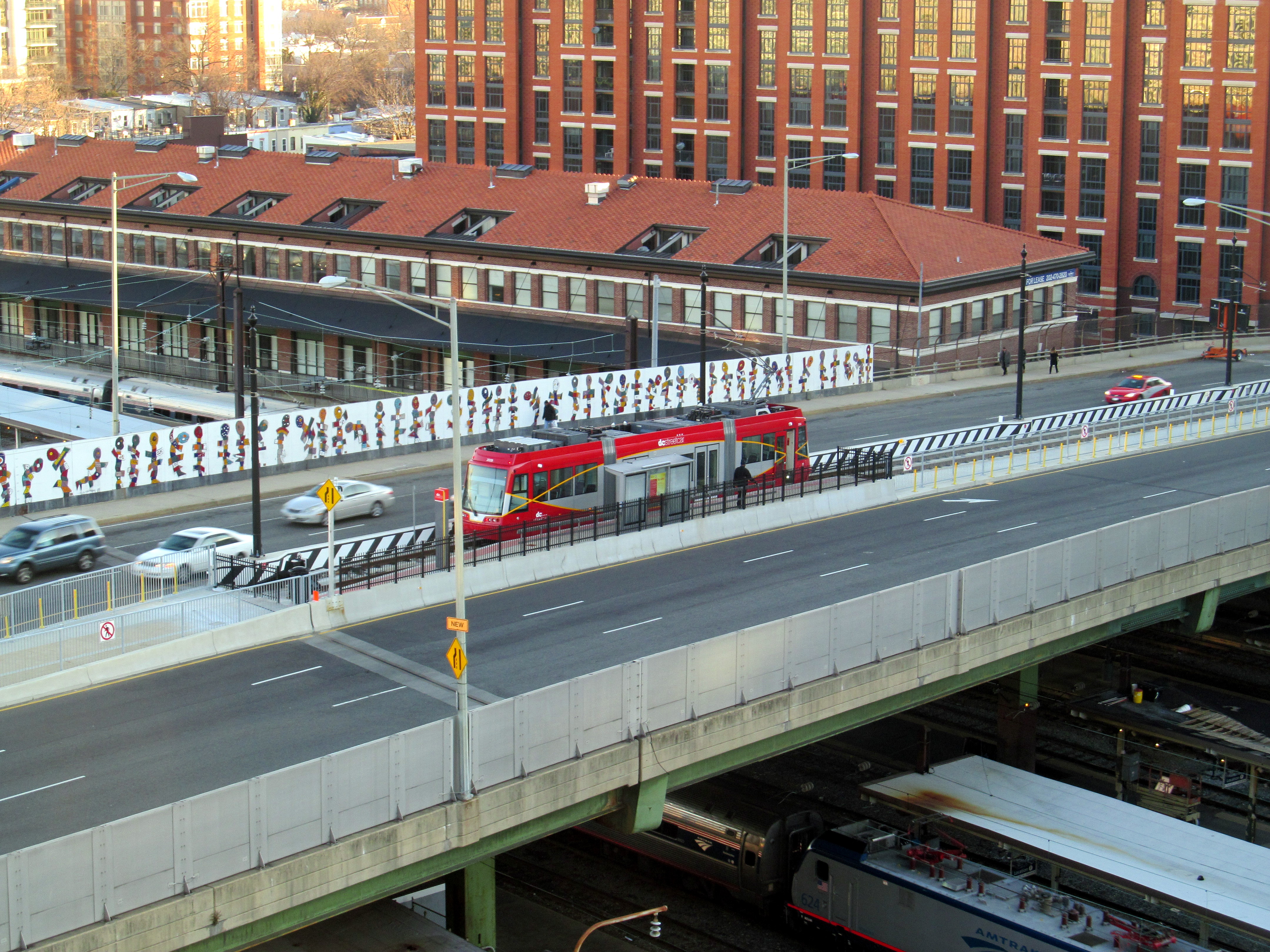
The DC Streetcar project was conceived as an incremental investment, a test run of a streetcar corridor along H Street/Benning Road that could be expanded if successful. Funded entirely by the District of Columbia without federal capital grants, the 2.2-mile line was built with local money, retaining local control.
Though the system failed to meet expectations — plagued by construction delays, cost overruns, and unreliable service due to its shared-lane configuration — it demonstrated a critical fiscal strength: adaptability. In 2025, Mayor Muriel Bowser announced the line would be shut down and replaced by an electric bus service using the same overhead infrastructure.
“Maintaining the current system, let alone expanding it, is financially unjustifiable.” — Kevin Donahue, D.C. City Administrator
Because the project was locally funded, city leaders were able to act decisively. There were no federal strings attached, no threat of clawbacks, and no need to defend the project for the sake of sunk political capital. Instead, they made a pivot rooted in actual performance and local priorities. This response was motivated by bottom-up alignment between cost, need, and accountability. Without federal incentives distorting the decision-making process, the city could respond to failure with honesty and clarity, rather than doubling down in hopes that the next phase would redeem the last.
Freedom to Fail, or Failure Forever?
Federal transit grants often come with strings so tight they become handcuffs. WES and Northstar weren’t just flawed; they were projects designed with the hope that one big bet could transform a region. When those bets failed, federal funding rules ensured cities couldn't walk away. The result wasn’t just inefficiency; it was rigidity. Cities had to continue defending broken systems, even as local needs evolved.
The DC Streetcar, by contrast, was not a success, but it was a smart test. Because the project was small, locally funded, and insulated from federal obligations, D.C. retained the ability to pivot. Leaders were not just free to respond to failure; they were also motivated because the financial incentives aligned with performance and local demand. This is the kind of failure we need more of: honest, recoverable, and instructive.
If we want more cities to experiment, learn, and improve, we must recognize that federal capital funding — by its very nature — prevents the flexibility and nuance those outcomes require. Federal programs are not built to support incremental learning. They are designed for scale, speed, and capital deployment. But successful transit systems require local understanding, ongoing feedback, and the ability to shift course.
That’s why true adaptability will never come from reforming federal policy; it will come from bypassing it. State and local governments should prioritize funding transit from the bottom up, where the incentives align with need and demand. When the financial burden rests locally, so does the discipline and the freedom to walk away from failure.
That means:
- Ending reliance on federal capital grants for speculative megaprojects
- Funding transit in phases, based on observed performance and community feedback
- Ensuring projects are small enough to fail and recover
- Aligning decision-making authority with fiscal responsibility
America doesn’t need more oversized commitments to outdated plans. It needs a new approach — one rooted in local insight, incrementalism, and the power to change direction.
Charles Marohn (known as “Chuck” to friends and colleagues) is the founder and president of Strong Towns and the bestselling author of “Escaping the Housing Trap: The Strong Towns Response to the Housing Crisis.” With decades of experience as a land use planner and civil engineer, Marohn is on a mission to help cities and towns become stronger and more prosperous. He spreads the Strong Towns message through in-person presentations, the Strong Towns Podcast, and his books and articles. In recognition of his efforts and impact, Planetizen named him one of the 15 Most Influential Urbanists of all time in 2017 and 2023.
%20(1).avif)
%20(1).avif)
%20(1).avif)
%20(1).avif)