We’ve Been Fighting the Wrong Transportation Fight

.webp)
Change is hard. Let’s not pretend otherwise.
We want safer streets. We want productive and prosperous cities. We want neighborhoods where walking and biking feel normal and safe. We want quality transit that connects successful places. We want highways between cities that are well maintained and reliable.
These are not radical aspirations. They are widely shared. And for more than three decades, reformers have fought hard inside the federal transportation program to advance them.
Since the end of the Interstate construction era in the early 1990s, each new transportation bill has been treated as the big fight. Push harder. Organize better. Negotiate smarter. This time, we’re told, reform will finally arrive.
And each time, reformers get table scraps.
A few new programs. A pilot here. A competitive grant there. Pennies on the dollar compared to the vast sums flowing automatically to highway and bridge expansion. Each round is heralded as progress. As the beginning of a new era.
We’ve been “beginning a new era” for over three decades now.
I don’t say this to diminish the work of reformers. Many of them are friends. They are thoughtful, committed, and tireless. They have navigated a system that rewards scale and expansion, and they have carved out space for safer streets and better transportation within it.
But we have to be honest about the terrain.
This is the wrong fight. Or, more precisely, it is a fight designed for us to lose slowly.
Let me give you an example.
Our friend Mike Lydon recently shared an update from New Haven. In 2022, the city completed its first active transportation plan. At the last minute, tweaks were made to ensure the plan qualified as a “Safety Action Plan,” a prerequisite for the new federal Safe Streets and Roads for All program.
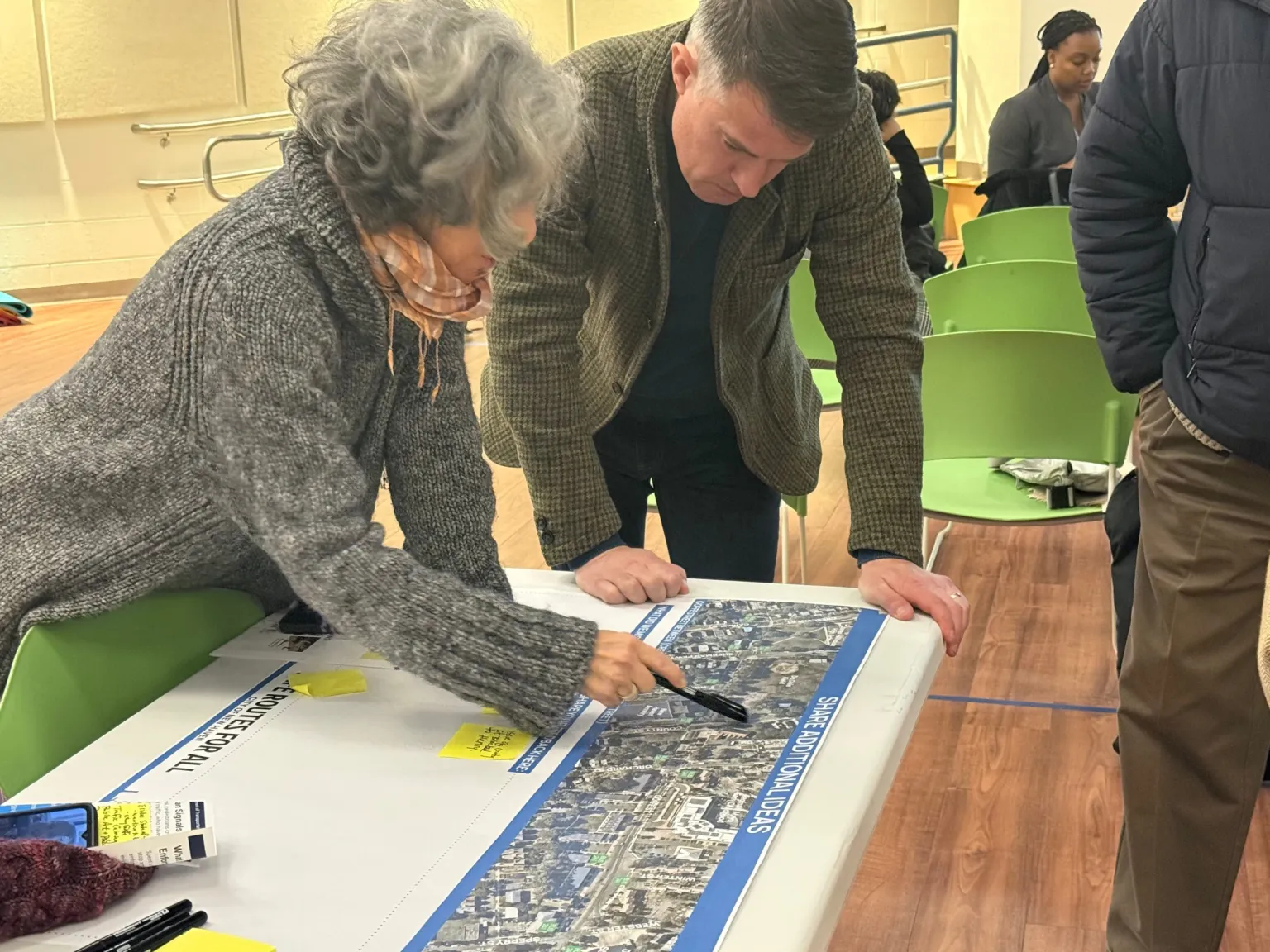
Two successful federal grant applications later, New Haven has secured millions of dollars for safety improvements, including a quick-build redesign of a six-block stretch of Goffe Street and a larger reconstruction effort on Chapel Street. The Goffe Street corridor links schools, parks, churches, and future bus rapid transit lines and was identified years ago as a priority for safety improvements.
This is exactly the kind of investment many transportation reformers want to see more often: a low-cost safety improvement in a place where the need is already well understood.
Yet even projects like this often require years of planning, applications, coordination, procurement, design refinement, and implementation before residents experience permanent change. Some of those delays are local. Some are state-level. Some are federal. The exact mix varies from place to place.
The larger question remains: Why does a city need to navigate such a complicated process at all to make a known dangerous street safer?
This is good work by good people. Mike is the best at what he does—there is nobody better than Street Plans at helping communities advance projects like these. But the broader system still requires local governments to assemble funding, navigate multiple layers of approval, and compete for resources before addressing problems they already know exist.
The problem is not that reformers lack moral clarity. It’s not that we haven’t pushed hard enough. It’s not that there aren’t good ideas in Washington.
The problem is venue.
We are fighting on terrain built for highway expansion. The federal program was designed in the 1950s to build a continental network of high-speed roads. It succeeded in that mission. But the machinery that built it never shut down. Instead, it adapted. It expanded its categories. It layered on new goals. It created new grant programs. And reformers have been trying to redirect that machine ever since.
The result is a system where expansion happens automatically and reform must compete.
Even if every federal employee were brilliant, every consultant efficient, every city department functional, and every state DOT cooperative, we'd still have a strange system: local governments must compete for federal approval and funding to implement relatively inexpensive safety improvements on streets they already know are dangerous.
Reformers celebrate a $400,000 grant. Highway programs move tens of billions through formulas that require no competition at all.
Reformers spend years crafting plans to meet federal eligibility rules. Expansion projects move forward because they fit neatly into legacy funding streams.
We keep telling ourselves that if we just fight harder in the next bill, if we just get a little more flexibility, a few more competitive grants, a slightly larger carve-out, we’ll finally turn the corner.
But we’ve been turning that corner for more than a generation now.
Change is hard. But so is losing slowly.
The federal Highway Trust Fund—insolvent since 2008—expires at the end of September. Congress will once again face the question of what the federal role in transportation should be. Most of the debate will focus on how much to spend and how to divide it.
We want to ask a different question.
What if the problem isn’t how the money is divided?
What if the problem is that we’re still fighting inside a framework built for a completed mission?
Declaring the construction of the Interstate System “mission accomplished” is not an act of nostalgia or retreat. It is a recognition of reality. The original purpose was clear: connect the nation with a unified network of highways. That work was finished decades ago.
What remains is a permanent funding apparatus searching for justification.
If we acknowledge that the construction era is over, we can have a new conversation about stewardship. About aligning responsibility with authority. About giving states and cities the space to invest in the projects that make them strong, without forcing every safer street, every protected bike lane, every transit upgrade to run a federal obstacle course.
On more level terrain, the projects we believe in can compete on their merits. And when they do, they win. Walking and biking investments are low-risk, high-return improvements for cities. Well-designed transit connecting productiv places is a wealth accelerator. Endless highway expansion, layered atop massive maintenance backlogs, is a financial burden.
But we will not prove that by begging for crumbs.
Our friends in New Haven deserve better terrain. So do the thousands of planners, engineers, advocates, and local officials across the country who are trying to build strong towns within a system stacked against them.
This week, we are going to propose a profound shift. It begins with a simple declaration: the Interstate construction mission is complete. From that starting point, we can rethink the federal role in transportation around stewardship instead of expansion.
Change is hard. But we should not be paralyzed by fear of it. We should be motivated by how unacceptable the status quo has become.
On Thursday, we will release a new white paper outlining this approach and host a live broadcast to walk through the argument and take your toughest questions. If you’re tired of fighting for crumbs, I invite you to join us.
It’s time to declare the Interstate mission complete and build a federal transportation policy designed for the next era, one that gives reformers the change of venue they deserve.
%20(1).png)
Charles Marohn (known as “Chuck” to friends and colleagues) is the founder and president of Strong Towns and the bestselling author of “Escaping the Housing Trap: The Strong Towns Response to the Housing Crisis.” With decades of experience as a land use planner and civil engineer, Marohn is on a mission to help cities and towns become stronger and more prosperous. He spreads the Strong Towns message through in-person presentations, the Strong Towns Podcast, and his books and articles. In recognition of his efforts and impact, Planetizen named him one of the 15 Most Influential Urbanists of all time in 2017 and 2023.
.webp)