
Hello,
It's Member Week at Strong Towns and we're asking you to help support this movement. We'll be direct: Strong Towns is a nonprofit organization that depends on donations from generous readers like you in order to continue the work we're doing. That includes bringing you articles like the one you're about to read! We're a small team, and we're only able to do what we do with your help. Please consider donating whatever amount is meaningful for you. Thank you so much, and keep doing what you can to build a Strong Town.

New Resource Helps Portland Communities Take Action on Road Safety

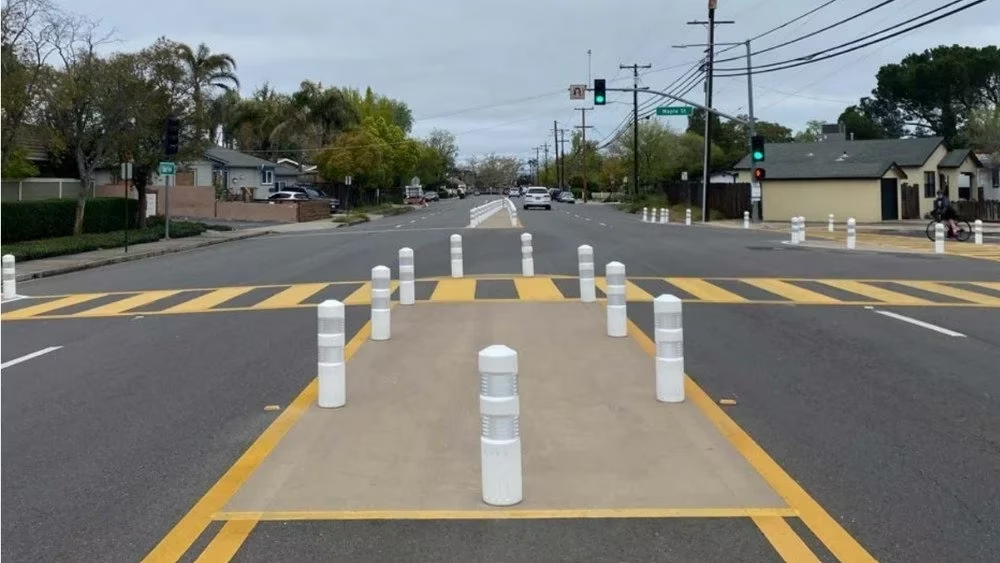
An example of quick-build traffic calming measures recommended in Oregon Metro’s new community guide. (Source: Oregon Metro.)



The Portland, Oregon, area just got access to a major resource for building safe streets. The area's regional government, Oregon Metro, launched a new Safe Streets hub last week. The hub gives residents, advocates, and city leaders access to safety data across the region. Users can explore crash statistics by city, county, or region; view maps of high-injury corridors; and even generate custom charts, graphs, and tables.
This resource will make it easier for communities to identify dangerous areas and clearly communicate the need for change. Instead of working with fragmented or outdated information, people now have a shared regional picture of where the risks are and how severe they are. That shared understanding is an essential first step in reducing injuries, preventing deaths, and creating safer, more productive neighborhoods.
But Oregon Metro didn’t stop with data. As part of the hub, the agency released "Community Quick-build and Demonstration Projects," a practical guide to quickly addressing dangerous areas once they’ve been identified. The guide — which cites Strong Towns as a resource several times — outlines how residents and local governments can test interventions such as temporary crosswalks, curb extensions, traffic diverters, and protected bike lanes. These low-cost projects give communities a chance to experience safer design firsthand and build support for permanent improvements.
Since Oregon Metro is a regional governing body, every city within its boundaries now has access to the same tools — and encouragement from the regional level to use them. That alignment can help accelerate safer, more productive street design across dozens of jurisdictions.
This is how regional and state governments can strengthen cities: by providing the tools and encouragement that cities need to enact bottom-up change.