New Haven Was Cut in Half. One Alder Is Trying to Stitch It Back Together

.avif)
%20(1).avif)
%20(1).avif)
Caroline Tanbee Smith fell in love with New Haven, Connecticut the way a lot of people fall in love with a place: not all at once, and not because a brochure told her to.
It was the small things first. A run past the same porch, the same nod, the same wave. Summer days spent wandering “dusty corners” of City Hall for a project that forced her to learn the city as a living, somewhat messy, thing. And then the kinds of memories that you can’t plan for: sitting on the grass, surrounded by 8,000 people, all gathered to listen to cellist Yo-Yo Ma in the rain.
What all of these moments had in common was not spectacle, but proximity. They depended on people being able to see one another, linger together, and share space without rushing through it. In other words, they depended on the basic conditions that allow people to be neighbors.
Today, much of Tanbee Smith’s work focuses on restoring those conditions in a city where midcentury planning decisions took them away.
“My belief in New Haven is really derived by the spirit of advocacy, the history, the entrepreneurial spirit of the city that you can just feel rippling through the sidewalks and streets,” she recalled on the Bottom-Up Revolution podcast. “I think, as a young person at the time, I was so moved by that experience and also built so many friendships that made me say, ‘Hey, I want to fight for this place too,’ just like these mentors and coaches I see around me who are fighting for this city.”
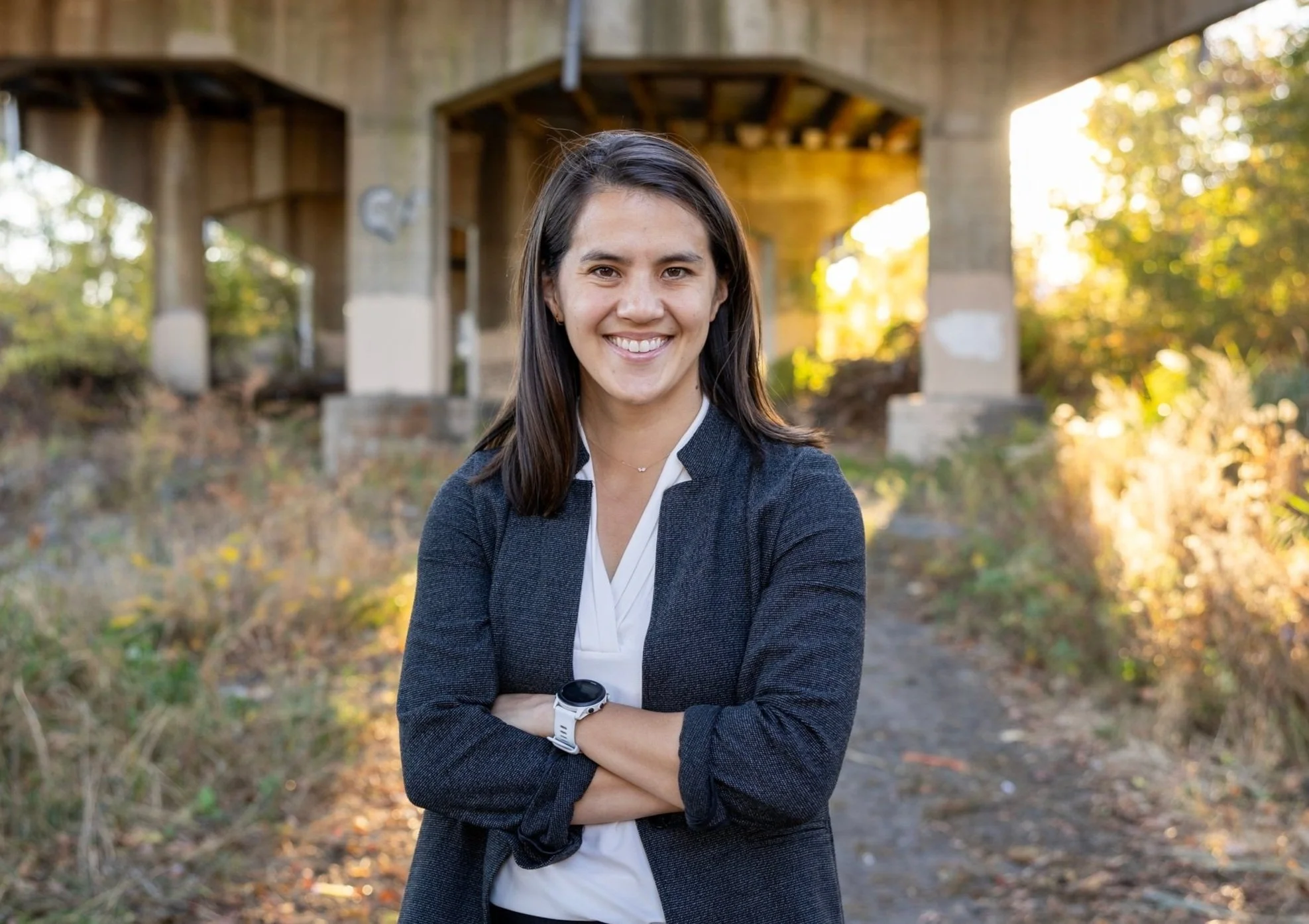
Now she’s an Alder in Ward 9.
In the mid-20th century, at the height of the urban renewal movement, New Haven received $120 million in federal funding to clear so-called urban blight and redevelop its aging industrial core. City leaders were told they were building the future, a blueprint for others to follow. What followed instead was a cautionary tale. The construction of I-91 tore through neighborhoods, destroyed thousands of homes, and accelerated the flight of residents to the suburbs, draining the local tax base. What was meant to modernize the city instead fractured it. The wounds sting over half a century later.
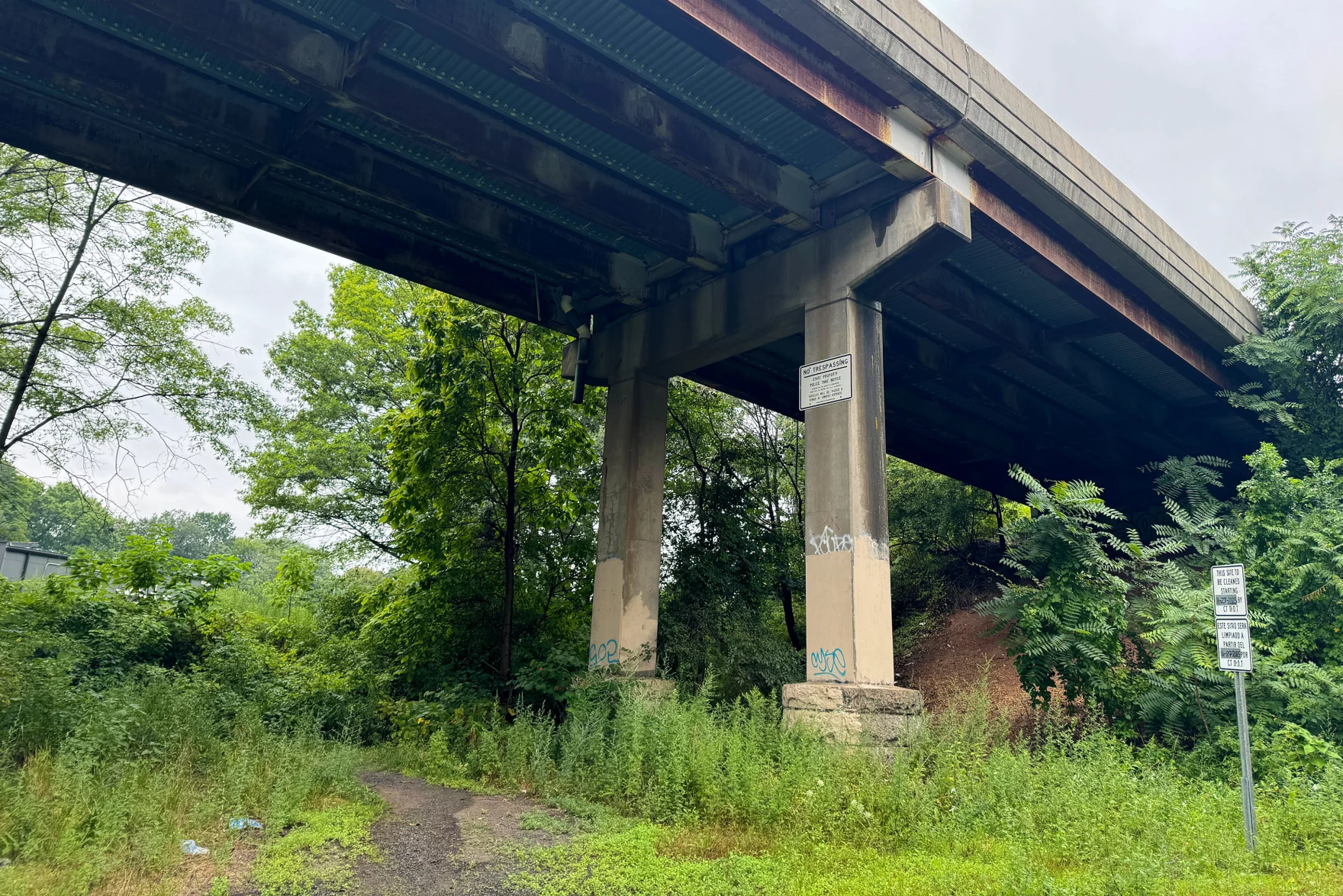
“You can really feel the divide,” Tanbee Smith told PBS last year, describing the separation between East Rock and Fair Haven. “So about a year ago, me and a few other people looked at this underpass and this space and started to say, ‘OK, well, what if we were to take this area and reimagine it into an area that connects them back together?’”
But Tanbee Smith doesn’t talk about the highway like a monument you mourn. She talks about it like a problem you can work on, patiently, publicly, and with the people who live in its shadow. That mindset helped drive the city to pursue a federal Reconnecting Communities grant and launch the I-91 Neighborhood Reconnection Initiative. Getting funding for a different future is key, but what’s equally important is the signal it sends: New Haven is a city willing to look at its own scar and say, out loud, we can do better than this.
One underpass in particular has become a kind of proving ground for that imagination. For years it was the kind of place cities ignore: leftover space, dim and unfriendly, often trashed, easy to forget unless you live nearby. Tanbee Smith and partners have been working to turn it into an Underpass Park, or a place where young people can skateboard and shoot hoops. Ultimately, a place where one can stand near the river and feel, even briefly, like the city is on their side.
The hope is that this is only the beginning.
Smith’s response has been to work at two scales at once. If the highway represents a large, structural barrier to neighborliness, she is just as interested in the smaller, social ones — the moments where people hesitate to gather, organize, or invite one another in. That’s why she helped launch the Know Your Neighbors Fund. It provides simple $100 microgrants for residents who want to host something small, like a Saturday basketball meet-up, a chess club, a cleanup, a potluck. The dollar amount is almost comically modest, and that’s what makes it powerful. It lowers the barrier just enough to turn an “I’ve always thought about…” into “Let’s do it.” It tells someone with an idea — maybe even someone who feels a little silly for wanting it — that they’re allowed to try.
In a time when so much pushes people inward, Smith is betting on the opposite, not by manufacturing community, but by clearing away the friction that keeps it from forming. Because cities don’t heal all at once. They heal the way people do: through repeated, tangible experiences that slowly restore faith — faith that the place can change, and faith that we can change it together.
Learn more about Caroline Tanbee Smith’s work on the Bottom-Up Revolution Podcast.