What's Standing in the Way of Safer Streets in Philadelphia?
.webp)
.webp)
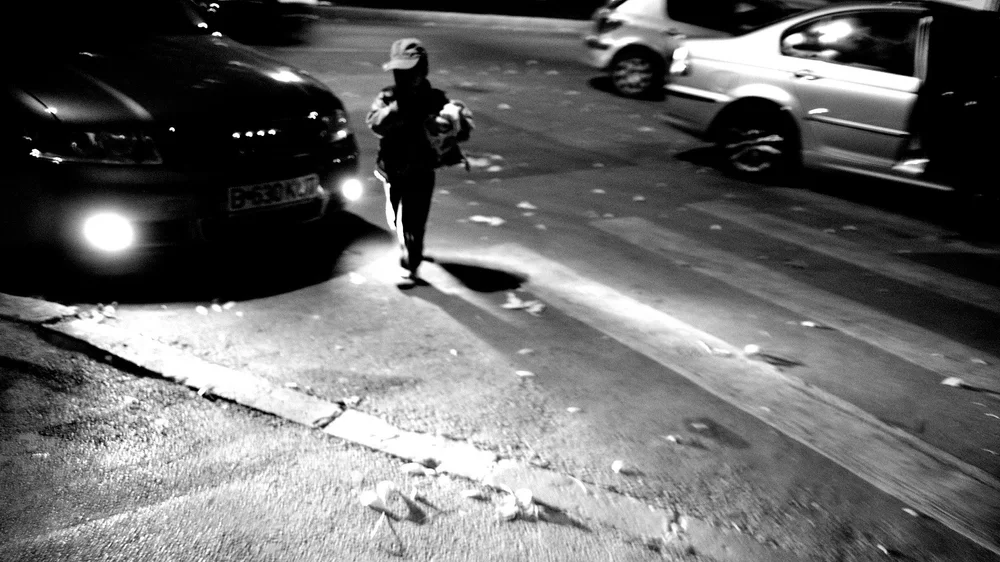
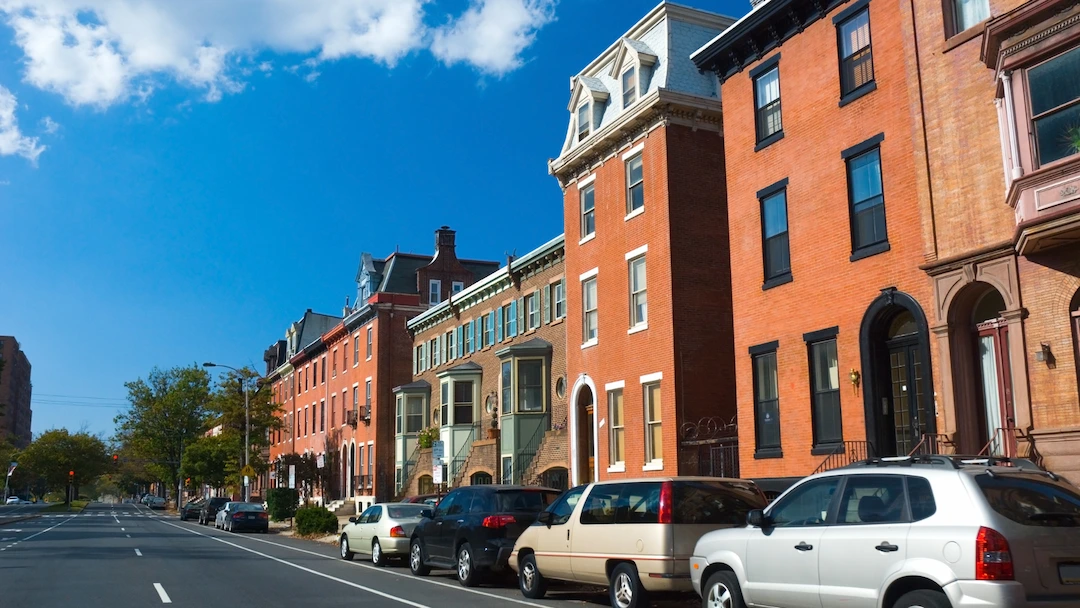
Philadelphia’s street grid is a mashup. Highways cut through neighborhoods. Major arterials run along the waterfront. Some residential streets are barely wide enough for a single car. Despite the variety, just about every inch of that street and road network is legally accessible by trucks, cars, and anything else with a motor.
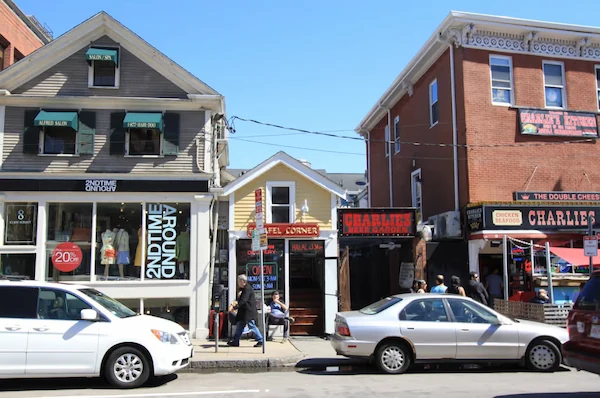
That setup means that streets designed in the 1700s for horse and buggy now have trucks of unusual size making their way across the city stop sign by stop sign, past houses, offices, and schools alike. At one such spot, the Palumbo Recreation Center, crossing the street often feels like you’re putting your life in the hands of the "chaotic gods" of Philadelphia traffic.
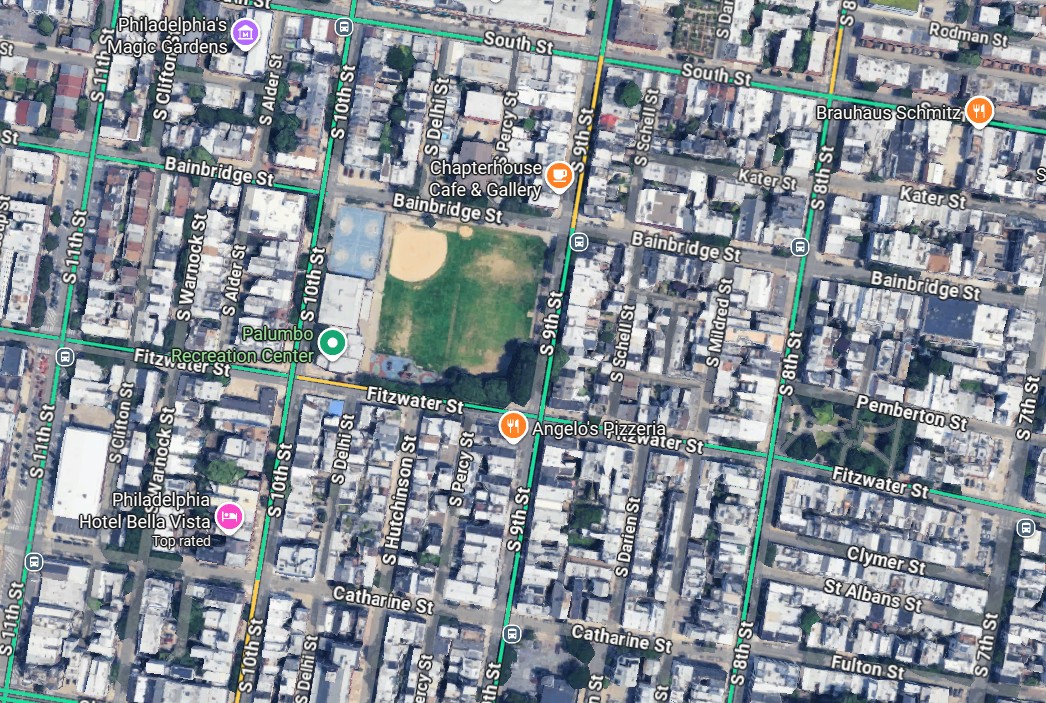
On paper, these are neighborhood streets. In practice, they form a gauntlet where families trying to get home safely are contending with out-of-towners on a trip to the famed Angelo’s Pizza, commuters rushing to the bridge, and drivers taking high-stakes risks in places that were never designed to accommodate speed or volume.
For those of us who live here, the danger is felt in your gut every time a car clips a corner or rolls through a stop sign. But for folks looking in from the outside, it’s worth describing the scene: it’s a place where drivers, frustrated by every stop sign and person crossing, try to get to the next intersection fast, while families peek out from behind cars parked on the crosswalk, trying to pick the safest moment to step out.
The city’s response: “we might get sued”
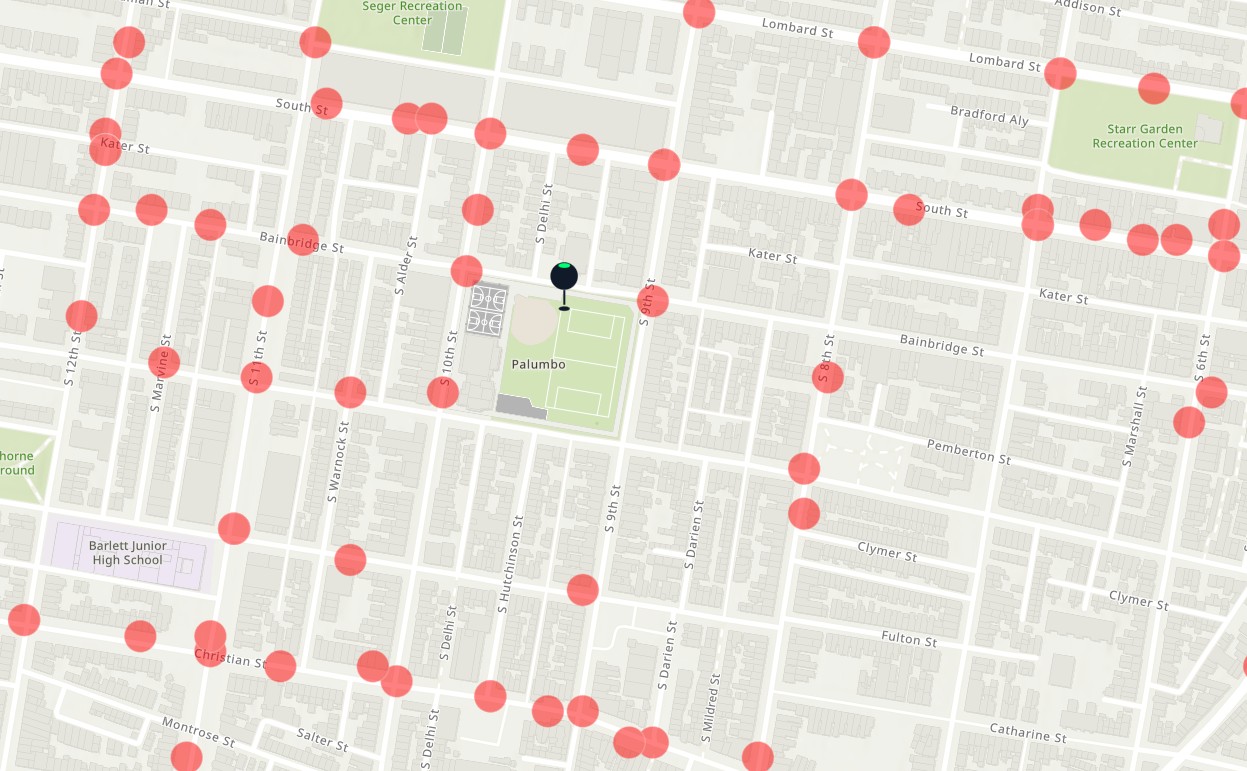
When I raised these concerns with my Councilmember and the Streets Department, I proposed a modest intervention: diverting through-traffic using planters. Residents would still be able to access their streets, but cut-though traffic would be routed away from the playground. Here’s how I framed it:
“My objective is to implement modality filtering using planters to deter thru-traffic. This approach would require vehicles attempting to drive straight through the area to make two turns, effectively limiting these sections to local traffic only.”
To his credit, the Councilmember responded quickly. He looped in the City’s Chief Traffic Engineer—for better or worse, our CTE has been in the trenches for a stretch of 30+ years that has seen some pretty discouraging crash statistics. His response, while disappointing, revealed a deeper, more systemic issue at play: the fear of being sued.
“Diverters, chicanes etc. using bike corals, flex posts, planters etc. are expensive, difficult to procure, & way too expensive to maintain. Plus, the City is self insured & having testified on thousands of cases against the city, it’s hard to defend. Folks sue us for many reasons that still surprise me. Law Department’s Risk Management unit will certainly be concerned.”
There’s a cautionary tale that helps explain why this fear looms so large for traffic departments across the country. In a high-profile Georgia case, there was a tragic single-vehicle crash involving a planter several feet off the roadway. The driver did not survive, and his parents filed a lawsuit against the city. In the end, the municipality was hit with a $32 million jury award—roughly 85% of that city’s entire annual budget—after the court determined that the planter constituted a defect in the right-of-way, rendering the city liable.
The ultimate irony? The city didn’t even install the planter; it was already there when the town incorporated.
Frustrating as it is, “folks sue us” is a powerful moment of honesty here. It reveals how city engineers and planners are constrained by the threat of litigation. If objects outside the roadway put cities at risk, how can they hope to implement even small, targeted interventions that could save lives?
Engineers themselves are particularly exposed. Their professional licensure, reputations, and institutional memory all reinforce a preference for designs that have already been used and successfully defended in court. Innovation isn’t just technically risky—it’s legally uncertain.
The result is a system that often prioritizes what is easiest to justify in court over what might best address a specific safety problem. Known dangers persist because they are familiar, while modest, context-specific changes face outsized scrutiny. As a result, we appear to sacrifice physical safety to protect the city’s legal liability.
That is painful enough to hear for folks taking a gamble crossing these streets every day, but it is excruciating for anyone who was unlucky enough to know someone, or be someone, that lost that gamble.
Budgets: rhetoric vs. reality
When faced with the liability issue, I pivoted and asked if we could implement raised crosswalks instead. The reply? “Limited funding.”
“Raised crosswalks & intersections, not only are super expensive to install, but in our city they pose tremendous challenges in grades & drainage... Our funding for schools’ traffic calming initiative is quite limited.”
And money is a real constraint! Especially because engineers and departments are not the ones that get to set the budget. That authority lies with City Council and the Mayor. But that’s where the disconnect becomes more apparent.
Philadelphia has publicly committed to "Vision Zero"—the goal of eliminating all traffic fatalities and severe injuries. Yet, there is a painful gap between the rhetoric of mourning preventable deaths and the reality of funding the tools to stop them. We see "larger-than-life" infrastructure projects receive millions or billions in funding, while modest, low-cost safety upgrades are treated as an "inconvenience" or a budgetary impossibility.
When the city treats a primary risk to neighborhood safety as a secondary budgetary concern, it signals that Vision Zero is a slogan, not an operational priority.
What’s more expensive in the end?
Ultimately, I told the city this directly: “Dead and injured Philadelphians are exponentially more expensive.” Lawsuits are cheap in comparison.
If we’re being cynical, a wrongful death lawsuit costs the city way more than a raised intersection. If we’re acting in good faith, measuring a child’s life against the cost of asphalt is absurd.
We need to stop accepting “it’s too expensive” as the default response to neighborhood safety concerns. We need to stop letting the Risk Management department design our streets. Put bluntly, until we value a kid on a bike more than a potential lawsuit from a driver, I can't help but feel like we’re just spinning our wheels.
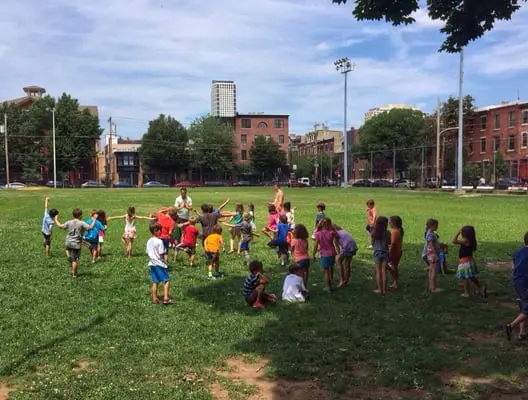
At the end of the day, this isn’t an abstract policy debate. It’s about a specific corner, next to a playground, where families cross the street every day knowing the odds aren’t in their favor. Those families don’t experience our street network as a liability matrix or a budget spreadsheet. They experience it as a moment of risk—one they didn’t choose and can’t opt out of.
If our systems can’t respond to that reality with anything more than “it’s too expensive” or “we might get sued,” then the problem isn’t a lack of money or engineering expertise. It’s a failure to treat neighborhood safety as a core responsibility of local government.
Peter Durlacher writes Make Driving Suck Less, a blog dedicated to the idea that the best way to fix traffic is to give people the freedom to leave their cars at home. Based in Philadelphia, Peter is a career coach by trade who also writes Make Work Suck Less, applying that same straightforward problem-solving to the professional world.