The Samaritan Loophole
.avif)
(Source: Europeana/Unsplash)
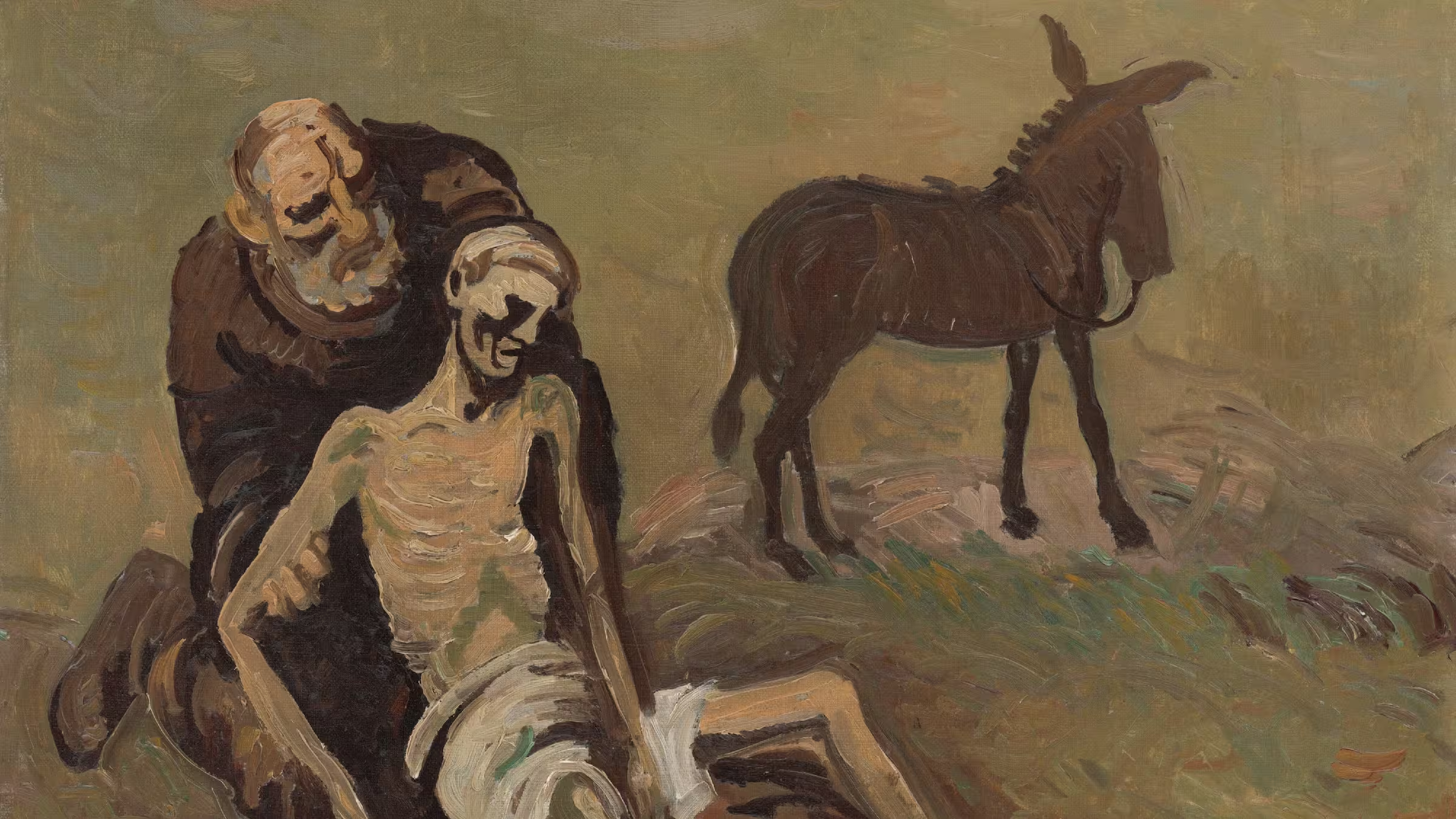
A couple years ago, I noticed something about the Good Samaritan. If you didn’t grow up in a linoleum-floored Sunday school room, quick recap.
A legal expert asks Jesus what it takes to have eternal life. Jesus responds by asking what the law says. The man answers correctly: love God with everything you’ve got and to love your neighbor as yourself.
Jesus tells him he’s right. Do that and you will live.
But then comes the real question from the lawyer. Who is my neighbor? It is a very human question.
I promise, I’m going to tie this into cities, you just gotta stick with me for a bit more context.
He is not asking how to love, but where the line is. Who counts and who does not. So Jesus tells a story. A priest, respected in society, walks by a beaten man. Then a Levite, also respected. Both keep going. Then a Samaritan, someone looked down on, stops. He helps, pays, and goes out of his way to assure the injured person is taken care of.
Jesus asks, who was the neighbor? The answer is simple. The one who showed mercy.
Cities Built to Minimize Exposure
People often think cities cause homelessness because that is where homelessness is most visible. But that is a little like saying a doctor’s office causes sickness. It does not cause it. It attracts it because it offers some kind of response to it.
And more than that, homelessness appears more concentrated in cities because services are concentrated there. This is both practical and troubling. It is practical because without that clustering, someone in need might spend their entire day moving from one place to another just to meet basic needs. Breakfast in one part of town, medical care in another, shelter somewhere else. Bringing those services together can make survival possible.
But concentration has a cost. It can create something like an economic monoculture. When poverty is clustered, it becomes easier to look away but harder to escape. The relationships and opportunities that often help people move out of poverty are less accessible. And so the very systems designed to help can, over time, reinforce the conditions they are trying to solve.
Knowing Your Homeless Neighbor
And this is what I mean by the Samaritan loophole. In the same way the legal expert was looking for a way to narrow down who counted as his neighbor, we have built a world that minimizes interaction altogether. Our cars act like portals. They move us through space while insulating us from it. You will drive through places you would never walk through.
I am writing more about this elsewhere, but for now it is enough to say this. You cannot be expected to show kindness to someone in need if you never encounter them.
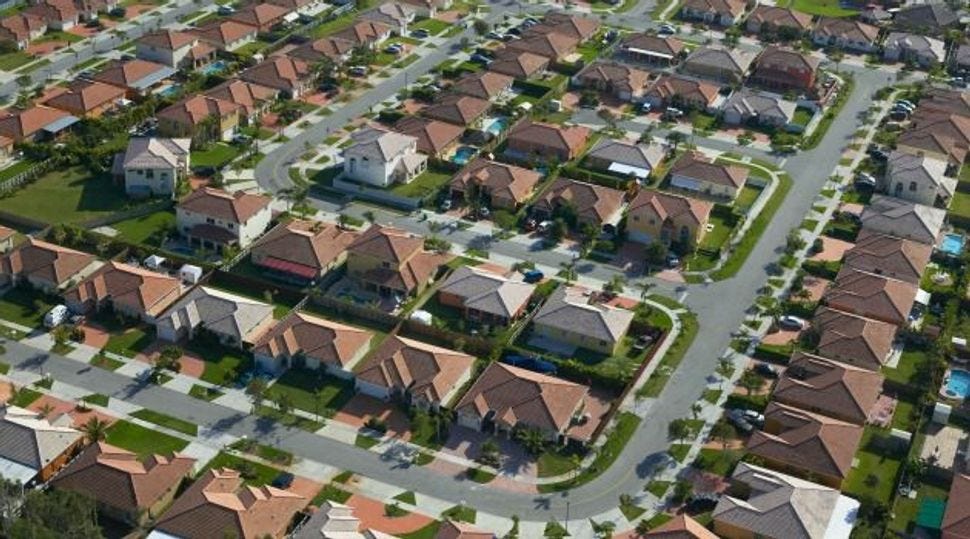
Suburban neighborhoods are often designed to prevent that encounter. Roads curve and loop like mazes, with entrances and exits placed side by side so no one passes through. There is no reason to be there unless you live there. With commercial activity separated out, the neighborhood becomes a place only for residents, not for strangers, not for chance.
And that can feel normal. But only because we have grown used to a kind of public infrastructure that behaves like private space. Many suburbs function like gated communities without the gate.
In a place like that, your chances of encountering someone in need shrink dramatically. But it was not always like this. In more connected neighborhoods, people in difficult situations are part of the social fabric. In my neighborhood, closer to the urban core, that is still true. There are people you know by name. There is a guy who moves things from one porch to another. Someone posts online about a missing wagon and suddenly someone else has a soccer ball and half a bag of fertilizer.
Sometimes I wake up to a shopping cart in front of my house. It is not convenient. I do not always love it. But it is grounding. It reminds me that I live near people who are struggling, and that their need is not abstract. It is right here.
Fearful Feedback Loop
And with concentrated poverty, a perverse feedback loop takes hold. Disease, fires and crime increase in the places where poverty is clustered. Fear follows, and that fear becomes a moral justification for avoidance. "I have a family to protect. I cannot take that risk."
But much of that fear is overstated. Plenty of people work in these environments every day without fearing for their lives. And more importantly, that fear is often a product of the concentration itself. When we cluster poverty, we also cluster its challenges. Then we design systems to avoid it. We make public space uncomfortable, restrict where people can exist, and create pathways that let us move through the world without encountering anyone in need. In doing so, we create a version of life where we can claim to love our neighbors without ever having to act on it.
More Is More
But love is not a belief alone. Love requires action. To love your neighbor is to act in their best interest. And to do that, you have to encounter them.
This is not a call to live in extreme conditions. It is a call to recognize that, with more flexibility in how we build and live, we would naturally encounter people across different stages of life. Right now, we expect poorer neighborhoods to absorb the burden of caring for the most vulnerable, while wealthier neighborhoods remain insulated from it.
Vince Graham put it this way: when you sell community and connectedness, every new home adds value. When you sell privacy and exclusivity, every new home feels like a loss. That idea holds at the human level, too. Sit in on a zoning meeting and you will hear it. People are not just afraid of burden. They are afraid of proximity.
So what do we do? Do we wait for people to become more open before we build more connected places? Or do we build those places so people can begin to see the value for themselves?
The answer is both. We expand imagination through storytelling, relationships and lived experience. And we pair that with policy that allows for more flexible, mixed and connected ways of living.
[[divider]]
This article was originally published, in slightly different form, on The Happy Urbanist. It is shared here with permission. You can hear more from Jon Jon Wesolowski soon at the Strong Towns National Gathering.
Jon Jon Wesolowski is an avid urbanist who enjoys decoding what makes a space great. Across his two TikTok channels, his videos discussing urbanism and Chattanooga have garnered more than 3.2 million likes and 325k followers. He recently returned from spending seven months abroad, exploring cities and documenting what makes spaces great. He is excited to bring those ideas back to Chattanooga in tactical ways.
%20(1).avif)
%20(1).avif)
%20(1).avif)
%20(1).avif)
