The latest ideas, insights and action from around the Strong Towns movement.
Featured
Top Stories

Lorem ipsum dolor sit amet, consectetur adipiscing elit. Suspendisse varius enim in eros elementum tristique. Duis cursus, mi quis viverra ornare, eros dolor interdum nulla.
Lorem ipsum dolor sit amet, consectetur adipiscing elit. Suspendisse varius enim in eros elementum tristique. Duis cursus, mi quis viverra ornare, eros dolor interdum nulla.
Lorem ipsum dolor sit amet, consectetur adipiscing elit. Suspendisse varius enim in eros elementum tristique. Duis cursus, mi quis viverra ornare, eros dolor interdum nulla.
.webp)
Lorem ipsum dolor sit amet, consectetur adipiscing elit. Suspendisse varius enim in eros elementum tristique. Duis cursus, mi quis viverra ornare, eros dolor interdum nulla.

Lorem ipsum dolor sit amet, consectetur adipiscing elit. Suspendisse varius enim in eros elementum tristique. Duis cursus, mi quis viverra ornare, eros dolor interdum nulla.
Latest Podcasts
(Transcripts Included)
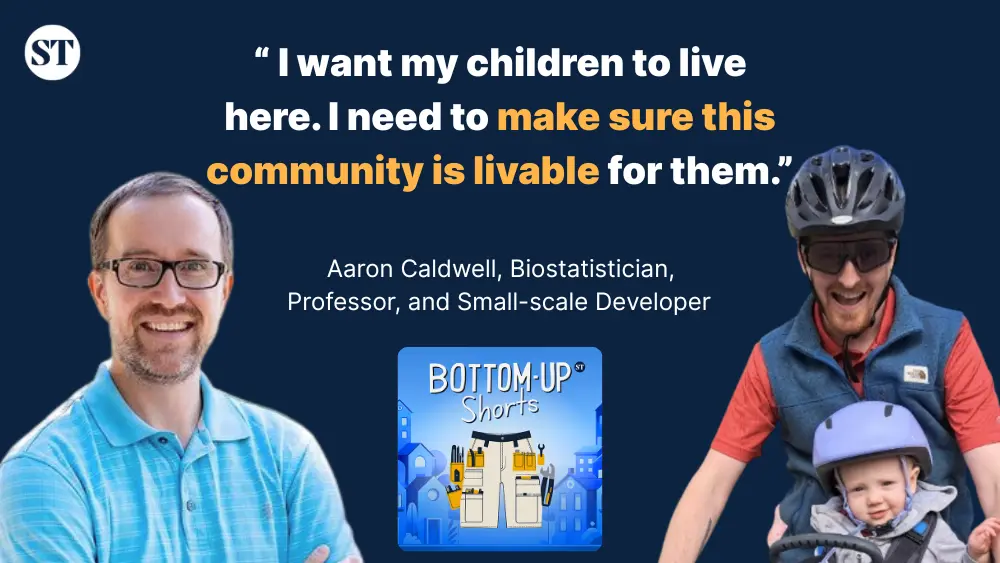
From Biostatistics to Better Streets in Fayetteville
How One Tiny House Helped Shift Boise’s Housing Rules
Walking, Visibility, And One Mom’s Fight For Safer Streets
Latest Stories
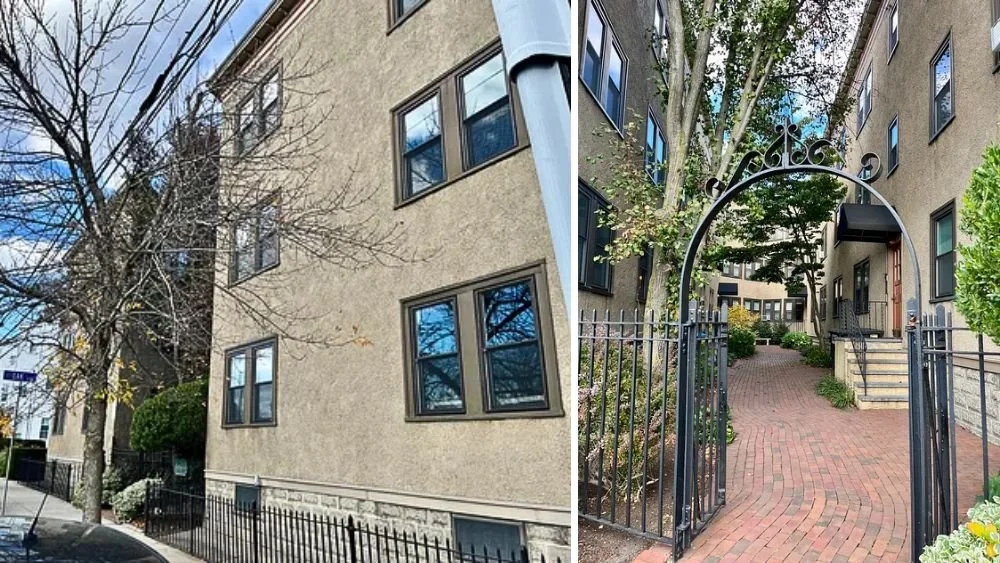
We assumed two stairwells made buildings safer. The numbers say otherwise.
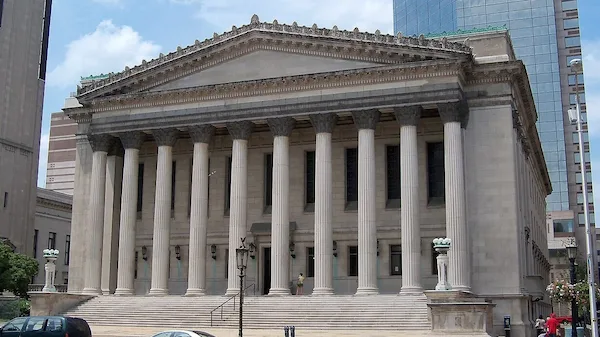
"When we fail to take action, we do a massive injustice to the public that we are supposed to be serving."

“You’re taught to take for granted what shows up in the codes.”
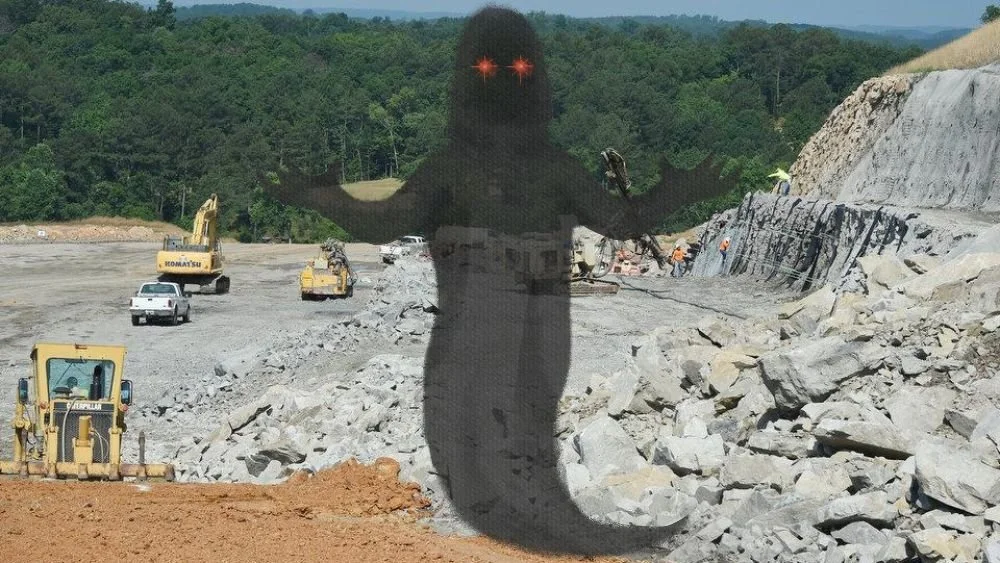
The Northern Beltline project has been haunting Alabama for over 50 years, draining money, time and energy from other more productive and desired projects. Here’s how it came about — and why it refuses to stay dead.

The Federal Reserve just cut interest rates. Some people are celebrating the move as making housing more attainable, but it's really just reinforcing the housing trap. Need proof? Look no further than the 40-year mortgage.
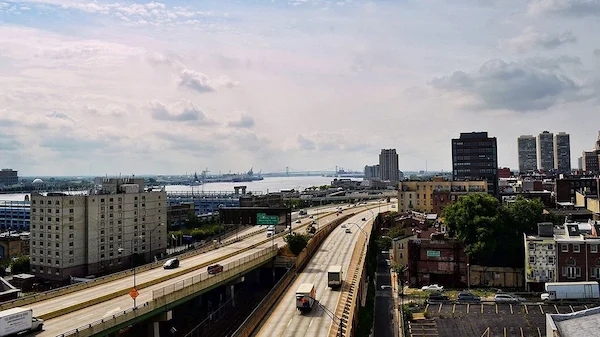
"By the time you hear of it, it's too late."

"From the moment they’re born, children are asked to adapt to a car-oriented world."

From compact blocks to old-building reuse, Jacobs’ framework offers a path for Southern cities to become financially stronger and more adaptable.
This formula for improvement is observable and repeatable. How will you apply it in your place?

The U.S. is in a massive housing bubble fueled by widespread fraud. With banks incentivized to look away and Wall Street and Washington incentivized to keep housing prices artificially high, a bottom-up approach is the only hope for bringing sanity back to the housing market.

Starbucks built its brand on being a third place — a communal hangout that fosters communication and conversation — but in recent years, its priorities have shifted to speed of service. Now, instead of returning to its roots, the corporation is trying to redefine what a third place is.
Brainerd, Minnesota’s newest addition isn't exactly cause for celebration. Instead, this “high-tech” ice machine reveals deeper issues with public investment, community apathy and neighborhood decline that can plague cities.
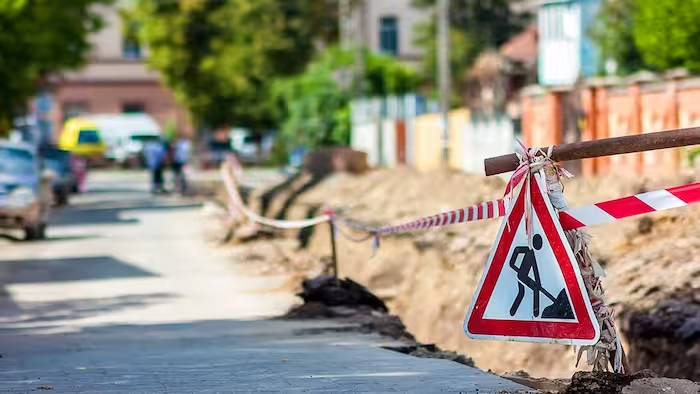
Are urban areas really more financially sustainable than suburbs? Do urban areas inherently have higher infrastructure costs? Here's what Strong Towns actually says about the Suburban Experiment and infrastructure spending.
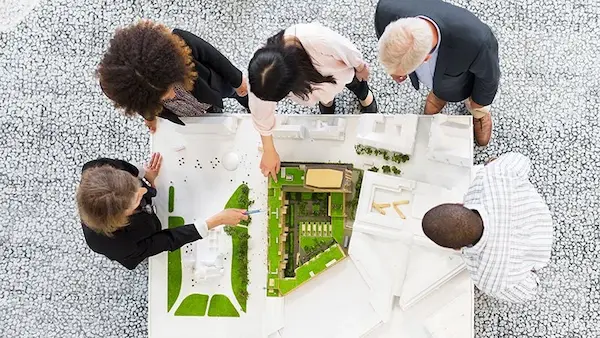
"Cities that truly embrace incrementalism understand that interesting places are emergent by nature."
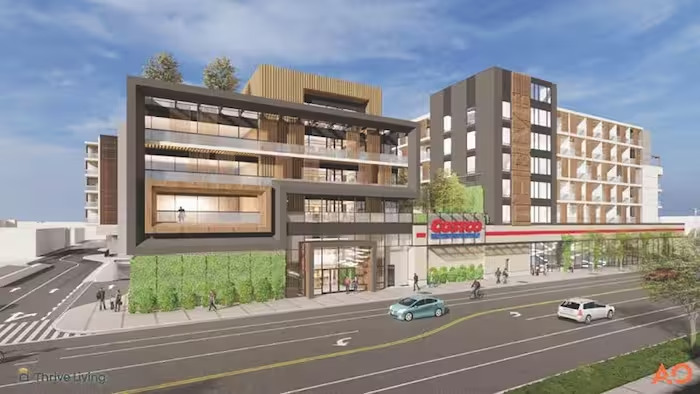
To skip delays and debate, a California Costco added 400,000 square feet of housing to its plans — a move that unlocked a faster approval process.
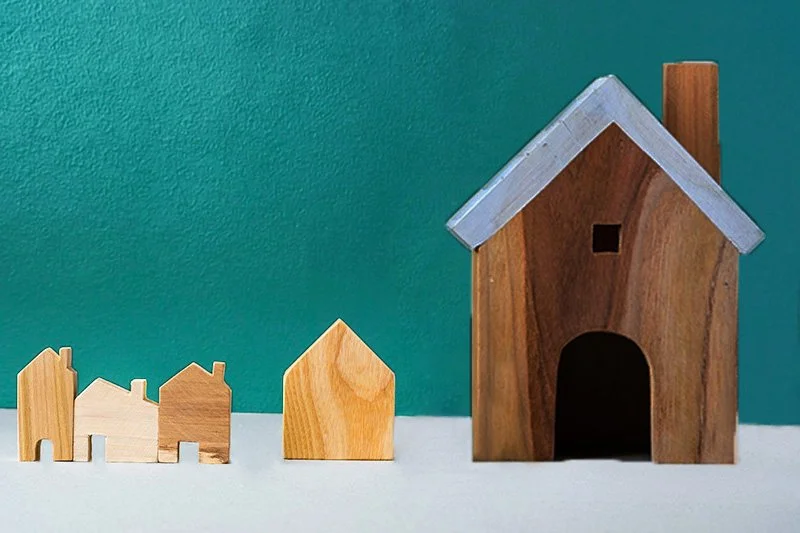
Housing shortages are housing spillovers.
Rates of loneliness and unhappiness are on the rise in the United States, but our European counterparts don’t seem to have the same problem. Why? Part of the reason is the way our built environment isolates us.

City engineers rely on faulty logic and misrepresentations to maintain the status quo. Here are the top four arguments against parking reform and why they’re wrong.
Learn how Habitat continues to pursue housing construction in the face of difficult conditions, why good schools are more important than you realize, and why Habitat owners participate in the construction of their own homes.
"The activities we see in a community tell us something about the values and priorities of that city."

To change peoples' minds, we have to make an effort first to listen.