
Financing Tools
How Will It Be Financed?
6 local financing tools to allow developers and builders to overcome the financing barriers that prevent needed housing from being built.

Why Utilize These Financing Tools?
Even when small-scale housing is legal and builders are ready, financing can remain a major obstacle. Backyard cottages, duplex conversions, and starter homes may be financially viable but fall outside conventional lending products.
Cities can help close this gap by using their assets, relationships, and legal authorities to connect viable housing projects with capital. Rather than routinely subsidizing projects or absorbing private losses, cities can help rebuild local financing capacity while protecting public resources.
The goal is to create a sustainable financing system that supports neighborhood-scale housing again and again, without exposing cities to excessive financial risk or compromising future investments.
Tool 1
Small Catalytic Grants
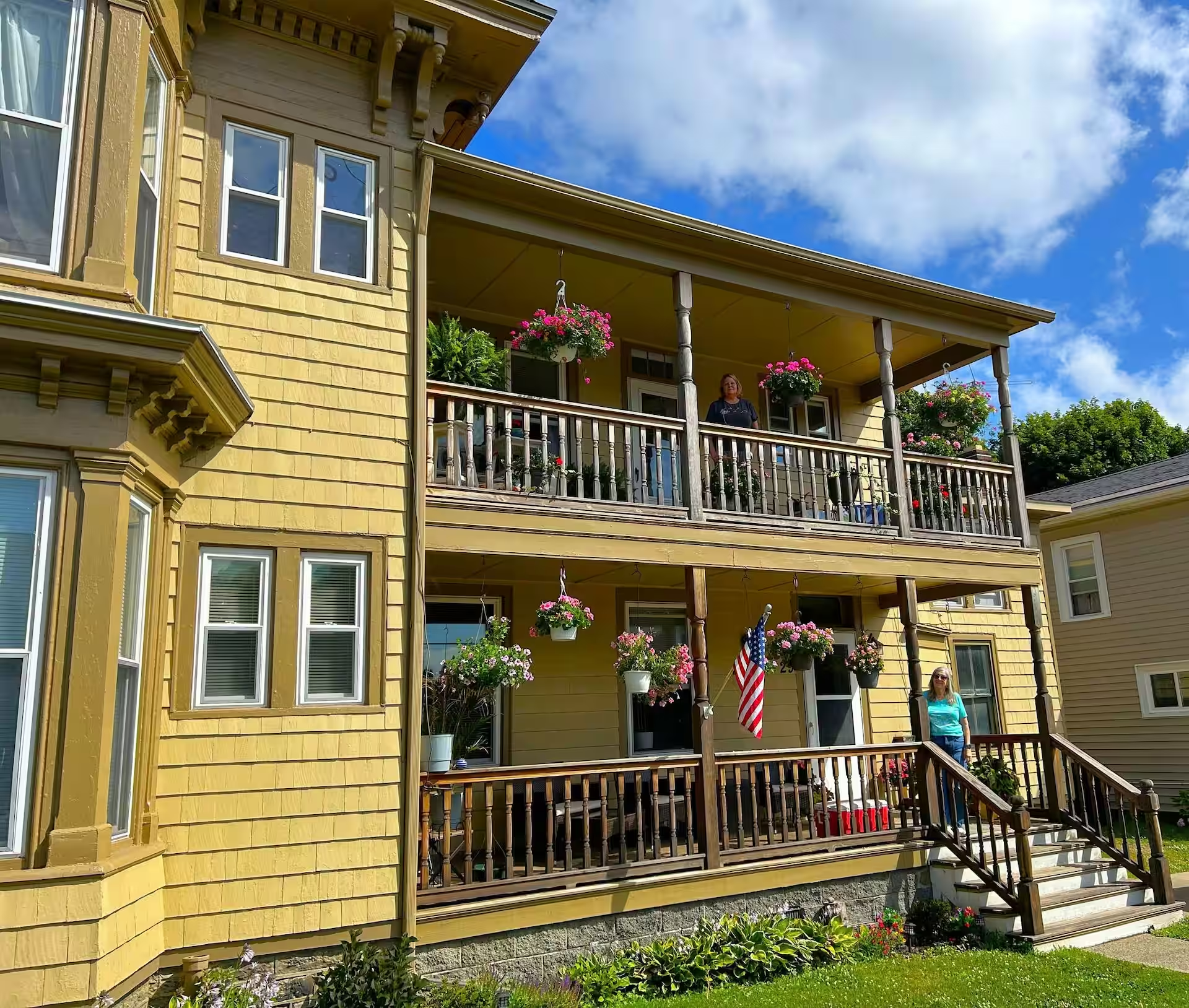
A property owner considering a home improvement is also making a judgment about the neighborhood. Will others maintain their properties? Is the block improving? Will the investment still make sense a few years from now?
A small grant can help an owner act, but its influence can extend beyond the property receiving it. A repaired porch, freshly painted house, or restored facade gives neighbors visible evidence that someone is investing. When several owners make improvements together, each has more reason to believe that their own investment will be supported by what happens around them.
Small catalytic grants are designed to encourage that shared commitment. They cover a limited portion of an improvement's cost, giving property owners a reason to invest their own money and coordinate with their neighbors.
Visibility is essential to this approach. An improvement that can be seen from the street contributes to the confidence of the whole block. The public investment supports work on individual properties while encouraging further investment nearby.
The Oswego Renaissance Association in Oswego, New York, puts this approach into practice through its Renaissance Block Challenge.
Property owners apply in clusters of at least five neighboring properties. They commit to exterior improvements such as painting, porch repairs, landscaping, walkways, sidewalks, and lighting. Participating owners are generally eligible for a dollar-for-dollar match of up to $1,000, with larger grants available in certain circumstances.
The match gives owners a reason to begin. Applying together gives them a reason to talk, compare plans, and make commitments to one another. As the work becomes visible, other residents can see that investment is happening around them.
The association reports more than $6.5 million in private investment leveraged into its Renaissance Block neighborhoods. Its work draws support from foundations, banks, and other local partners.
For a city, the opportunity is to support this kind of coordinated investment with a modest, defined commitment. Public funds can complement private and philanthropic contributions, while participating owners pay a substantial share of the improvement costs.
This tool primarily supports the maintenance and improvement of existing housing. Its contribution to a local housing market is to help owners care for what is already there and give others greater confidence to invest.
The city does not need to undertake every improvement itself. A carefully placed grant can help neighbors begin work they have reason to continue with their own resources.
Tool 2
Tax Increment Financing for Entry-Level Housing
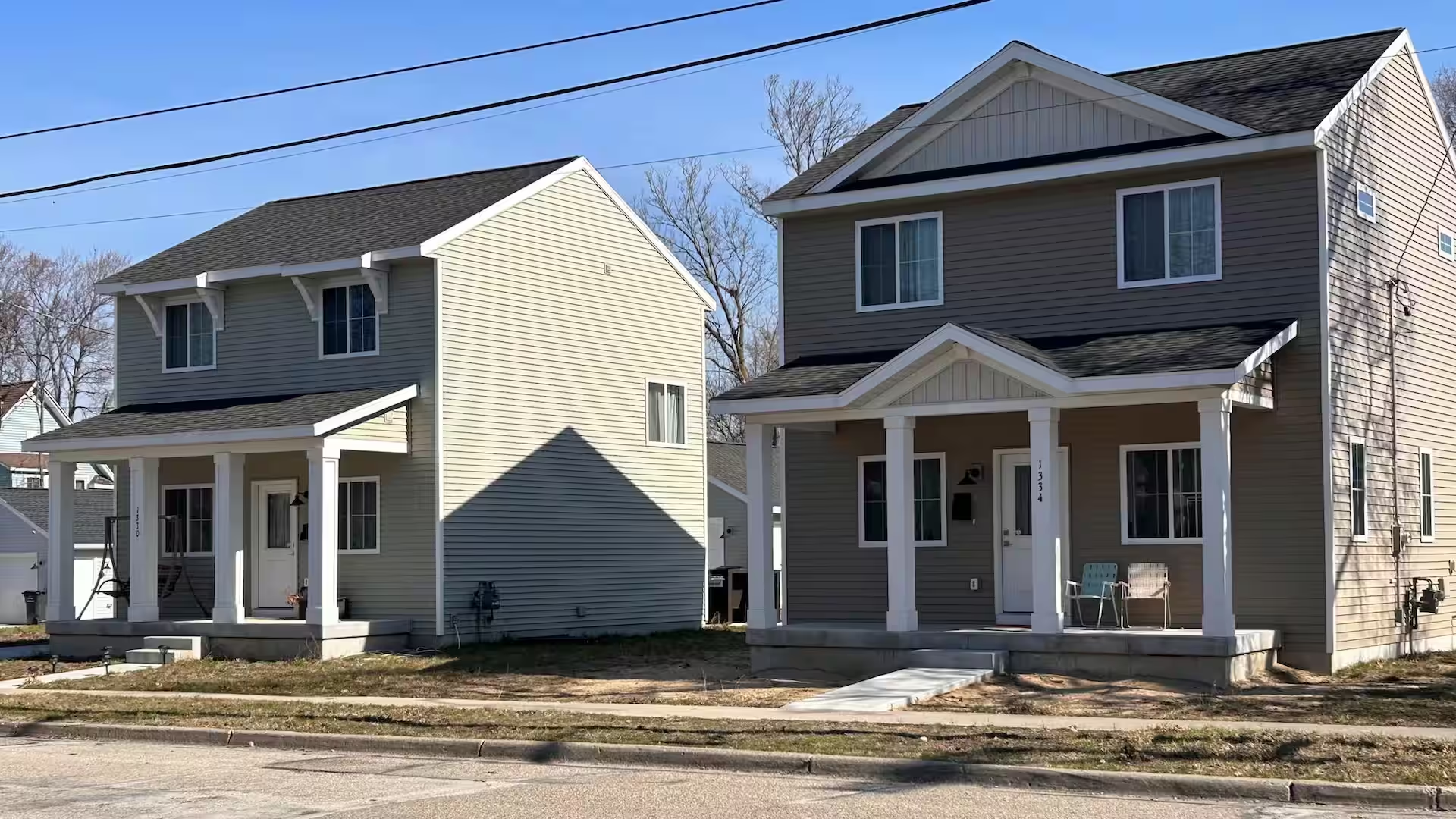
A modest home added to an existing neighborhood creates new taxable value. That future tax revenue can help make the home possible today.
The neighborhood already contains substantial public investment. Streets, water, sewer, sidewalks, and other infrastructure are in place. Where those systems have capacity, an additional home makes more productive use of what the community has already built.
Tax increment financing allows a city to dedicate qualifying increases in property tax revenue to an investment that helps produce them. For entry-level housing, the proposed use is straightforward: help a buyer make the down payment on a modest new home, then use the tax increment from that home to repay the city's contribution.
This tool is intended for small entry-level homes that the community needs but struggles to produce. Larger homes and other products already well served by conventional financing do not need the same assistance.
The approach also offers a way to expand beyond a fixed housing fund. Each qualifying home adds a revenue stream that can support the investment needed to make it possible. The city's ability to continue depends on the strength of those revenues, the cost of borrowing, and its legal and financial capacity.
Start with a modest new home — roughly 900 square feet or less — on a lot in an existing neighborhood already served by public infrastructure.
For illustration, suppose the home costs $100,000 and creates $2,000 a year in tax increment legally available for the program.
The city provides a $20,000 down payment on behalf of an eligible buyer, who obtains an $80,000 conventional mortgage. The city finances its contribution with debt supported by the future tax increment.
Before proceeding, the city must determine that the available revenue can cover principal, interest, administrative costs, and an appropriate margin for uncertainty over the repayment period. It must also account for the additional public-service obligations associated with the home. New tax revenue cannot automatically be treated as money available to repay debt.
The transaction should include a clawback provision so a buyer cannot capture the public contribution through an immediate resale. The assistance is intended to provide a household with a place to begin, with terms that protect the public investment.
As additional qualifying homes are built and purchased, each creates taxable value that can support its own financing commitment. The program can continue as buyers come forward, provided the city can finance those commitments without exceeding its risk limits or compromising its financial position.
State law will determine whether and how a city can use tax increment for this purpose, including eligible homes and buyers, permitted expenditures, and borrowing authority.
The city is using a portion of the future tax value created by an entry-level home to help make that home possible today.
Tool 3
Property-Assessed Housing Financing
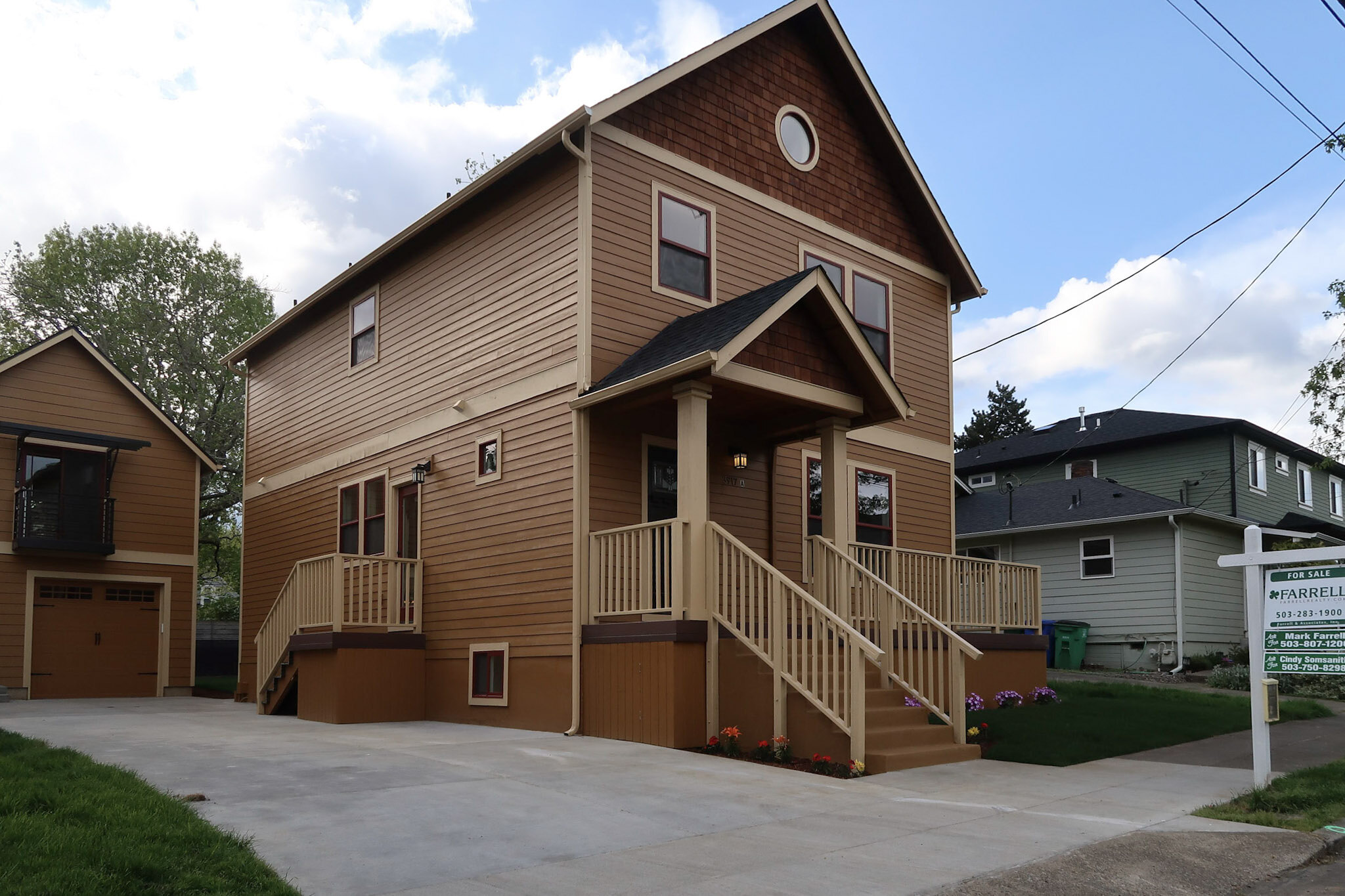
A backyard cottage or home conversion can provide housing for decades. The financing available to build it may require repayment much sooner.
That mismatch can prevent an otherwise sound investment. A property owner may be able to afford payments spread over a longer period but cannot carry the expense on the terms available through conventional lenders.
Property-assessed housing financing would use municipal borrowing and collection powers to provide a longer-term financing option. Cities may be able to borrow at lower rates and for longer periods than individual owners. Repayment through a property assessment could connect those advantages to modest housing investments.
The owner would remain responsible for the full cost of the improvement, including financing and administration. The city would make the project more affordable by changing the terms of repayment, with payments structured to recover the public's costs.
Under this proposed model, a property owner would arrange short-term construction financing for an eligible project, such as a backyard cottage or home conversion. Before construction begins, the owner and lender would need a clear understanding of the conditions under which the project would qualify for long-term municipal financing.
Once construction is complete and those conditions are met, the city would provide financing to retire the construction loan. It would place an assessment on the improved property for the amount financed, with interest and fees sufficient to cover municipal borrowing, administration, and an appropriate allowance for risk.
The owner would repay the assessment over an extended period through the property-tax collection system. The project would have a repayment schedule better suited to a durable housing investment, while the city would recover its costs.
This approach would require specific legal authority. Minnesota, for example, authorizes special assessments for designated improvements, including streets, water, sewer, and certain privately owned energy improvements. States could extend assessment financing to qualifying incremental housing projects.
Enabling legislation would define eligible projects, financing limits, underwriting standards, and protections for owners and cities. It would also need to establish how the assessment interacts with existing mortgages, what happens if payments are missed, and whether an outstanding balance transfers with the property or must be repaid at sale.
The purpose is to create a dependable financing path for viable improvements that conventional lending does not adequately serve. A homeowner could undertake a lasting investment, repay its full cost over time, and add housing without requiring the city to absorb the construction expense.
Tool 4
Credit Enhancement for Incremental Housing

A local bank may recognize the value of a backyard cottage or duplex conversion and still hesitate to finance it. The borrower may be creditworthy and the project financially sound, but the bank has little experience making that kind of loan. Comparable loans are limited, and there may be no secondary market where the bank can sell it.
That creates a difficult starting point. The bank needs experience to become comfortable lending, but someone must make the first loans before that experience can develop.
Credit enhancement can help bridge the gap. A foundation or other partner agrees to cover a defined portion of potential losses, giving the bank enough confidence to establish a lending product for projects it would otherwise struggle to serve.
The bank supplies the capital and remains responsible for evaluating borrowers and projects. The partner's contribution limits a portion of the bank's exposure while it learns how these investments perform.
The objective is to establish a lending practice that can eventually continue without that support.
Imagine a local bank willing to create a loan product for backyard cottages. A local foundation commits $250,000 to a reserve supporting an initial portfolio of $1.25 million in loans.
Under this illustrative arrangement, the reserve would cover the first $250,000 in qualifying losses across the portfolio. The bank would bear losses beyond that amount. The agreement would define eligible loans, when a loss qualifies for reimbursement, and the maximum amount the foundation could lose.
The bank would provide the $1.25 million in lending capital. It would determine creditworthiness, evaluate projects, originate and service the loans, and collect payments. Its own money would remain at risk, giving it a continuing reason to lend carefully.
The foundation's reserve would be drawn down only to cover qualifying losses. If losses remain below the amount committed, the unused balance could support further lending as earlier loans are repaid and the agreement releases the associated commitment. Any earnings on the reserve would depend on how the funds are held.
For the foundation, the opportunity is to support a larger volume of housing investment than it could fund through direct grants. Its exposure would have a defined ceiling, although money used to cover losses would be spent.
Over time, the bank would build a record of loan performance, refine its underwriting, and gain experience with local builders and housing investments. That evidence could allow it to continue lending with a smaller reserve or eventually without one.
The measure of success is a lender that has learned to serve a missing part of the local housing market and is willing to keep doing so.
Tool 5
Municipal Deposits As Leverage

A city's banking business has value. Operating accounts, reserve funds, deposits, and payments provide financial institutions with substantial balances and ongoing business.
Cities routinely evaluate those relationships based on service, cost, safety, and return. Where the law permits, they could also consider whether an institution is willing to help develop the lending products their community needs.
A bank may be reluctant to undertake the work of creating a product for backyard cottages, duplex conversions, or modest starter homes. The prospect of earning or retaining a valuable municipal banking relationship gives it another reason to explore that market.
The city would use its position as a customer to encourage lending to creditworthy borrowers with viable projects. Its deposits would remain public funds, protected and managed for their intended purposes. The bank would supply the lending capital and bear the risk of the loans.
The city begins by understanding the value of its banking business: how much money it holds, which institutions hold it, what services it purchases, and when those relationships come up for review.
It then identifies a specific gap in local housing finance. Homeowners may struggle to find construction financing for backyard cottages. Neighborhood builders may need loans suited to modest projects on existing lots. The city needs to understand what is missing well enough to discuss an actual product with prospective banking partners.
That conversation should move beyond a general promise to support housing. Which projects would the product serve? What loan terms would make it useful? What would the bank need to establish it, and when could borrowers begin applying?
Within applicable law, willingness to develop and offer those products could become one consideration when the city selects its banking partners. The city would continue to evaluate the safety of its funds, the quality and cost of banking services, and its own cash-management needs.
The bank would establish underwriting standards, evaluate borrowers and projects, originate and service the loans, and bear the lending risk. The city's role would be to make serving this part of the housing market a more attractive business decision.
This is a proposed approach rather than an established municipal program presented here as a model. Strong Towns has discussed it with bankers who have indicated that it is workable. A city pursuing it would need to determine how it fits within state laws governing public deposits, investments, procurement, and banking relationships.
A city already makes decisions about where to place its financial business. Those decisions can become an opportunity to ask more of the institutions seeking that business.
Tool 6
Public Land As Patient Capital
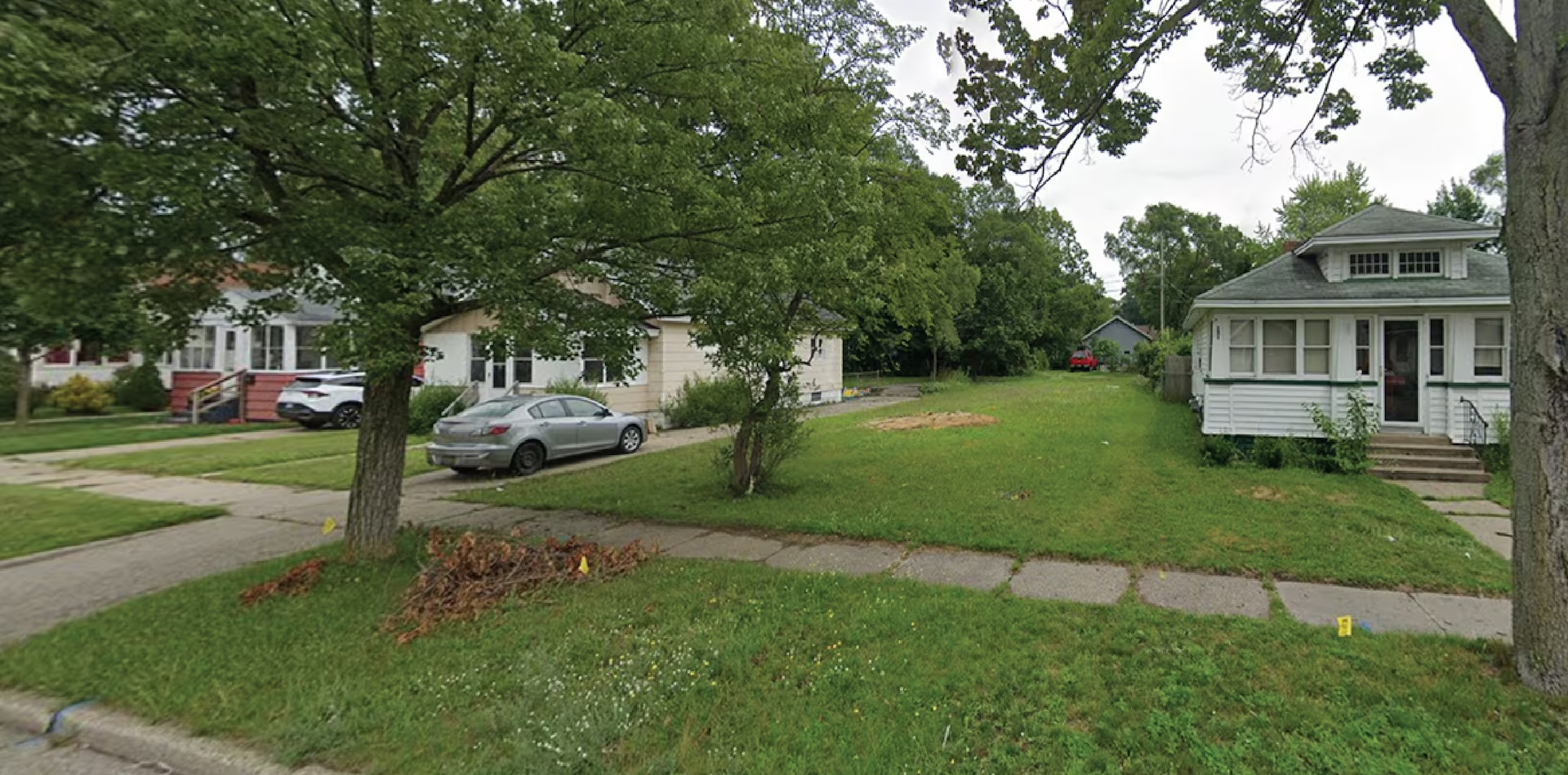
A city may own a vacant lot suitable for a modest home. A local builder may be ready to build it. Yet purchasing the land before construction begins can tie up enough money to keep the project from moving forward.
The city can help by changing when and how it gets paid.
Public land is often treated as something to sell, give away, or hold for a future purpose. It can also serve as patient capital: an asset whose value remains in the project while the builder completes the work needed to repay it.
For an entry-level home, that flexibility can matter. The builder still needs to finance construction, but does not have to finance the land purchase at the same time. The city can receive the agreed value of its property when the completed home sells.
The opportunity is to make a viable project easier to finance while preserving the public's investment.
The city identifies land suitable for modest housing, with particular attention to parcels in existing neighborhoods already served by streets and utilities. It establishes the land's value and determines whether a different payment arrangement could make a viable project possible.
Under a deferred-payment agreement, a local builder would obtain the right to build on the parcel without paying the full purchase price upfront. When the completed home sells, the city would receive the agreed payment for the land.
The agreement would establish a completion deadline, how the city's interest is protected, and what happens if construction stalls or the home does not sell. The builder, city, and construction lender would need compatible terms before work begins.
A city could instead retain ownership through a long-term ground lease. The builder or homeowner would pay for the use of the land over time rather than purchase it upfront. The lease would need to support financing of the home and clearly establish responsibilities for payments, maintenance, resale, and default.
Either arrangement requires the city to account for the costs and risks of waiting for payment. Recovering the land's stated price at a later date does not, by itself, establish that the public has recovered its full investment. Interest, lease payments, or other agreed terms can compensate the city for that commitment. Any intentional concession should be identified as a public expenditure.
The available arrangements will depend on the laws and restrictions governing the particular property. The city must establish what it can sell or lease, under what terms, and through what process.
Used carefully, public land can help a neighborhood builder complete a modest project while returning value to the community. The city's contribution is its willingness to wait for payment on terms that protect its capacity to act again.