When a Drive-Thru Feels Like the Only Option
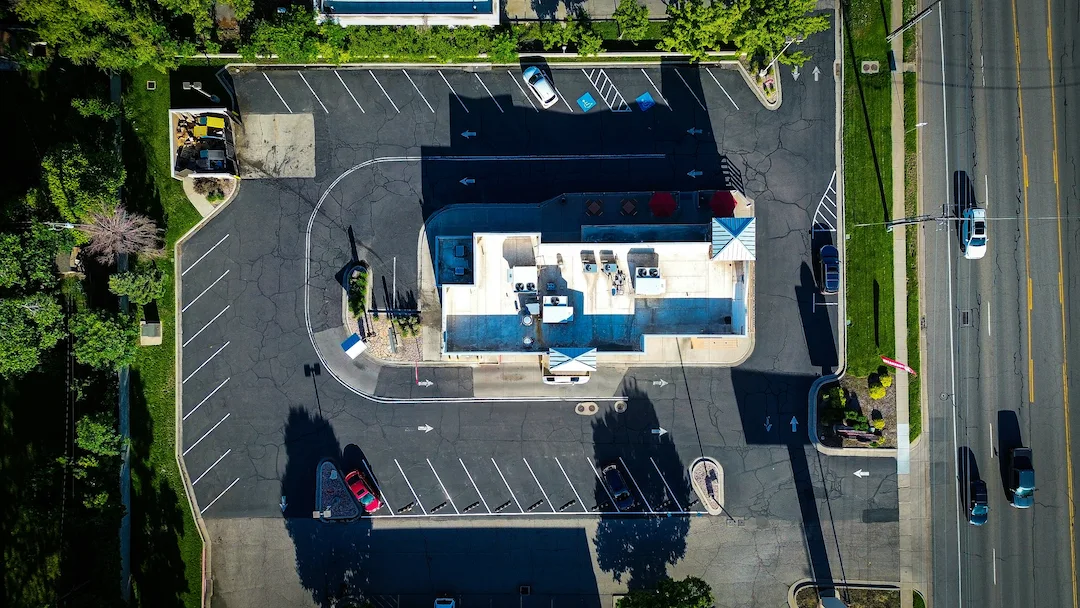
Photo by Heber Davis on Unsplash.
A Strong Towns member recently asked a question many local advocates will recognize.
“Would be interested in the Strong Town's take on this project proposed for a long vacant city owned lot on the edge of downtown Des Moines, IA. Normally those of us in Strong Des Moines [the city’s Local Conversation] would be against a drive-thru business like this in our downtown area but are finding the group having mixed feelings on this.”
The site is complicated. It’s oddly shaped, bordered by railroad tracks, constrained by easements, and has sat vacant for years. Under normal circumstances, an auto-oriented use so close to downtown would be a clear “no.” But nothing else has happened on this site, and this is the only proposal the city has received.
The Local Conversation found itself torn.
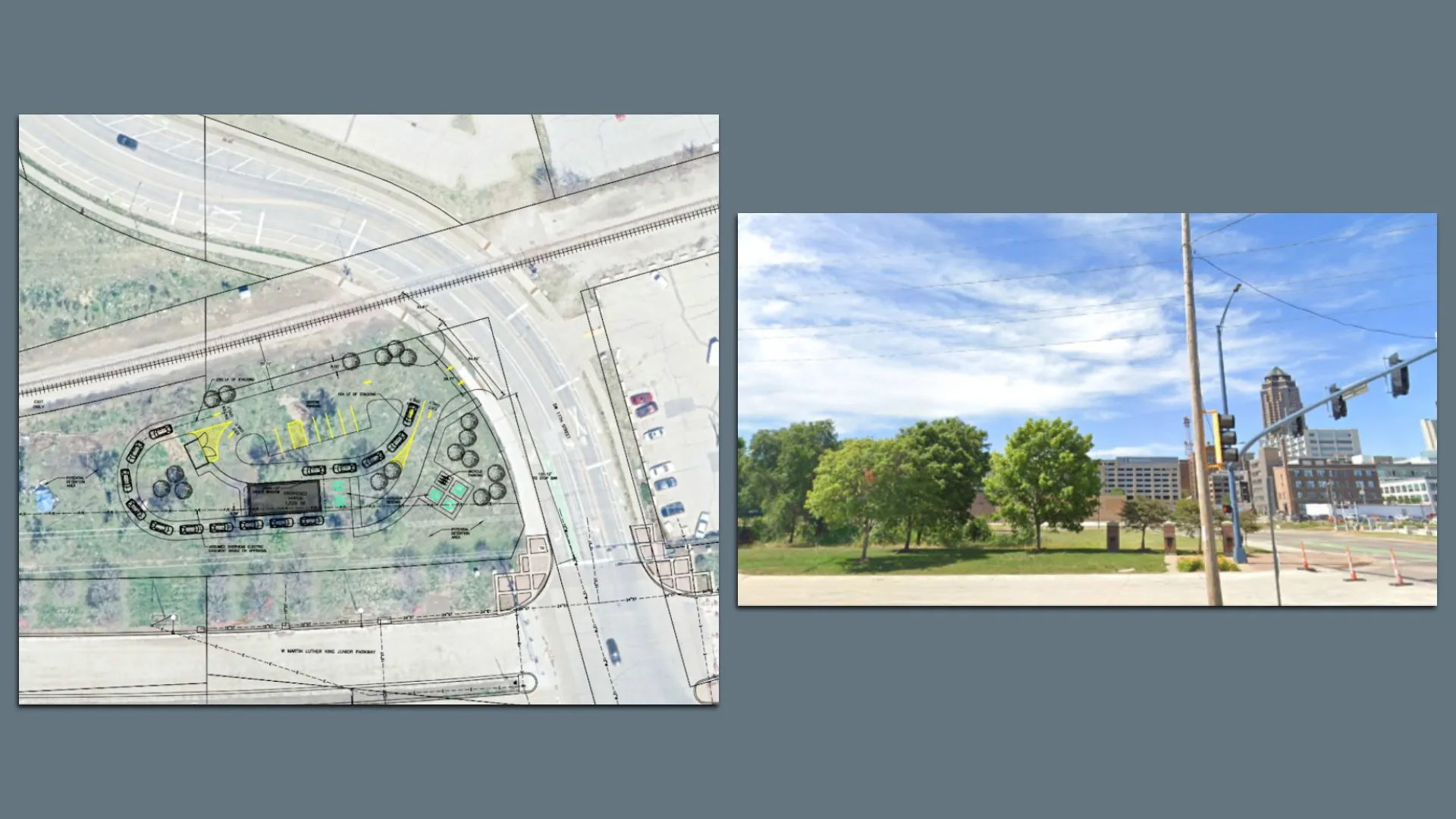
On one hand, the project would put unproductive land back on the tax rolls. The developer has made some accommodations for bikes and pedestrians. After years of vacancy, it feels like a win that something might finally happen.
On the other hand, the proposal represents the lowest-intensity form of commercial development: a small building centered on the site, wrapped by a drive-thru and surrounded by parking. Across the street, new urban mixed-use buildings are taking shape and this project could set a precedent for auto-centric uses along an important developing corridor. Whatever is built here will likely remain for decades, delaying the possibility of something more urban.
What makes the situation especially uncomfortable is the fact that when the city put the property up for sale, this was the only interested party. There were no other buyers.
If this is the only option, what are we supposed to do? Say no and leave the land empty indefinitely? If even a drive-thru can’t make this site work, what will?
This is where Strong Towns thinking asks us to slow down and reframe the problem.
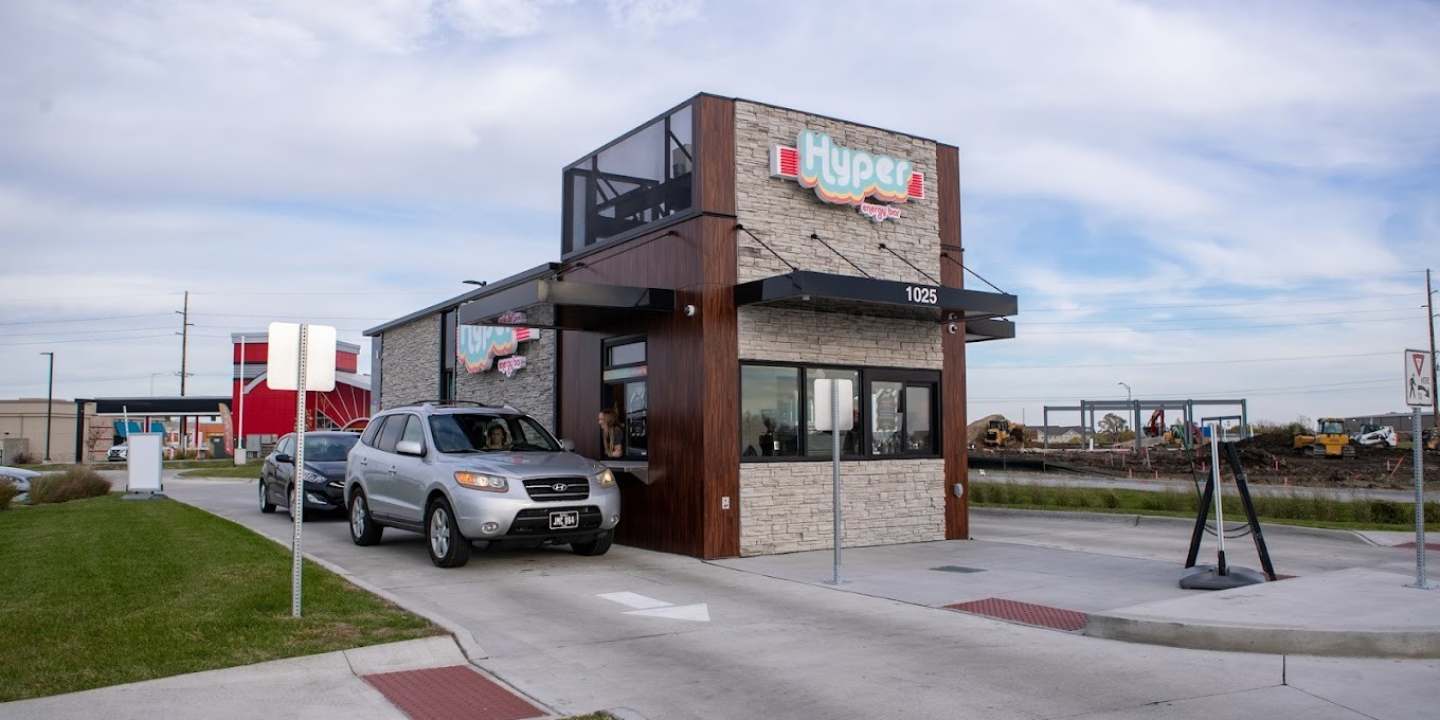
The Real Question Isn’t the Drive-Thru
The debate in Des Moines isn’t really about whether a drive-through is good or bad. It’s about whether the city has done the work to understand the potential of this site. When a project is presented as the last, best, or only hope for a piece of land, that’s usually a signal. The site isn't hopeless, but evidently the city hasn’t yet invested in clarifying what’s possible there.
A drive-thru isn’t a permanent land use, even if it’s built to look permanent. It’s a suburban development pattern optimized for speed, convenience, and short-term return. It consumes a lot of land, generates relatively little value, and often struggles to support the infrastructure around it over the long run.
At Strong Towns, we’ve observed a useful rule of thumb: for every dollar of long-term public investment in streets, utilities, and maintenance, a place typically needs around roughly $40 of private investment to make the math work. A low-intensity, auto-oriented project on a prominent urban site rarely comes close. So the question becomes: Why is this all the market is offering?
When cities say, “No one else is interested,” what they often mean is: no one else is interested under the current rules, risks, and uncertainty.
Zoning, setbacks, parking requirements, access standards, and stormwater regulations aren’t neutral. They shape what kinds of projects are feasible, financeable, and predictable. If those rules make urban buildings difficult or risky, the market will respond with suburban formats—even in downtown-adjacent locations. Not because developers lack imagination, but because lenders finance predictability, not creativity.
This is especially true on difficult sites, where complexity translates directly into risk. And that’s where cities have an opportunity to respond differently.
Invest Before You Sell
Instead of treating city-owned land as something to offload as quickly as possible, cities can make a small, strategic investment before the sale. These are modest investments that pays dividends for decades.
That investment isn’t a subsidy. It’s clarity, and its costs nothing for a city to be clear about its identity and expectations. The fact we need to recognize is that all of these development standards and zoning regulations are both adopted and administered by the city. In other words, the most knowledgeable experts on these are the technical experts working in city hall, so we can start by asking these experts what is possible.
Here’s what that can look like in practice:
- Complete a quick study to understand the maximum reasonable building placement and footprint. Answer the question: where and how much can be built on this site? This is a simple task that can be undertaken by the city planner and result in a simple box illustrating where a building could be placed on the site.
- Identifying any zoning or development standards restrict or prevent urban, walkable development. This is the opportunity for city plan reviewers to stress-test the code on a real project. If needed, adjust those rules so the desired pattern is actually legal, or provide technical guidance explaining how to achieve the desired outcome.
- Creating simple visuals like sketches, massing diagrams, and share precedent images, that show what could be built to inspire and attract attention. These visuals move the conversation beyond a vacant lot and communicate what is possible.
- Outline the steps required for development approval and entitlement. Clearly outlining a predictable low-risk path to entitlement lowers the risk and establishes expectations for an investor. If needed, use this as an opportunity to improve and streamline the process.
These steps do not require expensive consultants or exhaustive reports, or even designing the site to a finished state. It’s all about removing mystery from the development process. This signals to the community that City Hall understands the site, that it is aligned internally and is ready for a stronger outcome. When that happens, the pool of potential developers changes.
What This Looks Like in Practice
I saw this firsthand while working as an urban designer in Martin County, Florida. Many redevelopment areas included challenging parcels—irregular sites, politically sensitive locations, and neighborhoods exhausted by years of stalled plans. Instead of waiting for proposals, we asked a different question: What would a productive development look like here, and what’s preventing it?
We tested building envelopes, reviewed codes, and created simple diagrams showing how sites could develop incrementally over time. In some cases, we adjusted standards that forced suburban layouts. In others, we simply clarified the process.
That modest upfront effort changed everything. Developers no longer had to guess what the county wanted. Lenders saw reduced risk. Community members could respond to tangible possibilities instead of vague promises.
Back to Des Moines (and Everywhere Else)
This is why the Des Moines example matters, even if the drive-thru ultimately gets built. It highlights a common pattern: cities reacting to proposals instead of shaping conditions, and measuring success by whether something happens rather than whether the outcome strengthens the community over time.
Strong Towns members don’t need to win every individual fight. But every fight should offer a learning opportunity.
City-owned land is one of the most powerful tools local governments have. Used passively, it tends to deliver the bare minimum. Used intentionally—even with a small investment—it can nurture higher-value, more resilient development patterns that compound over generations. This approach doesn’t guarantee a better proposal every time, but what it does is improve the odds.
The next site is always more important than the current one. And the work that makes the next site successful often begins long before a “For Sale” sign ever goes up.
Edward Erfurt is the Chief Technical Advisor at Strong Towns. He is a trained architect and passionate urban designer with over 20 years of public- and private-sector experience focused on the management, design, and successful implementation of development and placemaking projects that enrich the tapestry of place. He believes in community-focused processes that are founded on diverse viewpoints, a concern for equity, and guided through time-tested, traditional town-planning principles and development patterns that result in sustainable growth with the community character embraced by the communities which he serves.
%20(1).avif)
%20(1).avif)
%20(1).avif)