If Public Engagement Is Worthless, What Should Replace It?
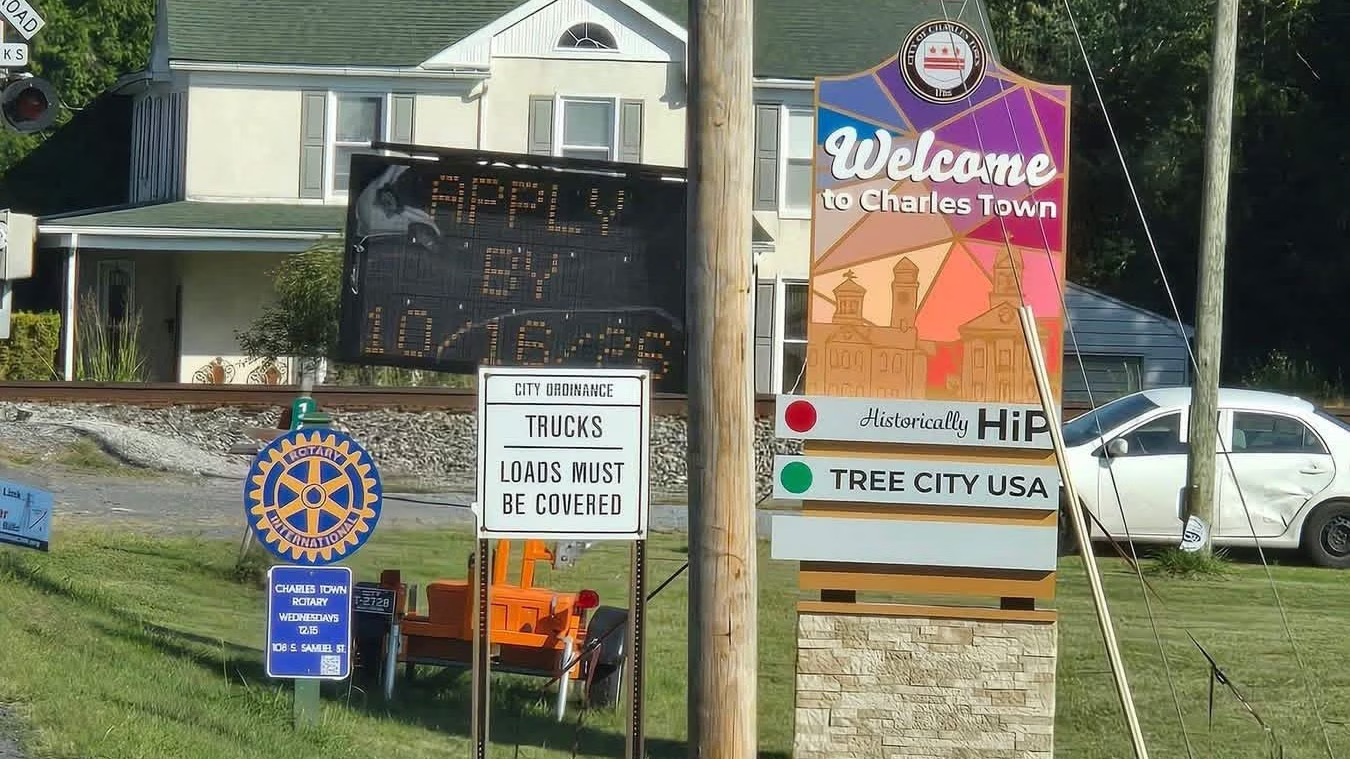
New welcome signs in Charles Town, WV. (Source: Author)
Seven years. That is how long it took my community of Charles Town, West Virginia, to install the two new welcome signs shown above.
There is a wonderful story behind those signs. Years ago, Rashedul Hasan Deepon, a planner for the city and an artist, was given the task of developing a wayfinding system for Charles Town. He researched the community, sketched ideas and developed a design drawing from things that are distinctly local. One of those elements was a colorful mosaic created by more than 500 members of the community. If you spend time in Charles Town, you know the mosaic. Families take photographs there. Students pose before prom and graduation. Couples take wedding pictures. It has accumulated meaning because people have incorporated it into their lives. The mosaic became part of the city's identity, and its pattern and colors found their way into the new welcome signs.
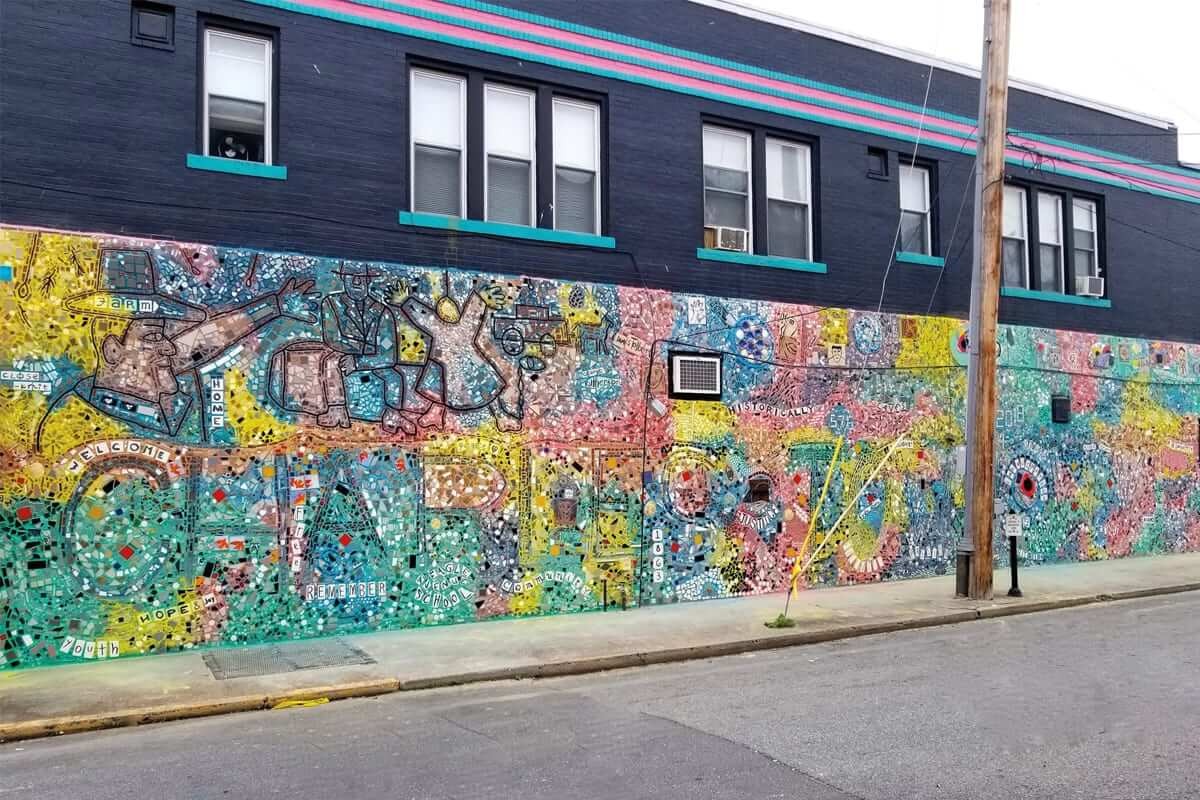
The city council unanimously supported the wayfinding package. Businesses had been asking for better wayfinding. The city funded it. And then it took years to actually happen.
When the signs were finally installed, city staff celebrated the accomplishment on social media. I learned about the project the same way many other residents did. The signs seemed to appear out of nowhere, and almost immediately, people started debating them. Some loved them. Some didn't. People argued over the colors, the design and whether the signs appropriately represented Charles Town.
I asked a different question: why did it take seven years?
When a Small Project Becomes a Big Project
The answer from city staff was revealing. The original designer left the city two years into the process. Four city managers were involved. The sign company went through three project managers. Staff turnover interrupted the work. Other problems demanded attention. With a small municipal staff, the project repeatedly went onto the back burner. The response was simply put: they did the best they could with the people they had. As someone who has been in that position in a small government, I believe them and appreciate their honesty.
This isn't a story about incompetent government workers. Quite the opposite. There is something admirable about people carrying an idea through seven years of turnover and competing priorities until it finally becomes real.
But we should pay attention to what the experience is telling us. A relatively modest civic improvement became a seven-year undertaking. After seven years of design, approvals, funding, procurement, management changes and fabrication, the public finally experienced the result. Then came the feedback. Do you like it? Yes or no? Beautiful or ugly? Appropriate or inappropriate? But after seven years, what exactly is the city supposed to do with those opinions? The signs have been designed. The money has been spent. They have been fabricated. The concrete has been poured. At that point, "Do you like it?" may be one of the least useful questions we can ask.
We Have Been Doing Public Engagement Backwards
Years ago, Strong Towns Founder Charles Marohn wrote "Most Public Engagement Is Worthless." His argument wasn't that residents have nothing valuable to contribute. It was nearly the opposite. We routinely ask people questions they are poorly equipped to answer, such as what percentage of the city budget should go toward parks or which of several professionally prepared alternatives they prefer, while failing to ask about the things they know better than anyone else. Marohn argued that people's actual experiences are much more valuable. How did you get here? Do you use the park? Do you feel safe walking here? "Our planning efforts should absolutely be guided by the experiences of real people," he wrote. Their actions, rather than their stated preferences, should provide useful information.
I really like Ruben Anderson's response, "Most Public Engagement Is Worse Than Worthless." Anderson argued that poorly structured engagement can actually corrode the relationships communities need. Asking people questions they aren't equipped to answer and then disregarding their answers doesn't build trust between residents and local government. It undermines it.
I agree with both critiques. But watching what has happened in Charles Town over the past two years has made me wonder about the next question. If conventional public engagement doesn't work very well, what should replace it? Charles Town may be stumbling into an answer: we go for a walk.
A Walk About Nothing
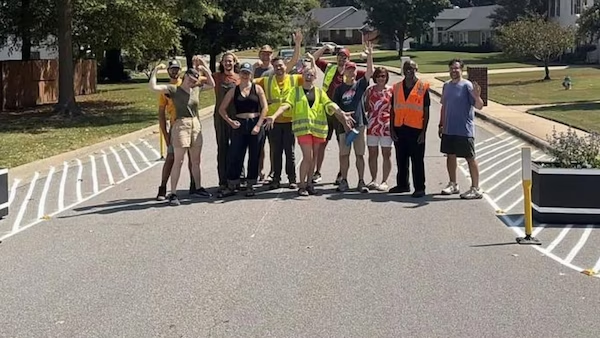
Twice a month, people meet outside Charles Town City Hall for something called a "Walk About Nothing." There is no agenda, no meeting minutes to prepare and no predetermined route. Sometimes a topic or destination is announced beforehand, but most of the time people simply show up and start walking.
The idea came from Charles Town's business development and downtown coordinator, Liz Cook. Inspired partly by "Seinfeld," the famous "show about nothing," she wondered whether a walk with no formal purpose could create the connections she wanted to see in the community. The first walk took place in September 2024. Nine people and two dogs showed up. Attendance grew from there, and within the first year, a walk attracted 50 participants. Today, it isn't unusual to have 50 or 60 people walking together.
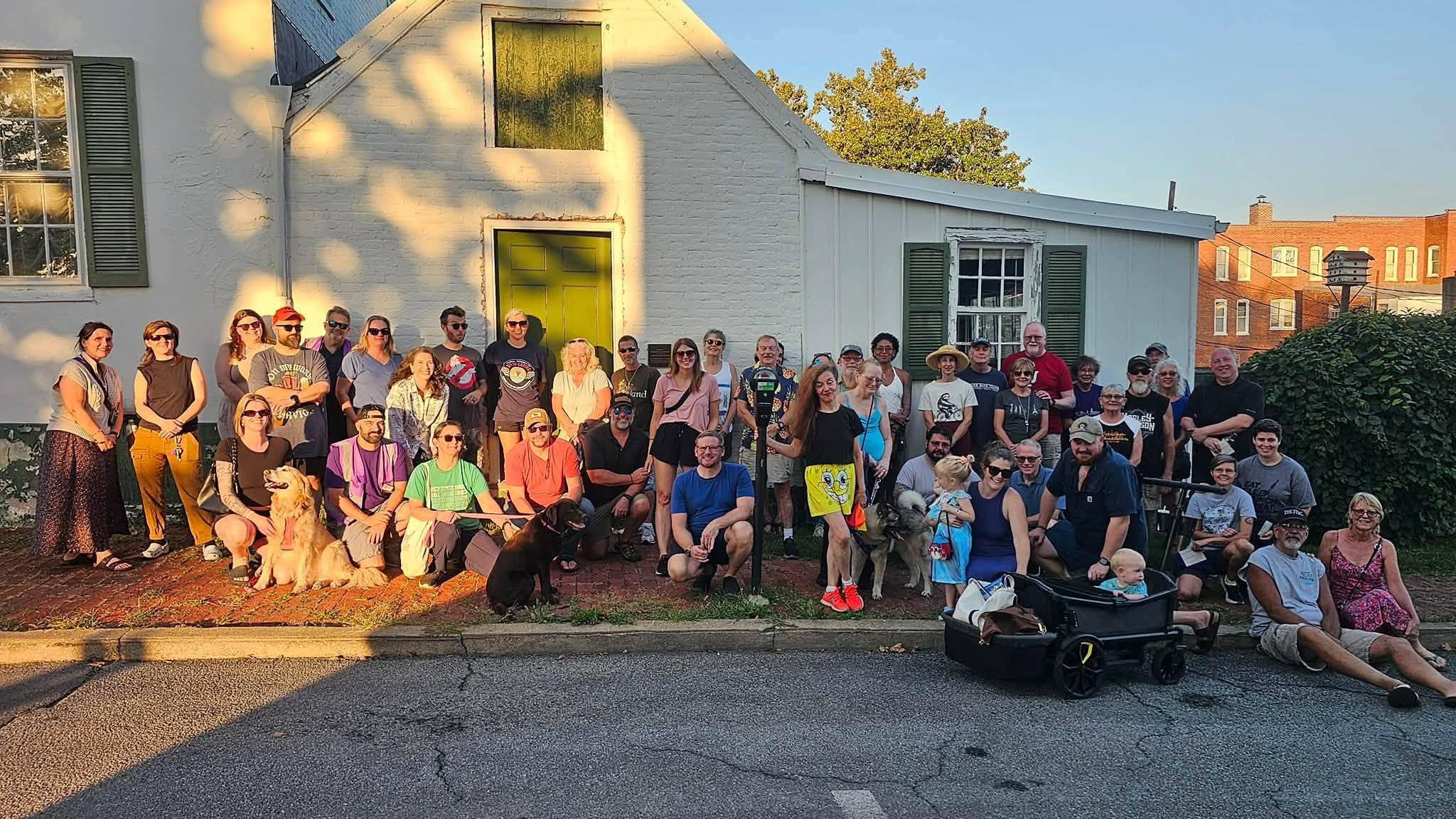
City staff, elected officials, residents, business owners and whoever else wants to join spend one hour experiencing Charles Town together. They talk, notice things and ask questions. And because the conversation is happening in the place itself, an abstract issue can suddenly become something everyone can see and understand. That's where things get interesting.
A Crosswalk in a Week
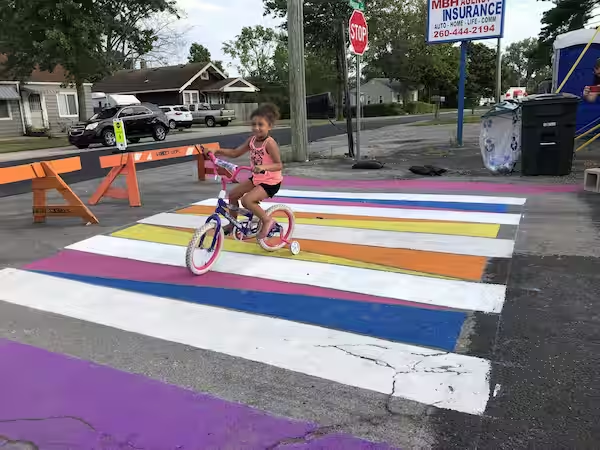
During one of the early walks, participants were talking about crosswalks. The city had installed new crosswalks in parts of Charles Town, and because the group was walking through the community, everyone could experience them together. That opened another conversation. Residents Sandy and Andy Cavalier raised concerns about the lack of a crosswalk in their residential neighborhood outside downtown. A council member followed up with City Hall the next day. Public Works responded, and within a week the neighborhood had a new crosswalk.
Think about that process. Nobody needed to commission a study. Nobody needed to organize a special public meeting. Residents didn't need to prepare testimony. They were walking together, experiencing an improvement the city had already made, when someone essentially asked: could we do this in our neighborhood? Within a week, something changed, and now residents could observe the response. The "engagement" took the form of a feedback loop, as opposed to a transaction.
Not Everything Gets Fixed in a Week
Of course, cities are complicated. Not every problem identified on a Wednesday walk can be fixed by Public Works the following week. Washington Street demonstrates that. Nearly every Walk About Nothing eventually involves crossing or walking along Washington Street. It’s our main street, and it's maintained by the state through the walks, people experience the street together. They talk about safety and about crossing it, and they have different ideas about what should change. There is a Safe Streets planning process addressing Washington Street, but that work follows a very different timeline. Larger changes will require coordination, funding, design and eventually construction. The walks don't eliminate those constraints. They allow people to continue experiencing the street while those larger processes unfold. Instead of one public meeting followed by years of silence, there is another walk in two weeks, and another after that. The conversation continues.
Parking has been another recurring topic, and it sounds different when the conversation happens while walking through town. Participants can see the on-street spaces, the city-owned public lots, the private parking areas, which spaces are occupied and which aren't, and the actual walking distance between a parking space and a destination. That creates an opportunity to ask a different question: does Charles Town actually have too little parking, or do our regulations require too much of it? Now parking mandates aren't an abstract planning concept. People have experienced the conditions themselves. The city is currently working on code updates, although those proposals have not yet been presented. The walks haven't formally enacted parking reform, nor should they. They are doing something that should happen before reform. They are building understanding, introducing people to an idea, connecting that idea to something they can see, and giving them time to think about it and encounter it again on the next walk.
Meeting the People Behind the Storefronts
The walks have also become a way to experience the businesses and people who make Charles Town what it is. On the Wednesday before Prismatic Art Studio opened, walkers were invited inside. They met the owner, Gabby, learned what she was creating and experienced a new community art space before its grand opening. On another walk, the group met Summer Wilks, the new owner of Charles Washington's historic office. The building had been closed for decades. Wilks is working to restore the structure and bring new life to an adjoining former florist space. Instead of reading about the project in a newspaper, participants walked inside. She showed them the building. She showed them historic finishes being preserved. She told them what she hoped the place could become.
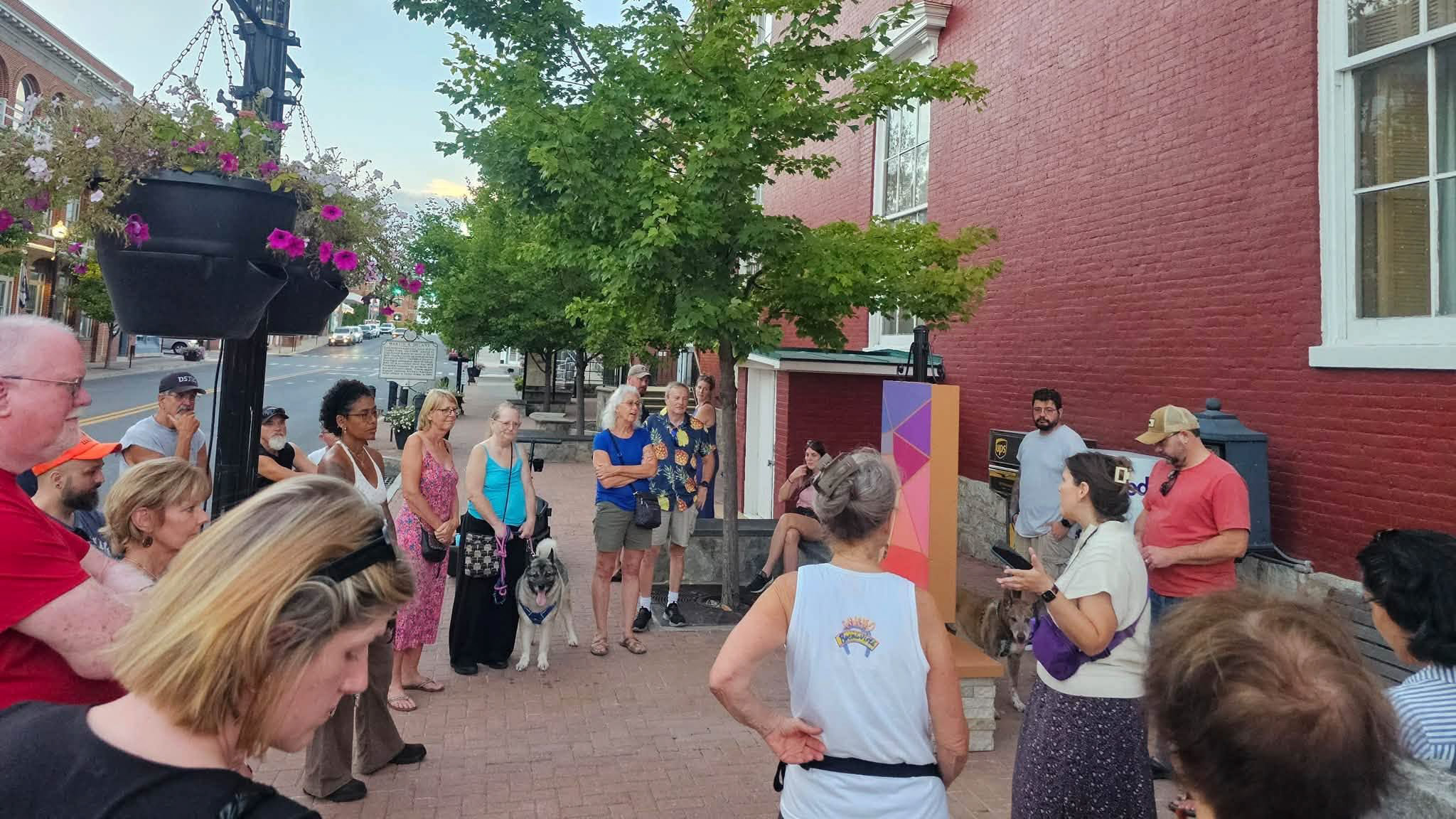
These encounters may never appear in the minutes of a public meeting. There are no comment cards to tally. There may be no measurable deliverable. Yet a business owner is no longer simply someone behind a storefront or an applicant at the permit counter. Residents understand a little more about what it takes to invest in their downtown. The business owner meets the people who live there. City officials hear the experience of both. The community becomes a little more connected. That is also public engagement.
Disagreement Is Part of the Feedback Loop
There is another reason these walks work. People don't have to agree. Charles Town has established a designated outdoor drinking area, locally branded as Hip Sips, where adults can purchase approved alcoholic beverages and carry them within a defined downtown area. Not everyone supports the program. Yet on many Walks About Nothing, participants grab a beer and continue walking. The disagreement doesn't need to be resolved before people can experience the community together. The same is true of Washington Street. The same is true of parking.
The purpose of the walk isn't consensus, and that may be one of the most important lessons here. We have designed too much public engagement around producing an answer: which option do you prefer, do you support this project, what should we build. A feedback loop doesn't require everyone to arrive at the same answer. It requires people to continue paying attention.
The Walk Is the Meeting
Earlier this year, I wrote that the highest form of public engagement isn't a meeting. Cities routinely reserve a conference room, send notices, print drawings, prepare PowerPoints and invite residents to react to something before a project gets built. The process feels orderly, but it often rests on a flawed assumption: engagement must be completed before action can begin.
The Walks About Nothing have pushed my thinking one step further. Maybe public engagement shouldn't be something we complete at all. Maybe it should be continuous.
Consider the conventional process: idea, design, public engagement, approval, funding, procurement, construction, and then, perhaps years later, public reaction. The project moves forward while the feedback loop remains open for only a brief moment.
Charles Town's walks suggest another model: walk, observe, talk, learn, respond, walk again. Sometimes the response is a crosswalk. Sometimes it is the beginning of a conversation about parking mandates. Sometimes it is learning what a business owner is trying to accomplish. Sometimes it is recognizing that the street everyone is walking on is dangerous but that fixing it involves another level of government and a much longer process. And sometimes the response is simply another conversation. Then, two weeks later, people walk again.
This Is the Strong Towns Approach
There is nothing particularly sophisticated about any of this. The Strong Towns approach to public investment begins with something similarly simple: humbly observe where people struggle, identify the next smallest thing that can be done to address that struggle, do it, and then observe what happens. The emphasis on small increments isn't merely about saving money. It creates the ability to learn. If our observation was incomplete or our response didn't work as expected, we haven't committed ourselves to an enormous irreversible solution. We can adjust and try again.
Public engagement should work the same way. Instead, we frequently attach engagement to large projects. By the time a project reaches the public, professionals may have already spent months or years working on it. There are drawings, budgets, schedules, consultants and funding commitments. Everyone involved has something invested in the solution. At that point, criticism is difficult to hear as information. It feels like opposition. And when the project is finally constructed, there may be little ability to respond to what we learn.
That brings me back to those welcome signs. I don't have an opinion on the design or placement of Charles Town's new welcome signs. I'm increasingly convinced that isn't the interesting question or discussion to be had. People worked really hard on them, and there is meaning behind their design that connects to our community. There were legitimate reasons the process took as long as it did. But there is an important contrast between a project that took seven years before most residents could experience it and a walk where a resident pointed out a problem and Public Works responded within days. One isn't evidence that the government is bad. The other isn't proof that every problem is simple. They represent two different relationships with time, risk and learning.
Cities don't need another technique for getting more people to attend public meetings. They need stronger relationships between the people who experience a place and the people responsible for caring for it. That requires something different from asking people what they want.
Go outside. Walk together. Observe what people actually experience. Listen when someone identifies a struggle. Try the smallest reasonable response. Then come back and see what happened.
Edward Erfurt is the Chief Technical Advisor at Strong Towns. He is a trained architect and passionate urban designer with over 20 years of public- and private-sector experience focused on the management, design, and successful implementation of development and placemaking projects that enrich the tapestry of place. He believes in community-focused processes that are founded on diverse viewpoints, a concern for equity, and guided through time-tested, traditional town-planning principles and development patterns that result in sustainable growth with the community character embraced by the communities which he serves.