Why We Love Halloween
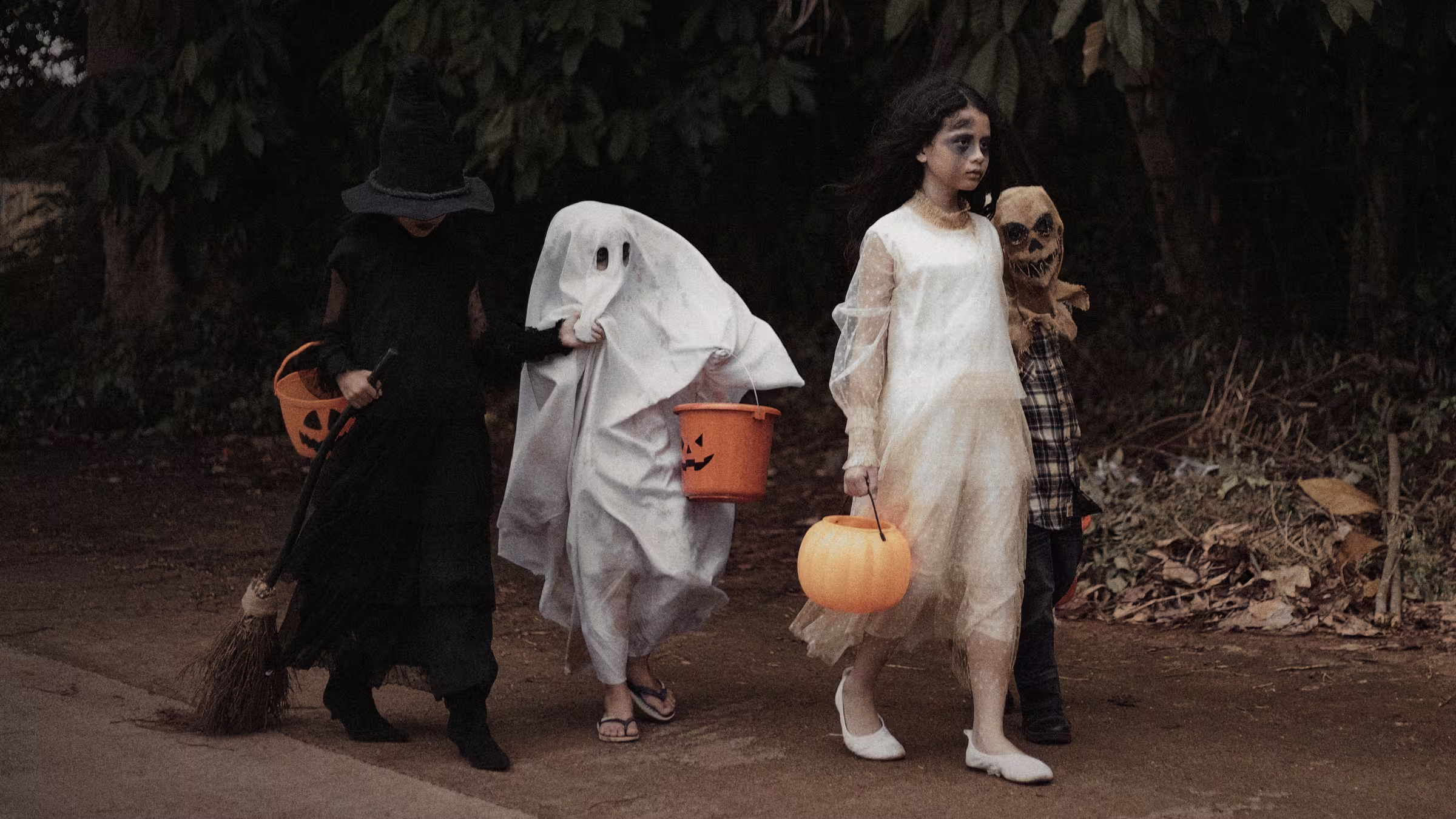
Every year, it seems like Halloween is becoming a bigger deal.
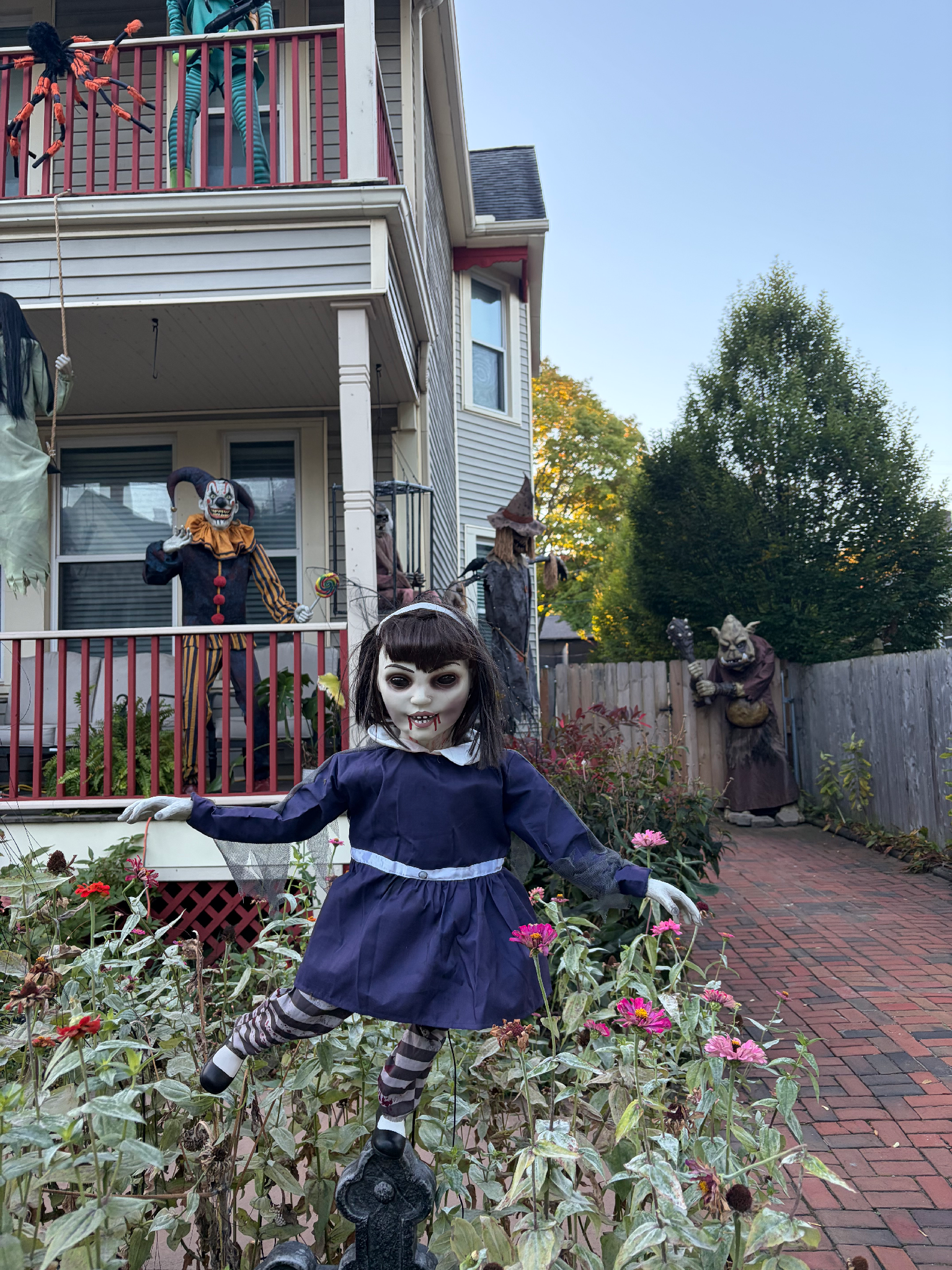
In my neighborhood, it’s surpassed Christmas, I think, in the amount of anticipation it inspires. My kids start planning months in advance. Even the decorations are increasingly over-the-top.
The friendly competition to have the spookiest front yard in my neighborhood has reached intimidating levels. I’m not complaining about this. I am an active participant. I think it’s very fun.
People love Halloween for good reason. Our traditions around this holiday, particularly trick-or-treating, celebrate a sense of generosity and neighborliness. It also offers something that is becoming rarer and rarer: the full immersion of kids in community and public space and life. People are especially eager to celebrate this holiday as these taken-for-granted values seem to be slipping through our fingers.
Every Halloween, I see think pieces deriding the rising creep of “trunk-or-treat.” I have to admit I don’t fully agree with these critiques. In my family, trunk-or-treat is just another celebration. (And if we wanted to be urbanist and nit-picky about it, we could call it “parking lot activation,” I think accurately.)
But in fairness, people worry it will replace trick-or-treating, a sacred American childhood tradition. And already, it’s not the same as it once was. There are fewer kids in neighborhoods, in the first place. Maybe their parents, rightly or wrongly, don’t feel it is safe to allow them to go door to door. Maybe for some kids, they do attempt it and no one answers.
I am happy to say this hasn’t been an issue for my family. We live on a legendary trick-or-treating street and never miss it. Where I live, a historic neighborhood in Cleveland, Ohio, is perfect for the holiday. The houses are close set with wide porches and we have complete, shady sidewalks. (Even just those three basic amenities are rare in neighborhoods now!)
Plus, my neighbors really get into it. People travel from all over the city to come to my street to trick-or-treat, and we welcome that.
On Halloween night, it’s hard not to get swept up in it all. The whole neighborhood takes on a magical quality. For starters, in Northeast Ohio it’s the height of fall. The leaves are spectacular, bright red and yellow, dry and rustling in the wind. The shift in the seasons always takes me by surprise, even though it's the most predictable thing in the world. And I am intoxicated by the beauty of fall. For a lot of people around here, it's their favorite time of year for good reason.
The darkness, too, foreign after a summer, changes the whole feeling of being outdoors. To travel through a dark neighborhood on foot, especially combined with the otherworldliness created by smoke machines, fake cobwebs and strobe lights, is hard to describe. It's a welcome change from ordinary life.
It helps I’ve lived in my neighborhood for 15-plus years and I know almost everyone, kids and adults. Still, I think we all yearn for more opportunities like this — I know I do. Casual, happy, friendly interactions without the pressure of coordinating all that yourself. It’s no wonder everyone loves this holiday. We’re all a little bit nostalgic for a time we maybe remember when this kind of neighborhood life and activity was more normal.
I’m working on a book that looks closely at urban life and children’s play in previous generations, particularly around the turn of the century. Back before people drove an average of 30 miles a day — leaving the neighborhood for long periods — or traveled internationally for that matter, or moved every four years, many people lived their whole lives in neighborhoods where every face was familiar. This was the case to the point where if a “stranger” from outside the neighborhood walked in, everyone would recognize it and keep an eye on them. Today, many people do not know their neighbors at all.
I was reading a book recently called "Working," by Robert Caro. In it, he discusses his work writing “The Power Broker,” the biography of Robert Moses, who is the famous villain in urban planning lore: the nemesis of Jane Jacobs who built the highways that tore apart neighborhoods in New York City
In the book, Caro describes the sense of social dislocation that followed the destruction of the East Tremont neighborhood in the Bronx, which was bulldozed to make way for the Cross-Bronx Expressway, a pet project of Moses.
Caro writes:
The general picture that emerged … was a sense of profound, irredeemable loss, a sense that they had lost something — physical closeness to family, to friends, to stores where the owners knew you, to synagogs where the rabbi had said Kaddish for your parents (and perhaps even your grandparents) as he would one day say Kaddish for you, to the crowded benches on Southern Boulevard where your children played baseball while you played chess: a feeling of togetherness, a sense of community that was very precious and that they knew they would never find again.
He later visited an older couple who had been relocated to small apartment elsewhere in the Bronx. “When I asked them how life was, there was a long pause and the wife said ‘lonely.'"
I’ve never been through something as dramatic as my neighborhood being destroyed (although my family is from Toledo, Ohio, a part of the country that experienced such a severe and sustained economic decline that it created a diaspora). Even so, I think all of us can relate a little to that passage. Something has been fraying within our communities. The binding community-based institutions (like the sociologist Robert Putnam wrote about in his famous book "Bowling Alone") and our sense of shared trust got away from us somehow. Now loneliness is one of the most serious public health issues, according to the former Surgeon General.
I think so many people are protective of Halloween and trick-or-treating because some of us who are older can actually remember a time when childhood was a little more down to earth and imagination driven. When there wasn’t such a strict separation between the adult world and the world of children. When a child marching out into a neighborhood to have an humble adventure with their friends was the norm (like in "Stranger Things"!).
On Halloween, if we’re lucky, we get that back for a little while. And I think reviving that sense of community and belonging is one of the most important civic challenges we face today.
For those of us who work in urban planning, maybe there’s an opportunity to lean into Halloween a little. Maybe it could be combined with a temporary street closure block party, along with trick-or-treating. I think more protections for children, who face the most serious traffic risk of the year on Halloween, should also be considered. How hard would it be to put a special 20-mph neighborhood speed limit in place during Beggar’s Night hours? It’s crazy to me we haven’t already done it.
That we tolerate any dangerous driving at all during those precious few hours where children are allowed to rule the neighborhood, I think is a good an example of how certain values, efficiency and speed, have taken precedence over other important values and how that isn’t always serving us well.
We have a latent desire for a return to neighborhood civic life that can be nurtured and celebrated, even if it’s just by dressing up and handing out candy for one night. That’s one cool thing about this holiday, that we can all contribute in a humble way to a beautiful thing that makes our neighborhoods stronger.
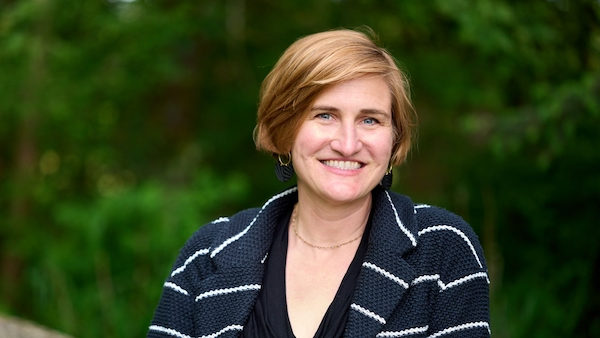
Strong Towns columnist Angie Schmitt is a Cleveland-based author and urban planner. Her book Right of Way: Race, Class and the Silent Epidemic of Pedestrian Deaths in America was published in 2020 by Island Press. A mom of two, she is working on a second book (North Point Press, 2028) about how to make cities and neighborhoods more kid friendly.