America's Aging Suburbs Don't Need to Start Over From Scratch
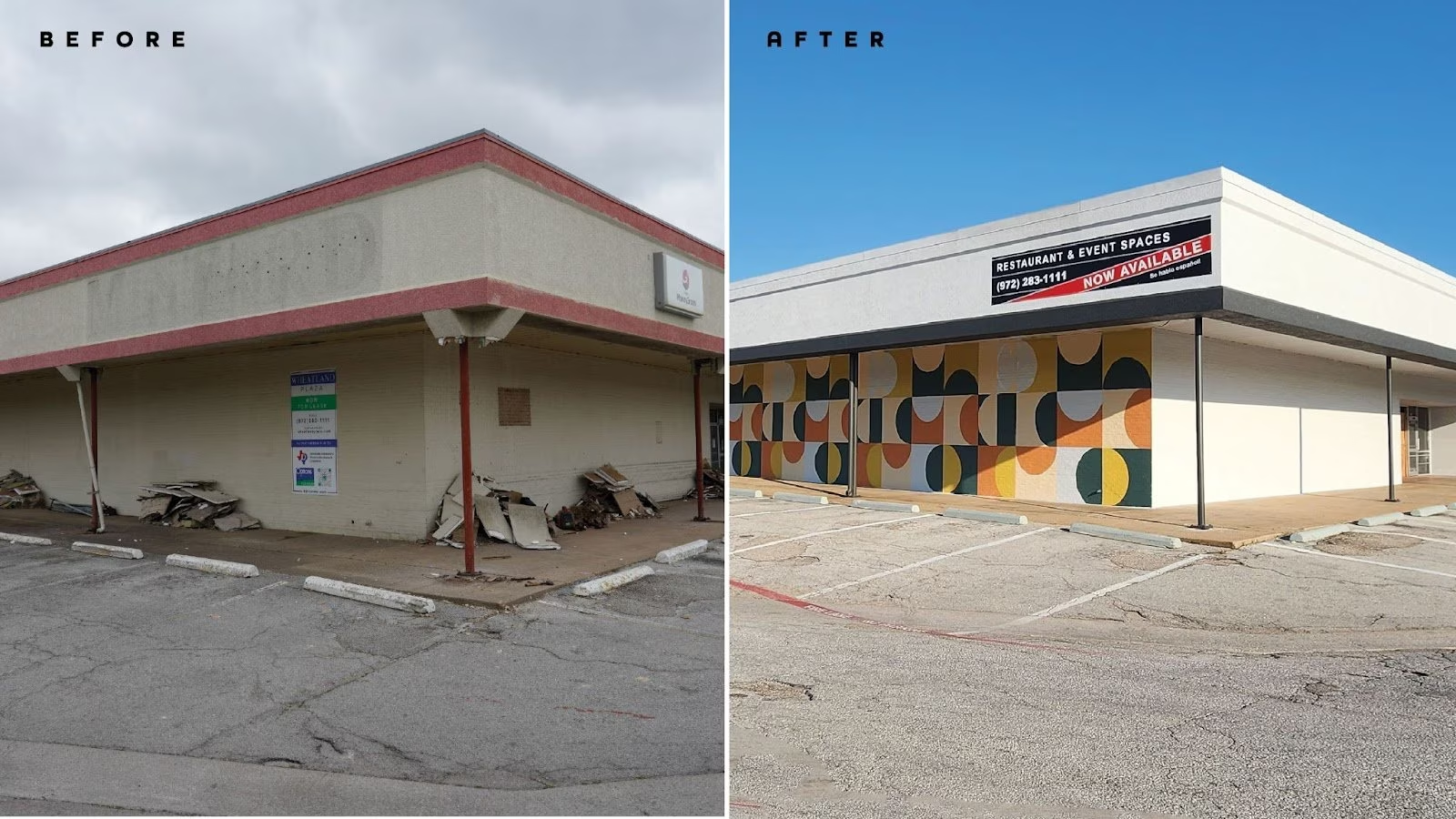
A once-derelict strip mall store gets a facelift as part of a mixed-use, rehabilitation project in Duncanville, TX. (Source: Neighborhood Evolution)
I have spent most of my life in Southern Dallas County, Texas. I grew up in South Oak Cliff, and I have spent more than 40 years developing, investing, living and working in Duncanville, DeSoto, Cedar Hill, Lancaster and Oak Cliff. After all these years, I keep coming back to a difficult question: why has Southern Dallas County so often underperformed its potential?
I don't believe it is because we lack good people, land, infrastructure, history, entrepreneurial talent or opportunity. I think part of our problem is that we have spent too much time trying to become somewhere else and not enough time figuring out who we are. For decades, communities like ours have looked toward the newest successful suburb and asked, "How can we get some of that?" Maybe we have been asking the wrong question. Maybe we should ask: "What do we already have, what do our people need, and what can this place become that no other place can?"
Sometimes Decline Starts With a Tree That Wasn't Trimmed
Economic development conversations usually begin with big numbers around jobs, dollars and square feet. I have come to believe we sometimes overlook something much simpler: just take care of the place. Trim the trees. Fix the lights, light the signs. Repair the parking lot. Paint the building. Pick up the trash. Maintain the landscaping. A dark shopping center, burned-out sign, overgrown tree or pothole-filled parking lot sends the message that nobody is paying attention here. Maintenance sends the opposite message. It says somebody cares.
This is where my experience overlaps with Strong Towns and Neighborhood Evolution, or NEVO. Strong Towns has helped communities understand the fiscal consequences of development patterns and the importance of maintaining the wealth we have already built. At NEVO, we focus on the people who make incremental change possible: small developers, local owners and cities willing to help them succeed. Before chasing the next $100 million development, perhaps we should take care of what we already have.
The Neighborhoods We Built for 1970 Don't Necessarily Fit 2026
Think about the typical suburban house of my generation. In 1970, Mom and Dad might have lived there with two or three children. One house supported four or five people. Fifty years later, the children are gone. Mom may live there alone. The house, lot, street, sewer line and other infrastructure are still there. But fewer people are supporting all of it. Mature communities need a different growth strategy. Sometimes the next home belongs behind an existing house, on a vacant lot, above a storefront, on an oversized parking lot or in a small apartment or condominium building near transit. We need to thicken our communities by adding households, businesses and taxable value where streets, utilities, schools, parks and public safety systems already exist.
This is not just a housing argument. It is a municipal finance argument. Our older suburbs have expensive obligations: streets, water and sewer systems, public facilities, parks and other infrastructure built over decades. If we extend another road and sewer line to the edge of town, we may add tax base, but we also add decades of future maintenance. If instead we put another household on an existing block, build on a forgotten infill parcel or add housing to an underused commercial property, we can add people and taxable value while using infrastructure we already maintain. The goal is not density for density's sake. The goal is productive use of existing public investment.
Thousands of Small Opportunities Are Hiding in Plain Sight
Drive through Southern Dallas County and look carefully. You will find oversized side yards, vacant residential lots, unused church land, half-empty parking lots and small properties where buildings disappeared years ago. Individually, none of this looks important. Collectively, they may be some of our greatest assets. Cities should inventory these sites and ask: How do we get them ready for local people to build on? Clear title problems. Resolve zoning. Confirm utilities. Allow modest housing types. Make permitting understandable. Then connect build-ready sites with aspiring developers and local capital. Instead of waiting for one developer to build 500 homes, what if we helped 100 local people build five?
At NEVO, we call these people Town Makers: small, locally committed developers who care about both the financial return and the long-term health of their community. America used to have thousands of them: the person who built a shop and lived upstairs, the family that added another home behind theirs, the business owner who built next door, or the local investor who repaired an old property. Today, someone trying to build four apartments can encounter many of the same zoning, engineering, financing and approval systems faced by someone building 400.
That naturally favors large developers. We need to rebuild a swarm of small developers and create local ecosystems where they can succeed. Economic development should not only be about recruiting companies. We need to grow owners.
Transit Is Only Valuable If We Build Differently Around It
Duncanville, DeSoto, Cedar Hill and Lancaster are not Dallas Area Rapid Transit (DART) member cities. But South Oak Cliff gives us another lesson: simply having rail does not automatically create good urbanism. Recently I attended a zoning meeting for property beside Tyler/Vernon Station in Oak Cliff. I saw a suburban-style townhome concept with substantial parking and wondered: if there is anywhere we should question the conventional suburban pattern, shouldn't it be beside a rail station? Why not consider more homes, smaller units, condominiums, neighborhood retail and less surface parking? The point is not that every station needs a high rise. The point is that development should respond to infrastructure investment.
Old Properties Are Not Failures. They Are Raw Material.
Much of my career has been spent working with places other people had given up on. At Wheatland Plaza in Duncanville, a 1960s shopping center that was roughly 20% occupied when we bought it is now close to 90% occupied. We worked with what was there and are now working to add housing on excess parking. The lesson is simple: don't abandon the old shopping center. Thicken it.
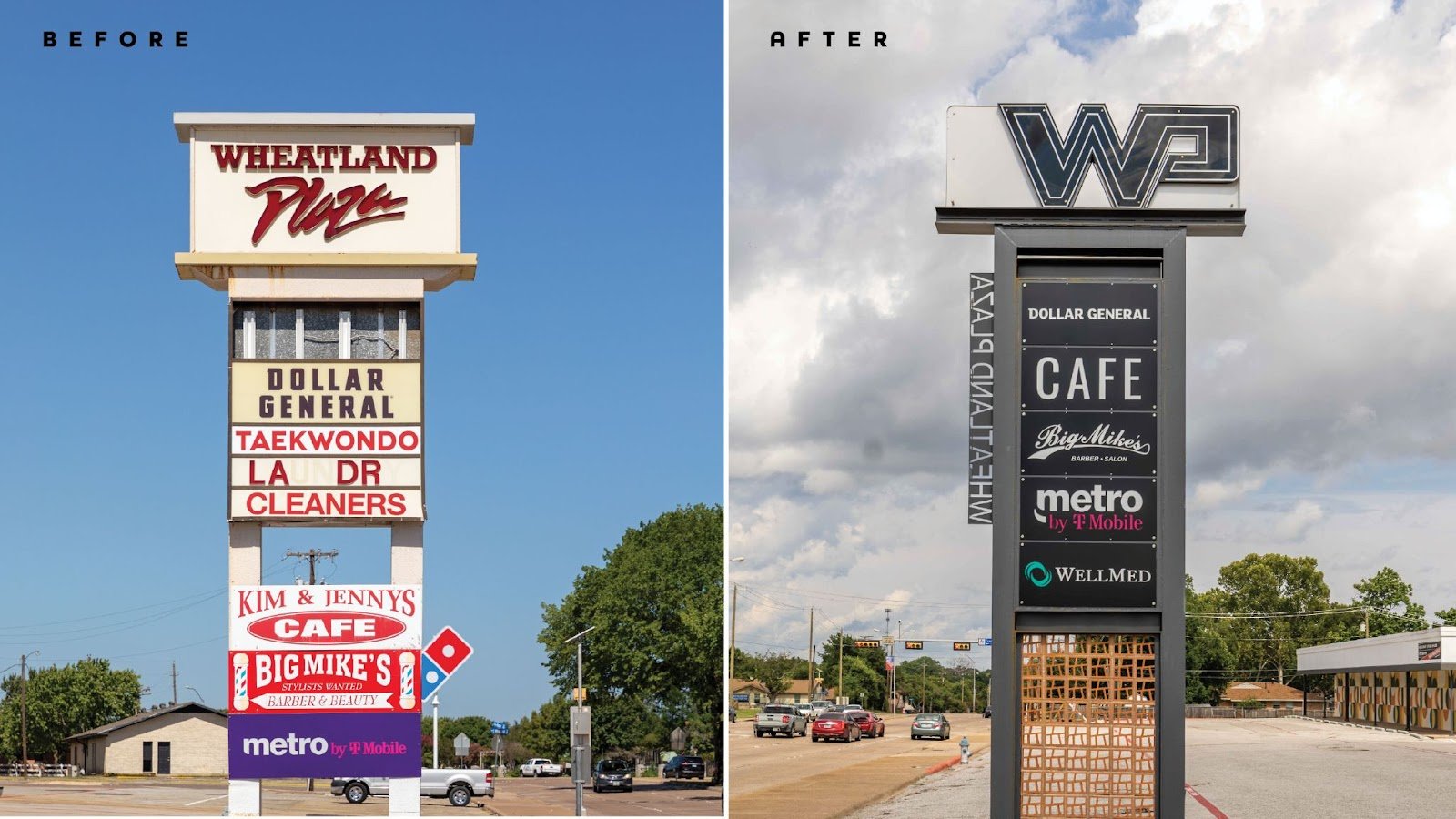
Main Station on Duncanville's Main Street was another small bet. Today it is fully leased. It did not transform the city overnight. That was never the point. Incremental development is one building, then another, then another.
The Belmont Hotel taught me the same lesson. We did not have money for a grand master plan. We restored it room by room.
Old places are not necessarily obsolete. Sometimes they are simply waiting for somebody to believe in them again.
Build People Along With Buildings
This may be the most important idea of all. Suppose someone in Southern Dallas County has very little net worth. How do we help that person become a homeowner? How does the homeowner add an accessory unit, buy a duplex, acquire a fourplex, own a small mixed-use building or develop an empty lot? Over time, that person can move from renter to owner, owner to investor, investor to developer, and developer to Town Maker. That is how knowledge and wealth compound locally. I am not against outside investment or large developers. We need both. But if hundreds of millions of dollars are invested here while nearly all the ownership, development fees, profits and appreciation leave the community, we have missed part of the opportunity.
We need another economic development measure: how many local people own a piece of what we are building?
It Is Time to Become Ourselves
Southern Dallas County does not need to become North Dallas. Duncanville does not need to become Frisco. DeSoto does not need to become Plano. Cedar Hill does not need to become Mansfield. Lancaster does not need to become anybody else. We need to become ourselves. Understand the history, but do not surrender the future to it. Take care of what we already have. Trim the trees. Light the signs. Fix the parking lots. Repair the buildings. Clean the streets. Love the place. Then fill the gaps.
Put people and taxable value back onto land where infrastructure already exists. Reimagine obsolete commercial properties. Get forgotten infill sites ready to build on. Put opportunities into the hands of local people. Help someone with little net worth become an owner. Help the owner become an investor. Help the investor become a developer. Help the developer become a Town Maker. Then help that Town Maker teach the next person. That is how we raise the bottom. That is how we rebuild civic confidence. That is how we create local wealth. Perhaps the measure of an aging suburb's comeback should not simply be how much money gets invested there. It should be how much wealth stays there, how many local people own a piece of it, how well we care for the place we inherited, and whether we leave it stronger for the people who come after us.
After more than 40 years of doing this work, I increasingly believe that making money and doing good are not competing ideas. Done properly, they strengthen each other. Buildings will change hands. Businesses will come and go. Our names will eventually be forgotten. The only thing we really take with us from this world is what we give away.
Maybe the next chapter of our communities begins when we stop asking somebody else to give us our future and start building it ourselves.
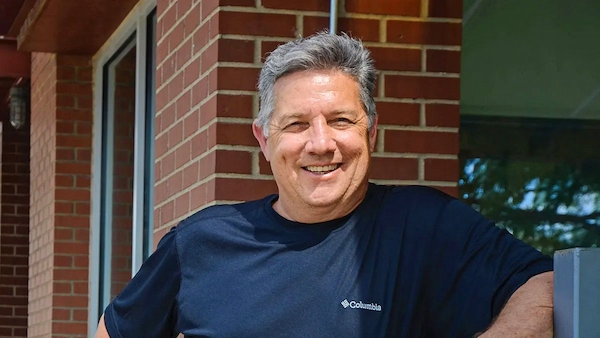
Monte Anderson is managing partner at Neighborhood Evolution, and President of Options Real Estate Investments Inc, a multi-service real estate firm specializing in developing sustainable neighborhoods in Southern Dallas and Northern Ellis counties. He is both an advocate and practitioner of incremental development and is often found speaking and teaching across the country on the Cultivating of Local Neighborhoods. He is the founding President of the North Texas Chapter of Congress for the New Urbanism (CNU) and was a co-founder of the Incremental Development Alliance. In his spare time Monte enjoys playing with his grandchildren, his cats, and listening to rap music.