We Should Be Sleeping in More Garages

.avif)
This month, I slept in two garages.
Before you start drafting a GoFundMe or texting my mom, I should clarify: these were very nice garages.
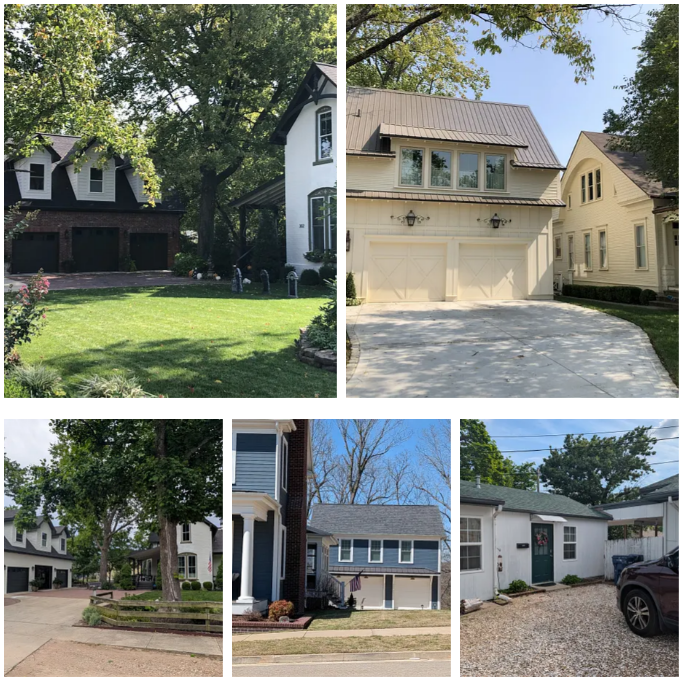
I’ve been traveling to Northwest Arkansas for work over the last month, and during my trips decided to stay in two different accessory dwelling units (ADUs) built inside former detached garages. Both were tucked behind houses and accessed from an alley. They were about the size of a hotel room, comfortable, private, and honestly kind of magical.
What surprised me most about these units I stayed in was how private they felt. You pull into an alley, walk through a backyard, open a small door, and suddenly you’re in your own little world.
I was already sold on the concept of ADUs, but after sleeping in two garages this month, I’m finding myself unusually excited about garages and all their possibilities.
What Is a Garage, Really?
I grew up in a suburb of St. Louis, and we had a large three-car garage which served its noble purpose of storing cars, lawn equipment, Christmas decorations, etc. A pretty typical experience for people living in the U.S.
The garages I stayed in still functioned partly as garages. One had multiple bays, and only a portion had been converted into living space. These units didn’t take some massive redevelopment project; just a corner of an existing building.
As a traveler, I loved it, but there are plenty of other reasons someone might want a garage apartment.
Maybe your adult kid is living at home and everyone involved would appreciate a little more personal space. Maybe you’re a baby boomer sitting on a lot of home equity and wondering if you’d rather move into a smaller, accessible space you designed yourself while your kids (and maybe their kids) take over the main house and relive the 90s.
Maybe you need a guest house. Maybe it’s an office. Maybe it’s for a caregiver. Maybe you’re wealthy enough to have an au pair, in which case congratulations on whatever it is you do.
My point is that garages are severely misunderstood.
For decades, we’ve treated garages as simply a parking structure. Anyone who has actually looked inside a garage knows that’s rarely the whole story.
Garages are workshops. They’re art studios. They’re home gyms. They’re band practice spaces. They’re woodworking shops. They’re startup headquarters. They’re places where hobbies become side hustles and side hustles occasionally turn into businesses.
And increasingly, they’re homes.
Many garages stopped being primarily about cars a long time ago… They’re some of the most adaptable buildings we have. They’re where people experiment, create, build, and solve problems. They should evolve as our needs evolve.
Kansas Citians Are Slowly Embracing the Possibilities of Garage Conversions
I’ve started noticing more garage conversions around Kansas City, Missouri, (where I live) and I hope we see many more.
Kansas City recently legalized ADUs citywide, creating a huge opportunity for homeowners to build a second small housing unit on their property. They even have pre-approved building plans you can use. I don’t think we’ve fully wrapped our heads around what that means yet.
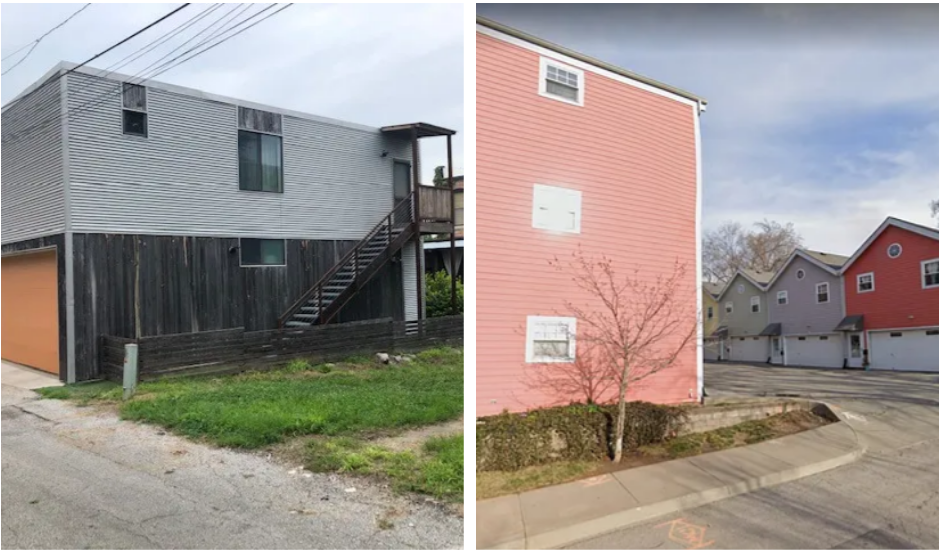
Technically, ADUs aren’t actually new. They’re scattered throughout many of Kansas City’s older neighborhoods already. They represent the way humanity built neighborhoods prior to the 1940s. Some were built decades ago as carriage houses, garage apartments, or backyard cottages. Others existed in a legal gray area for years and were grandfathered in as nonconforming uses.
What’s new is that we’re finally making it easier to build them intentionally.
A recent housing development near Beacon Hill incorporated ADUs into the project from the beginning, which is exactly the kind of experimentation I’d like to see more of.
Even closer to home, my neighbor behind me is building a garage/ADU right now (no photos… I’d prefer not to accidentally dox myself on the internet). It’s been fun to watch the project come together.
.jpg)
One of my favorite local examples (above) is a garage conversion in North Hyde Park. What makes this project especially interesting is that the converted garage was split onto its own parcel and sold separately at a relatively attainable price point for the neighborhood.
What if garage conversions could become a new generation of starter homes?
We spend a lot of time talking about how difficult it is to build housing that’s affordable to middle-income households. Yet here was a small home created from an existing structure, in an established neighborhood, sold at a price that opened the door to homeownership for someone.
That’s the beauty of incremental development. It doesn’t require billion-dollar investments or massive redevelopment plans. Sometimes it just requires looking at an old garage and seeing something more. An ADU can be a place for a visiting friend. A young adult saving money. An aging parent who wants independence. A graduate student. A caretaker. A long-term tenant. A recently divorced neighbor getting back on their feet. One small building can serve many different purposes over its lifetime.
In a lot of ways, garages embody the spirit of incremental development. They’re practical, flexible, and kind of adorable. They allow neighborhoods to grow a little at a time without dramatically changing their character.
Most importantly, they create opportunities. It’s time to stop thinking of garages as places to store stuff and start thinking of them as places where life happens.
[[divider]]
This article was originally published, in slightly different form, on Abby Newsham's Substack. It is shared here with permission.
Abby Newsham was the cohost of the Upzoned podcast. Abby is an urban design and planning consultant at Multistudio in Kansas City, Missouri. In her own community, she works to advance bottom-up strategies that enhance both private development and the public realm, and facilitates the ad-hoc Kansas City chapter of the Incremental Development Alliance. When she’s not geeking out over cities, Abby is an avid urban mountain biker (because: potholes), audiobook and podcast junkie, amateur rock climber, and guitarist. You can connect with Abby on Twitter at @abbykatkc.
%20(1).avif)
%20(1).avif)
%20(1).avif)
%20(1).avif)