A Mayor Willing to Tell His City the Truth

.avif)
A map showing the land value per acre in Post Falls, ID. (Source: Urban3)
Post Falls, Idaho, is a city of nearly 50,000 people just across the state line from Spokane, Washington. It has been growing rapidly, adding thousands of new residents over the past decade along with the homes, businesses, streets, parks, and public facilities needed to accommodate them.
For most cities, this is considered success. Growth means new investment, a larger tax base, more customers for local businesses, and all the other things city officials are accustomed to celebrating. There are certainly communities in America that would love to have the problems that come with rapid growth.
Randy Westlund, the mayor of Post Falls, is looking at it differently.
This past week, Westlund released a memo to the Post Falls City Council laying out a 10-year financial forecast for the city. There is no immediate crisis. The city has a balanced budget, healthy reserves, and the kind of ongoing growth that would normally give local officials confidence about the future. Yet, when Westlund extends the city's current trajectory out over the next decade, the numbers don't work.
If Post Falls continues providing today's level of service without adding any new employees, Westlund projects that the city will be running an annual deficit of $16.8 million by 2035. If the city adds the police officers, firefighters, parks employees, and other staff needed to maintain its current level of service as the population grows, the projected annual deficit is $26.9 million.
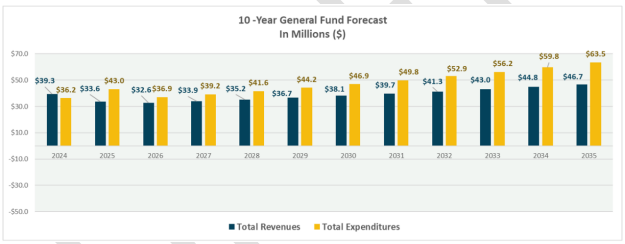
Westlund describes this as a “structural gap in funding which is driving the City towards insolvency.”
None of this diagnosis is a surprise to the Strong Towns audience. We understand that the North American pattern of development (what we call the Suburban Experiment) creates an illusion of wealth, especially during the growth phase. What is unusual is hearing the mayor of a rapidly growing city acknowledge where that trajectory leads.
What normally happens when a growing city starts to see financial stress is predictable. Officials look for more growth. They pursue commercial development to expand the tax base. They seek grants for infrastructure and a little bit of debt to handle “cash flow” issues. They paper over the problem, often using the accounting mechanisms unique to local government to suggest that everything is well and good.
Westlund does something very different. He uncovers the underlying problem and then asks, quite directly, whether the city’s approach to growth itself is making Post Falls poorer.
Growth That Makes You Poorer
Westlund hired Urban3 to analyze the fiscal productivity of different development patterns in Post Falls. Instead of looking at the total assessed value of a development, Urban3 looks at financial productivity. This allows a city to compare how much tax base different development patterns produce relative to the amount of land, streets, pipes, and other infrastructure needed to serve them.
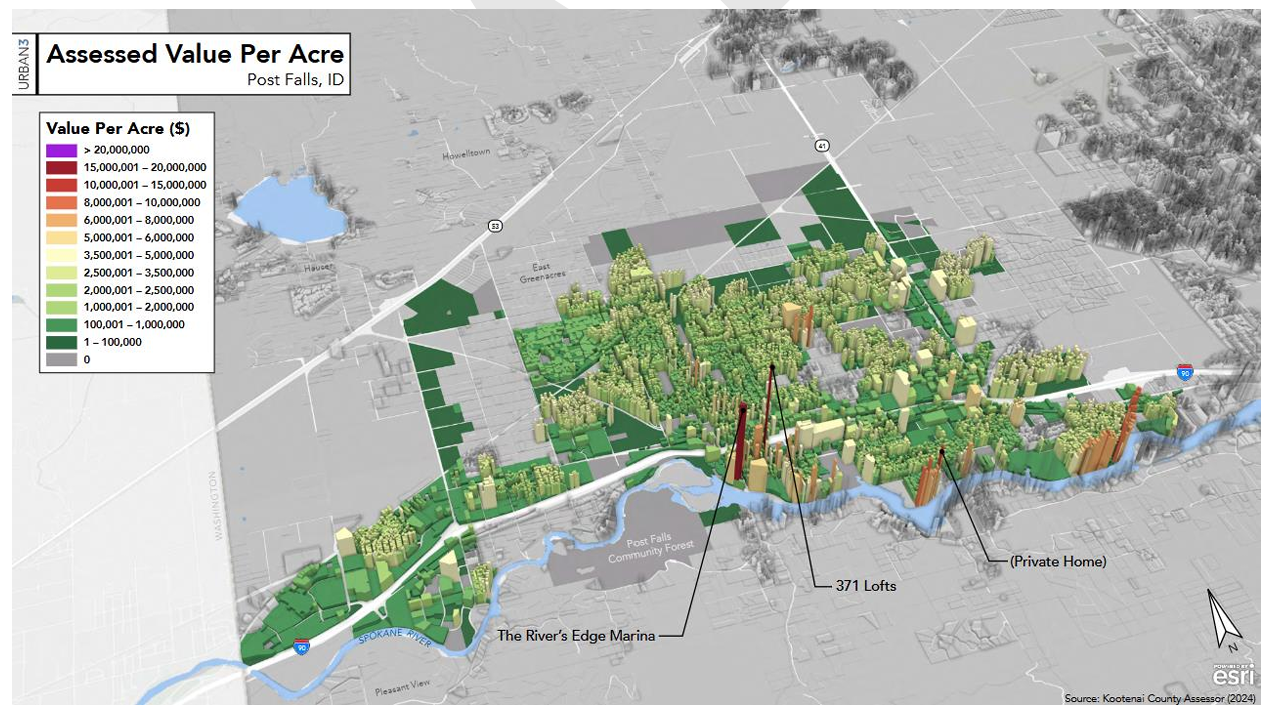
What they found in Post Falls will be familiar to anyone who has followed Strong Towns for a while. Westlund summarizes it this way: “Typical suburban neighborhoods are net negative from a tax perspective, meaning the infrastructure costs for the streets in the neighborhood are more than the tax revenue from that neighborhood.”
Then he adds something that should make every mayor of a rapidly growing city uncomfortable.
“Urban3 found that our infrastructure is dramatically under-funded and only looks okay now because much of it is new. Our growth pattern is not sustainable.”
This is the financial trap that makes rapid growth so seductive. When a city builds a new neighborhood, the streets are new. The pipes are new. The sidewalks, pumps, parks, and other public investments are new. There is very little maintenance to do, even as new tax revenue starts flowing into the city. For a time, everything looks great. The city’s financial accounting — which does not account for infrastructure liabilities — affirms the positive conclusion.
Eventually, those liabilities come due, and then they become expenses. The city then discovers whether the tax base created by the development is sufficient to cover them.
Post Falls is still early enough in this process that much of its infrastructure is new. Westlund understands what that means. The city’s healthy finances today tell him very little about whether Post Falls can afford the commitments it has already made.
Urban3 gives him another way to see this. Their analysis compares two Post Falls neighborhoods occupying the same 1.8 acres. One has 11 parcels and $4 million in total value. The other has 32 parcels and $10 million. The second neighborhood produces 2.5 times as much tax base while requiring roughly the same amount of land.
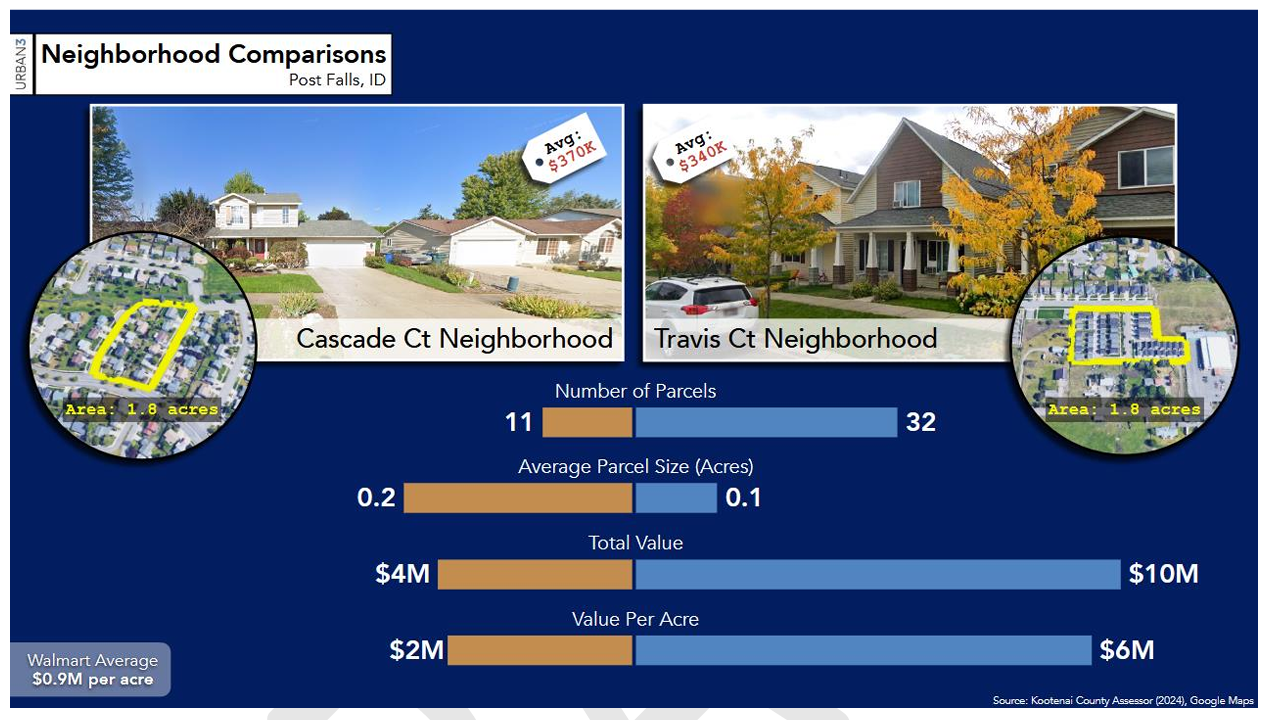
Westlund doesn't look at this and conclude that Post Falls needs more growth. He concludes that it needs a different kind of growth.
“Continuing to expand the City with low-density residential or commercial development that doesn’t pay for itself is driving us further insolvent.”
And then:
“We can move ourselves in a positive financial direction by encouraging denser infill development in downtown or other areas close to major streets rather than expanding all over the prairie.”
Cities routinely respond to financial stress by pursuing growth even more aggressively. The logic is simple. More homes mean more taxpayers, while more commercial development expands the tax base. If the city is short of money, the obvious response is to grow faster.
Westlund recognizes the flaw in that logic. When each new increment of development creates more long-term expense than it produces in revenue, more growth doesn't solve the financial problem. It makes the problem larger.
At Strong Towns, we call this the Growth Ponzi Scheme. New growth provides an immediate financial benefit while creating long-term obligations that come due years later. When those obligations arrive, another round of growth provides another infusion of revenue, along with even more future obligations.
A city can do this for a long time. Post Falls has. Westlund is telling his community that they have to stop.
A Balanced Budget Isn’t Enough
Westlund’s analysis of the city’s growth pattern leads him to reconsider how Post Falls does its budgeting.
“We need to ensure City budgeting is not just about balancing this single year, but rather a process that prioritizes short-term responsibility and long-term sustainability.”
Every city in America is expected to balance its budget. Revenues for the coming year are projected, expenses are estimated, and adjustments are made until the numbers line up. That process tells city officials whether they have enough money to pay the bills they expect to receive that year. It doesn't tell them whether the city is financially sustainable.
This is what makes Westlund’s 10-year forecast so important. Post Falls has reserves. Its current budget is balanced. There is no immediate financial crisis. Instead of taking comfort in those facts, Westlund extends the city’s current trajectory out over the next decade and asks a different question.
What will it cost to continue being Post Falls?
That is a much more serious way to think about municipal finance. Westlund isn't using the forecast to predict exactly what the city budget will look like in 2035. He can't know that. He is using it to test whether the commitments Post Falls is making today can plausibly be sustained by the community that will have to pay for them tomorrow.
The current budget says everything is fine. The trajectory says it isn't.
Start Making Adjustments
Westlund doesn't respond to the challenging 10-year forecast by proposing a 10-year solution. Instead, he proposes that Post Falls start making incremental adjustments now, with a greater awareness of where the current trajectory leads.
His approach to priority-based budgeting is a good example. Instead of spending upwards of $150,000 on an elaborate new budgeting system, Westlund proposes that the city start with the basics: identify what services it provides, understand what they cost, and determine which ones are most important. From there, the council can investigate potential changes, understand the consequences, and bring real choices to residents.
There is nothing particularly dramatic about this process, and that is what I like about it. Post Falls has a large structural problem, but nobody knows precisely how the next decade will unfold. Westlund isn't using that uncertainty as an excuse to wait, nor is he using the forecast as justification for making a series of large changes today.
This is quite different from how most American cities have approached uncertainty for much of the past century. We project decades into the future and then make enormous commitments today based on those projections. We build roads for traffic expected 20 years from now. We extend utilities for growth that has not happened. We build neighborhoods to a finished state based on assumptions about what people decades from now will want and be able to afford.
Westlund is proposing that the city begin with what it knows, make changes it can make now, and use what it learns to inform what comes next. Some changes can happen quickly. Others will require public discussion. Changes to Idaho law could take years, assuming they happen at all. As Westlund writes, “This process of reform will take years, and the path will not be easy. But we will not run from the problems we were elected to solve.”
This is a very Strong Towns way of approaching things.
Westlund doesn't know exactly where Post Falls will be 10 years from now — nobody can — but he knows the direction Post Falls is heading is not financially sustainable. That's enough information to start changing.
A Mature Conversation
There are recommendations in Westlund’s memo that I would approach differently. I don't agree with every conclusion he reaches, and I suspect that, as Post Falls works through this process, Westlund himself will change his mind about some of them.
That’s the whole point. We start with what we have, acknowledge the limits of what we can know, work incrementally, and learn as we go.
What I admire about this memo is not the specific set of reforms Westlund recommends. It is the conversation he is willing to have with the people of Post Falls. He is showing them what the city has, what it costs, and where the current trajectory leads. He is acknowledging that some services may need to be reduced, some taxes or fees may need to increase, and the city's approach to growth will need to change. He reaches these conclusions even though he doesn't know precisely what combination of those things will ultimately be necessary.
Do you know what that is called? Confident leadership.
There are thousands of cities across North America facing some version of what Post Falls is confronting. The easy thing for a mayor in that situation is to keep going. Approve the next development. Pursue the next grant. Hope the state legislature provides more revenue. Make whatever adjustments are necessary to balance this year's budget and leave the larger problem for another day.
Westlund is choosing to have a different conversation with the people of Post Falls. He is telling them that their city is not as financially healthy as it appears. He is showing them why. He is acknowledging that nobody knows precisely what the right combination of changes will be, while insisting that uncertainty is not a reason to avoid acting. And he is asking residents to participate in the difficult choices that will follow.
This is a mature conversation. It’s the kind every city's officials need to have if they want to create a Strong Town.
Charles Marohn (known as “Chuck” to friends and colleagues) is the founder and president of Strong Towns and the bestselling author of “Escaping the Housing Trap: The Strong Towns Response to the Housing Crisis.” With decades of experience as a land use planner and civil engineer, Marohn is on a mission to help cities and towns become stronger and more prosperous. He spreads the Strong Towns message through in-person presentations, the Strong Towns Podcast, and his books and articles. In recognition of his efforts and impact, Planetizen named him one of the 15 Most Influential Urbanists of all time in 2017 and 2023.
%20(1).avif)
%20(1).avif)
%20(1).avif)
%20(2).avif)