When an $8 Million Street Is a Warning

.avif)
Sumac Avenue in North Boulder, CO. (Source: City of Boulder)
The residents of Sumac Avenue in Boulder, Colorado, would like their street fixed. Probably you do, too.
That part is not in dispute. Like many of our streets, Sumac has not been paved in decades. The pavement is riddled with potholes. Nobody is arguing that everything is fine.
What prompted some consternation was the proposed price of the street’s repair. Residents learned the proposed project would cost $8.4 million.
“One street is $8 million?” resident Adam Asnes asked. “Are you kidding me?”
That question comes from an excellent piece of local reporting by Brooke Stephenson at the Boulder Reporting Lab. I recommend reading the full article, particularly for its account of the dispute over whether homeowners should be responsible for part of the bill. Some could face assessments approaching $90,000.
Now, the spicy bit of the article has to do with the assignment of costs. As Stephenson reported:
When the area around Sumac was annexed into the city in the 1980s and 1990s, property owners signed agreements committing to help pay for future street improvements. Some also agreed not to "oppose or remonstrate against" the establishment of a Local Improvement District to fund them. As properties changed hands over the decades, those obligations transferred to new owners. Some residents were unaware of the agreements when they purchased their homes, according to Riis.
There’s a fascinating backstory here which makes this an exceptional instance of property owners being stuck with an obligation to cover a significant amount of the cost of street improvements.
Being caught off-guard that you’re responsible for a cost you weren’t aware of is pretty rough. And being told you may not “oppose or remonstrate” would be an especially tricky pill to swallow.
But what stands out to me most is that first question: why are we spending so much?
The $8.4 million proposal includes full pavement reconstruction, drainage and utility work, curbs, pedestrian crossings, and a new sidewalk between eight and 10 feet wide. About $4.6 million is directly connected to rebuilding Sumac Avenue, while the rest would cover other related improvements and engineering. Under the current proposal, the owners of 52 properties would collectively pay about $1.8 million.
Residents are understandably asking who should pay.
We should also ask what actually needs to be built.
A local street has a fairly simple job. It needs to provide safe, dependable access to the homes and properties along it. Pavement is one way of doing that. However, using up a supply of available pavement is not the purpose of the street.
Yet our infrastructure process tends to treat the existing standard as permanent. Once a street is paved, it must remain paved. Once it is built to a certain width, it must be rebuilt at that width. Then come the additions: curbs, drainage systems, crossings, landscaping, wider sidewalks, and more pavement.
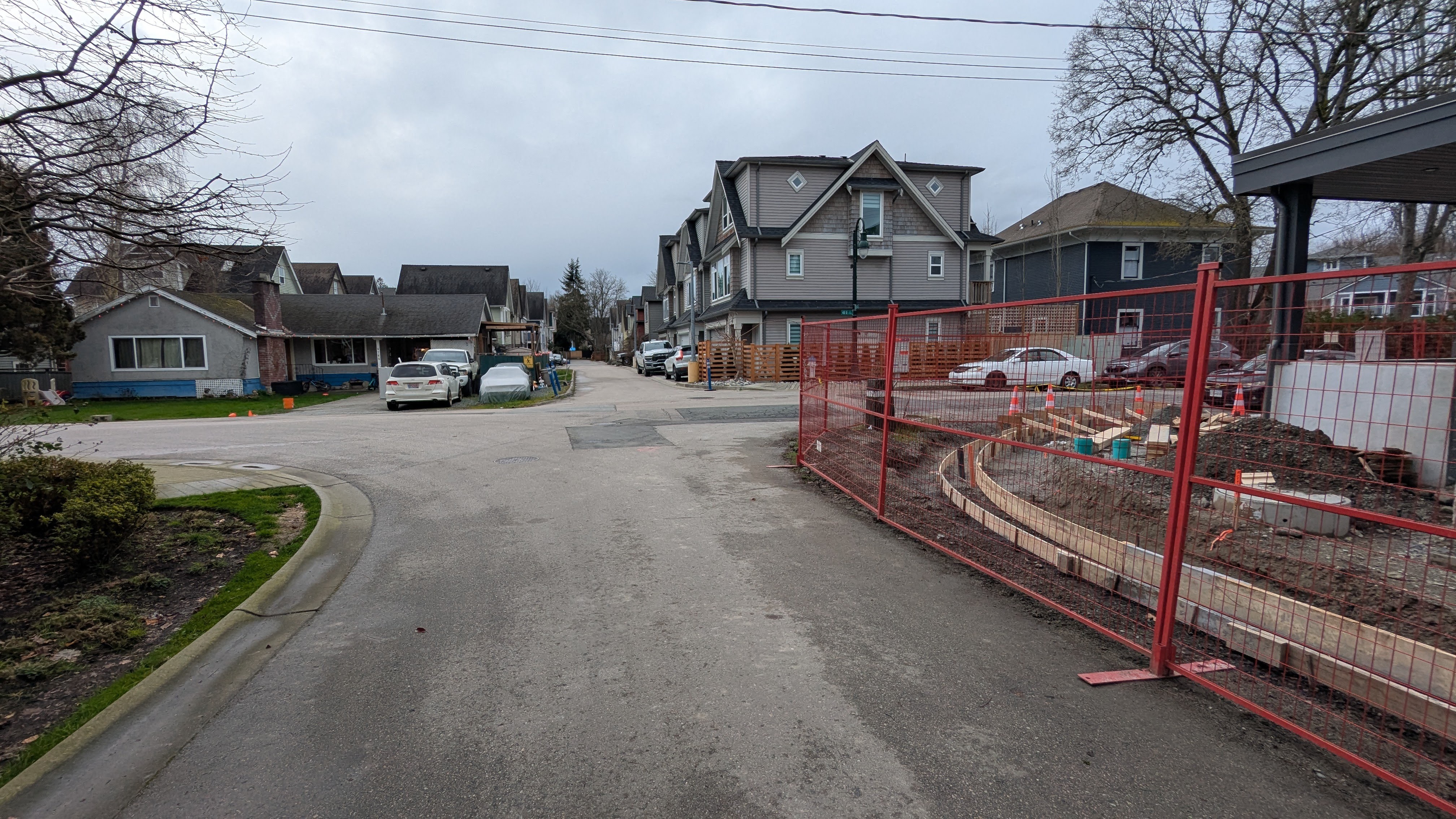
Each piece of the street reconstruction package feels like it belongs. Who doesn’t want sidewalks and improved drainage? But every upgrade turns a modest local street into an enormous financial obligation.
Chuck Marohn describes this dynamic in “The Cost of an Extra Foot.” Add one foot to each traffic lane and it does not feel like much. But that extra foot must be built, plowed, patched, resurfaced, and eventually replaced.
Multiply it across every lane, block, and mile.
The extra foot is not a one-time expense. It is a promise made to every future budget.
The same is true of everything added to Sumac Avenue. This is not simply a decision about what Boulder can build today. It is a decision about what future residents will be expected to maintain and replace.
The first lifecycle is the easy one. That is when the street is new and the money has been assembled.
The second and third lifecycles are when the truth comes out.


This will become especially difficult in lightly developed neighborhoods where expensive infrastructure serves relatively few properties. When the road finally needs complete reconstruction, the cost per household can be staggering.
Communities need more choices than full reconstruction or continued deterioration.
.png)
.avif)
I grew up on a dairy farm surrounded by miles of gravel roads. Those roads were not failed paved streets. They carried school buses, milk trucks, tractors, pickup trucks, and families.
Sure, they became dusty and developed washboards. They needed routine grading.
They were not optimized for performance but they were simple, repairable, and affordable enough to keep functional.
Is that the answer for Sumac Avenue? De-paving the street to match the street’s condition with what can actually be afforded?
I’m fine if the conclusion is that gravel or some other affordable option is appropriate for Sumac Avenue.
The point is that a lower infrastructure standard should be treated as a legitimate option.
That could mean gravel. It could mean a narrower street, simpler drainage, fewer added features, or rebuilding only what is necessary to provide dependable access. Some residents have questioned whether a 30-foot street and an eight-to-ten-foot sidewalk belong in an area they describe as having a more rural character.
Those are reasonable questions.
What would a narrower design cost? What could be simplified? What is the least expensive way to provide safe, reliable access?
The greatest obstacle to these choices may not be technical. It may be cultural.
Sarah, a city councillor in Havre, Montana, once told me that residents were proud their city had no gravel streets, unlike Helena, the state capital. Pavement was understood as evidence of civic progress.
I heard something similar from Josh Hopkins, the mayor of Chugwater, Wyoming. His community was struggling with the cost of maintaining its paved streets, but residents resisted the idea of returning some of them to packed gravel. Gravel felt like a step backward, even when the alternative was pavement so deteriorated that the town could not afford to repair it.
Is it possible we are more attached to the appearance of prosperity than to the discipline required to sustain it? A paved street looks permanent. But a street full of potholes that nobody can afford to rebuild is not a sign of prosperity.
Local leaders should be honest: communities will not be able to rebuild every street, pipe, sidewalk, and drainage system to the highest standard they inherited.
When a street reaches the end of its useful life, residents should be given real choices. They should see what each option costs today, what it will cost to maintain, and what obligation it creates for the next generation.
The responsible choice is not always to rebuild everything we inherited.
It is to provide the level of service we can actually afford to sustain.
[[divider]]
Is your community's long-term potential helped or hindered by the current state of its financial health and infrastructure obligations? Find out now using our Finance Decoder.
Norm Van Eeden Petersman is the Director of Membership at Strong Towns. He is a skilled communicator of the Strong Towns message and a community builder. He leads DelPOP, a land use reform and housing advocacy group in Delta, British Columbia, and is a leader of the Strong Towns Toastmasters Club.
Norm has a Master of Divinity and a Bachelor in Political Studies. He spent 10 years pastoring churches in Canada as a preacher, teacher, and leader. He worked in communications for the second-largest city in British Columbia and carried out infrastructure-related stakeholder outreach for Canada's Minister of Health and Federal Economic Development Initiative for Northern Ontario in Ottawa, ON.
Norm has published articles on housing, transportation, faith, and culture and his writing appears regularly on the Strong Towns site. You can connect with him on Twitter at @normvep or on LinkedIn.
%20(1).avif)
%20(1).avif)
%20(1).avif)
%20(2).avif)