The latest ideas, insights and action from around the Strong Towns movement.
Featured
Top Stories
.webp)
Lorem ipsum dolor sit amet, consectetur adipiscing elit. Suspendisse varius enim in eros elementum tristique. Duis cursus, mi quis viverra ornare, eros dolor interdum nulla.
.webp)
Lorem ipsum dolor sit amet, consectetur adipiscing elit. Suspendisse varius enim in eros elementum tristique. Duis cursus, mi quis viverra ornare, eros dolor interdum nulla.
Lorem ipsum dolor sit amet, consectetur adipiscing elit. Suspendisse varius enim in eros elementum tristique. Duis cursus, mi quis viverra ornare, eros dolor interdum nulla.

Lorem ipsum dolor sit amet, consectetur adipiscing elit. Suspendisse varius enim in eros elementum tristique. Duis cursus, mi quis viverra ornare, eros dolor interdum nulla.
.webp)
Lorem ipsum dolor sit amet, consectetur adipiscing elit. Suspendisse varius enim in eros elementum tristique. Duis cursus, mi quis viverra ornare, eros dolor interdum nulla.
Latest Podcasts
(Transcripts Included)
How Floor Plans Drive Families from Cities (and What Helps Them Stay)
Bringing the Strong Towns Conversation to a Growing City
Is Crowdfunding A Good Way To Fund Local Projects?

Latest Stories

"Cities that truly embrace incrementalism understand that interesting places are emergent by nature."
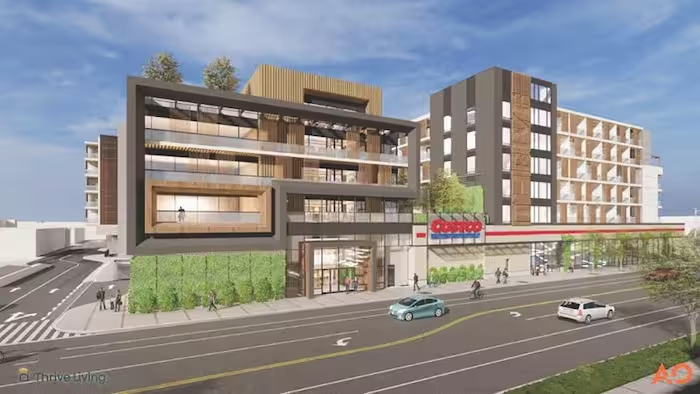
To skip delays and debate, a California Costco added 400,000 square feet of housing to its plans — a move that unlocked a faster approval process.

Housing shortages are housing spillovers.
Rates of loneliness and unhappiness are on the rise in the United States, but our European counterparts don’t seem to have the same problem. Why? Part of the reason is the way our built environment isolates us.
City engineers rely on faulty logic and misrepresentations to maintain the status quo. Here are the top four arguments against parking reform and why they’re wrong.
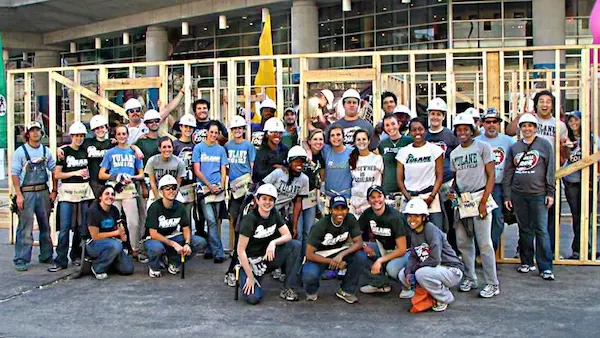
Learn how Habitat continues to pursue housing construction in the face of difficult conditions, why good schools are more important than you realize, and why Habitat owners participate in the construction of their own homes.

"The activities we see in a community tell us something about the values and priorities of that city."

To change peoples' minds, we have to make an effort first to listen.

“Take the next step that’s aligned with your values, and let it unfold.”

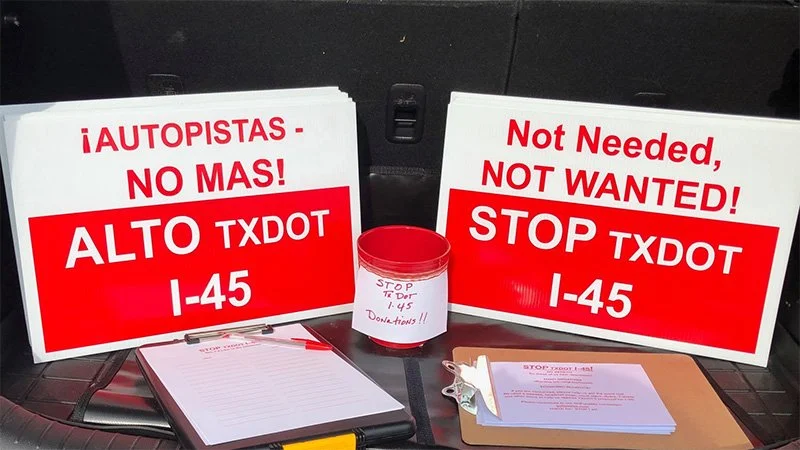
At 75, Susan Graham didn’t expect to spend her time fighting freeways — but after nearly five years leading Stop TxDOT I-45 in Houston, she’s nowhere near done.
As prices rise, housing affordability has become an increasingly popular topic of discussion across North America. However, in our current system, affordable housing is an oxymoron: Housing is treated as an investment, and good investments constantly increase in price. To escape this paradox, we must change the way we think about housing.
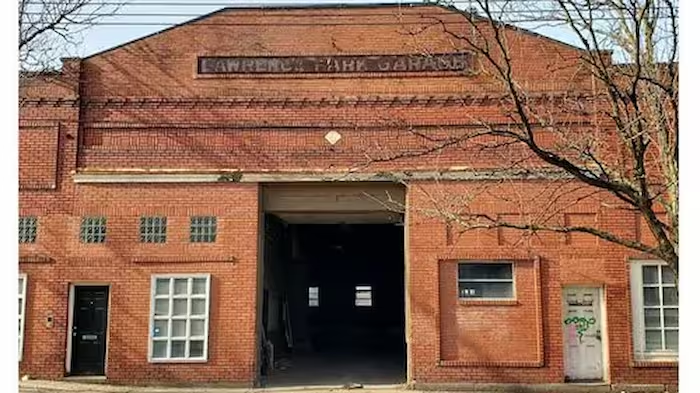
When the owners of Lawrence Hall bought the abandoned building, they had a vision of reviving it into a food hall that would support small businesses and help their community thrive. They never imagined that a few parking spots would put their dream on hold for seven years.
The financial struggles of Houston and the cities of the Silicon Valley area—as well as tens of thousands of others across North America—have the same underlying cause.
Like so many places, Muskegon, MI, has a shortage of housing and a surplus of vacant lots. That’s why it’s enacted a program that allows it to redevelop those lots into affordable housing—at a low risk to the city.

Houston’s fiscal problems are less critical than other major cities with large budget shortfalls—yet, their mayor is correct when he said his city is broke, that the financial approach of the city is clearly not working. Here’s why.
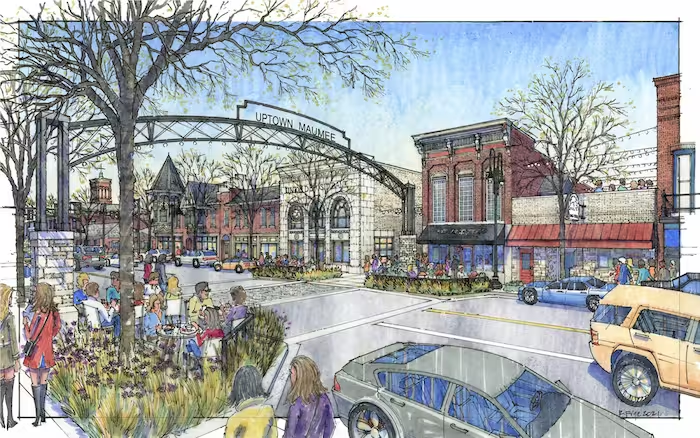
Like many U.S. towns, Maumee, OH, has a state highway that cuts through their Uptown. For decades, it’s been known as a dangerous road…but no longer: the city is taking back its streets and making them places for people, not cars.
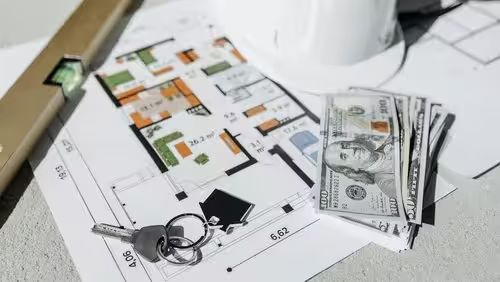
What does it really mean to say that housing can’t be both affordable and an “investment”?
Every four years, a small but vocal portion of our audience calls on Strong Towns to react to the politics surrounding national elections. This is our response.

Demonizing the 91% of Americans who drive by putting them into the category of "asshole humans” is a bad and ultimately losing strategy for creating safer streets.
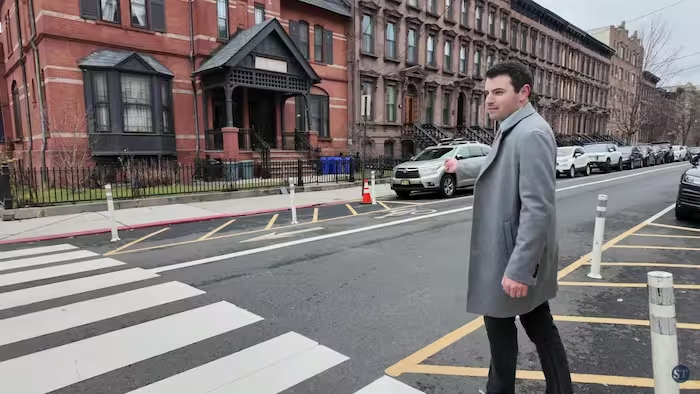
Hoboken, NJ, has gained fame online for its safe streets. But does this urbanist’s paradise live up to the hype, in person? We sent Strong Towns Staff Writer Asia Mieleszko to do some on-the-ground investigating to find out.