The latest ideas, insights and action from around the Strong Towns movement.
Featured
Top Stories

Lorem ipsum dolor sit amet, consectetur adipiscing elit. Suspendisse varius enim in eros elementum tristique. Duis cursus, mi quis viverra ornare, eros dolor interdum nulla.
Lorem ipsum dolor sit amet, consectetur adipiscing elit. Suspendisse varius enim in eros elementum tristique. Duis cursus, mi quis viverra ornare, eros dolor interdum nulla.
Lorem ipsum dolor sit amet, consectetur adipiscing elit. Suspendisse varius enim in eros elementum tristique. Duis cursus, mi quis viverra ornare, eros dolor interdum nulla.
.webp)
Lorem ipsum dolor sit amet, consectetur adipiscing elit. Suspendisse varius enim in eros elementum tristique. Duis cursus, mi quis viverra ornare, eros dolor interdum nulla.

Lorem ipsum dolor sit amet, consectetur adipiscing elit. Suspendisse varius enim in eros elementum tristique. Duis cursus, mi quis viverra ornare, eros dolor interdum nulla.
Latest Podcasts
(Transcripts Included)

From Biostatistics to Better Streets in Fayetteville
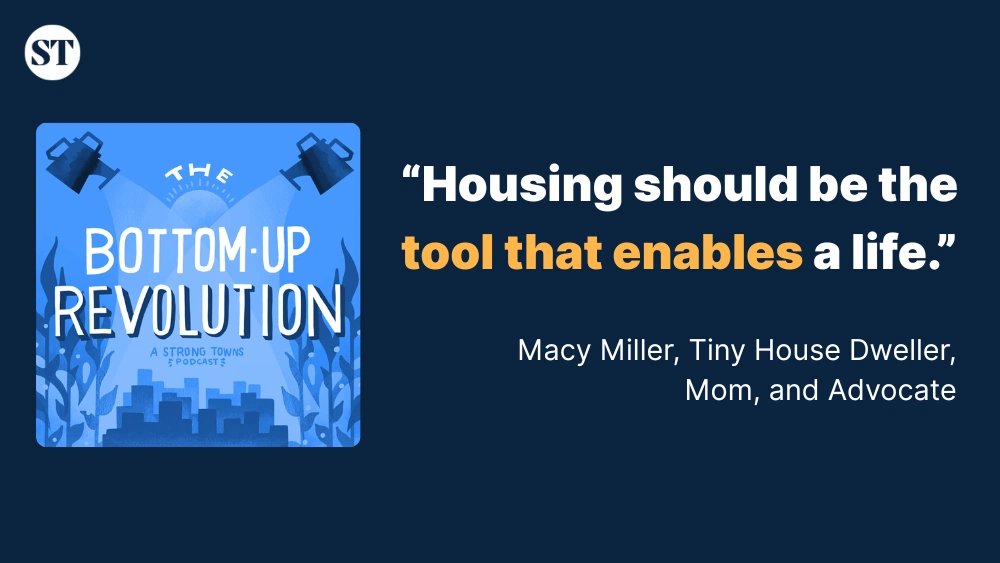
How One Tiny House Helped Shift Boise’s Housing Rules
Walking, Visibility, And One Mom’s Fight For Safer Streets
Latest Stories
An urbanist abroad discovers that Tokyo faces many of the same challenges as U.S. cities — off-street parking, pedestrian safety, utilizing space, etc. — but is addressing them in very different ways.
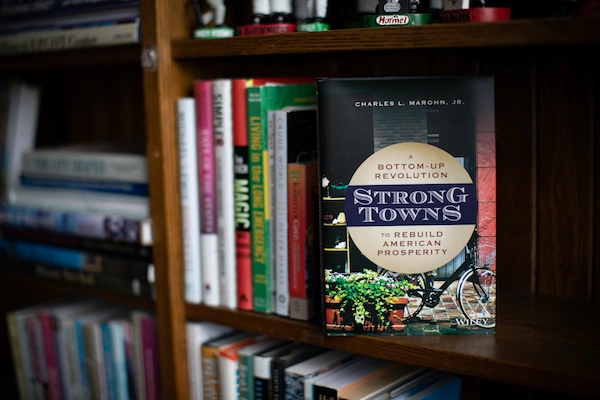
Making better use of what we have already built is a hyper-local undertaking, one done at the block level.
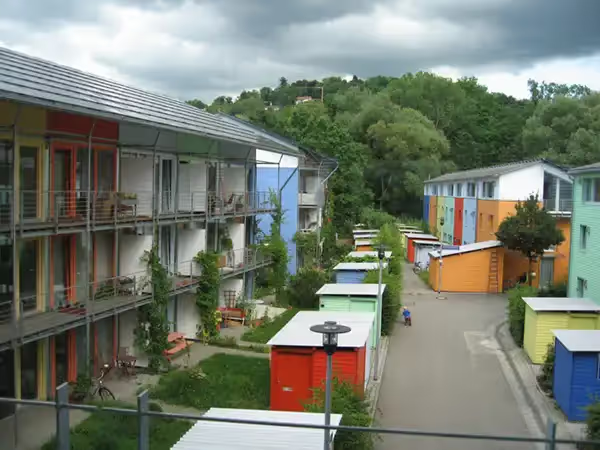
We all know the pitfalls of master-planned communities, right? Sterile. Homogenous. Certainly not adaptable or resilient over time. Is there a way around it? Maybe, if this fascinating case study from Germany has anything to teach us. And it all starts with one word: Baugruppen.
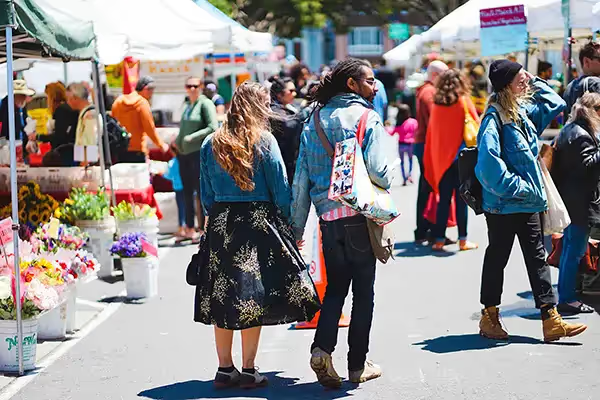
Everyone seems to have an opinion on gentrification. But what does the word actually mean?

We use the phrase “traditional development pattern” in dozens of Strong Towns essays. Here’s your one-stop-shop explainer article as to what that means.

Induced demand goes both ways.
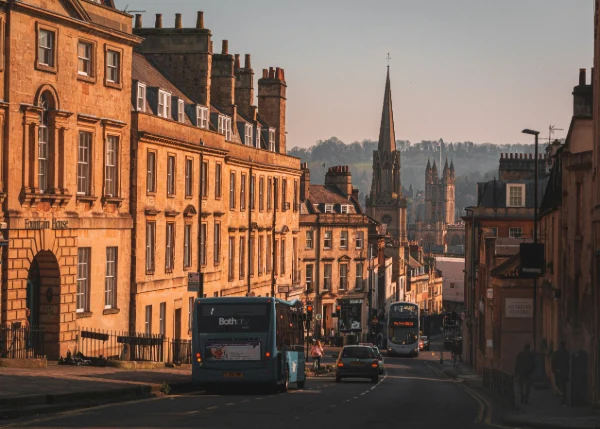
"We see our tolerance for chaos reflected in our built environment."
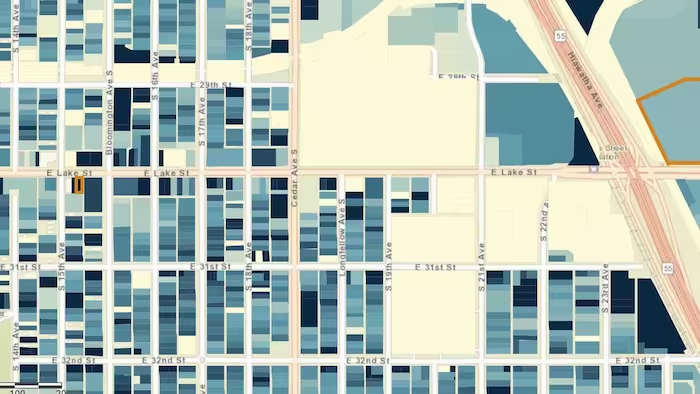
Will this new development make traffic worse? The conventional wisdom about the relationship between development and traffic contains a number of important misconceptions.
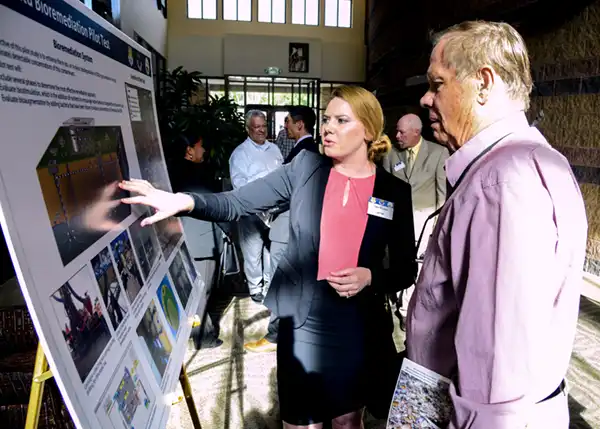
It is the experiences of real people that should guide our planning efforts. Their actions are the data we should be collecting, not their stated preferences.
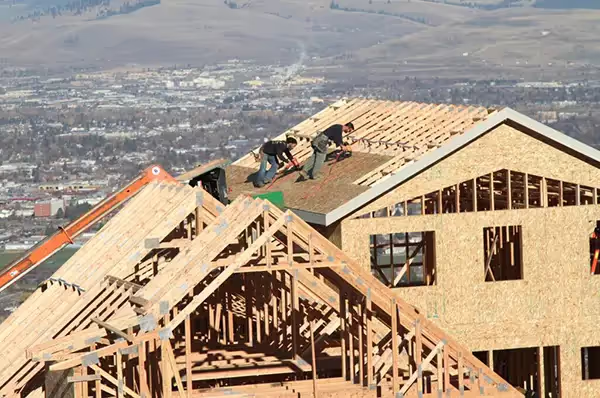
If you’ve asked this lately, or heard someone else ask it, here are five possible reasons why.

The closing of the mall’s anchor store exposes how fragile the community’s business model is, providing an opening to shift approach.
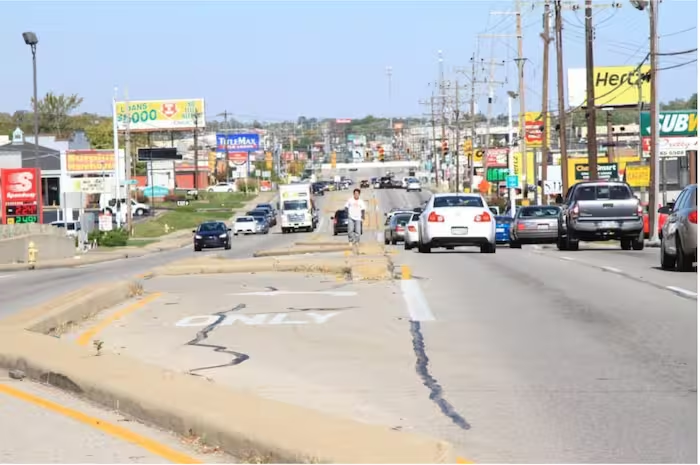
Need a crash course in what makes our streets dangerous and how to make them safer and more financially productive?
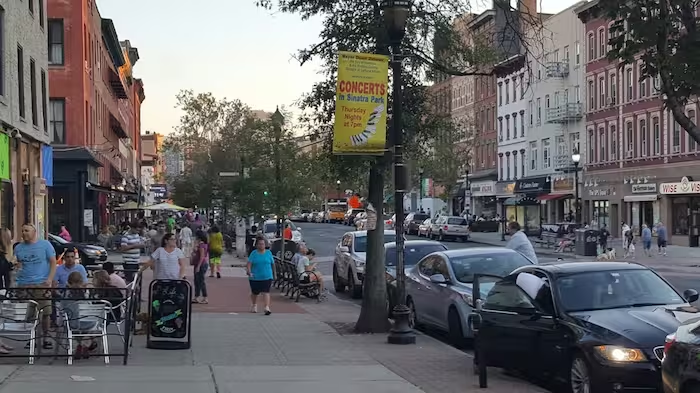
3 dollars and cents arguments that definitively prove the need for people-oriented, walk-friendly places.
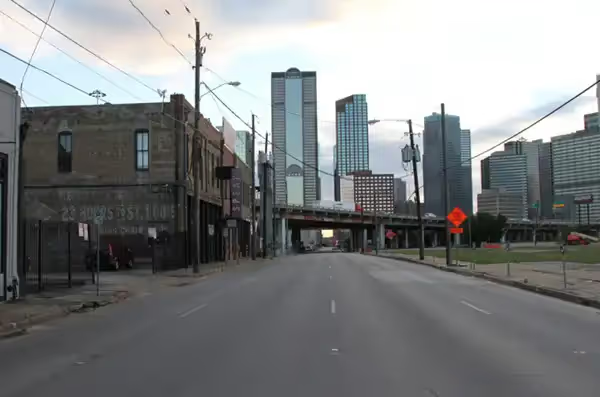
Government and corporate decisions half a century ago robbed our cities of life and prosperity today.
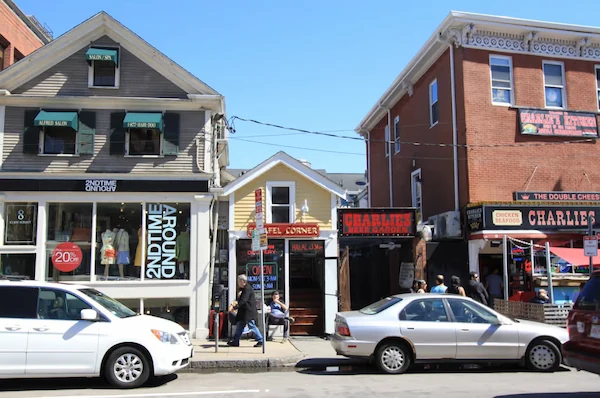
Want to figure out whether a local candidate for public office will uphold Strong Towns principles and values on the job? Ask them these 10 questions.
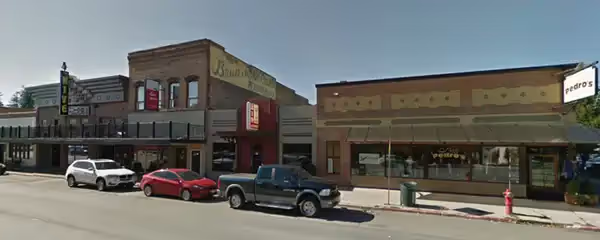
Plus 5 tips for repealing parking minimums in your community.
Towns that are designed for cars instead of people experience serious challenges that negatively impact small businesses, community health, and financial success for everyone.
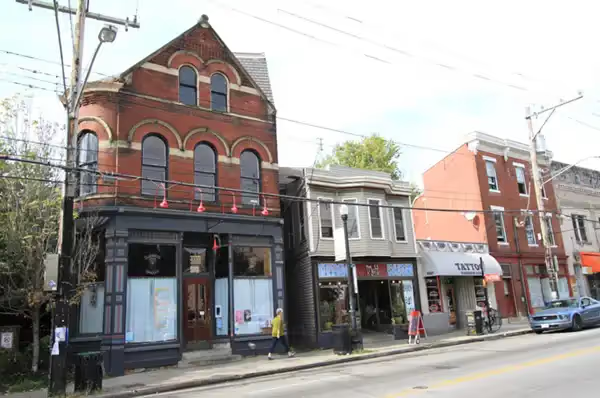
There's a big difference between these two types of development and one will create a far better outcome for our cities.
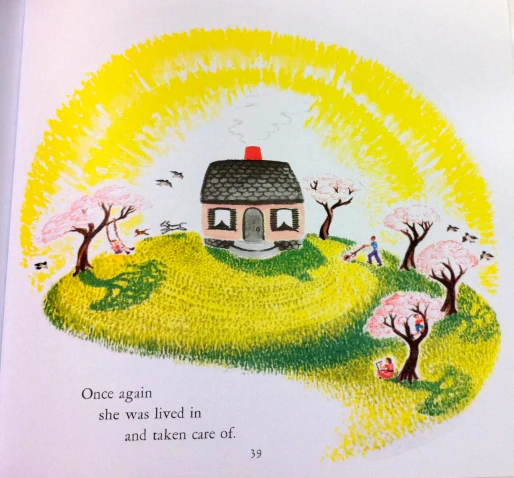
What a children's book can teach us about land value.
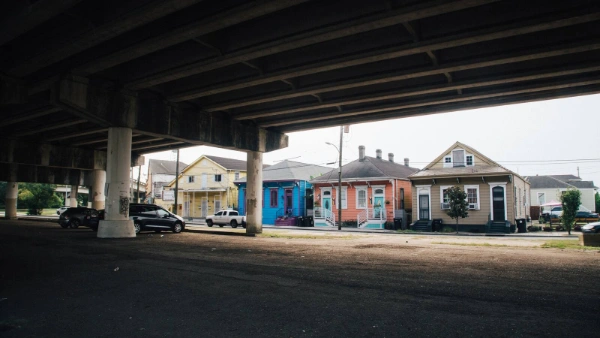
Step-by-step growth built our greatest cities. So why do we keep reaching for silver bullets instead?
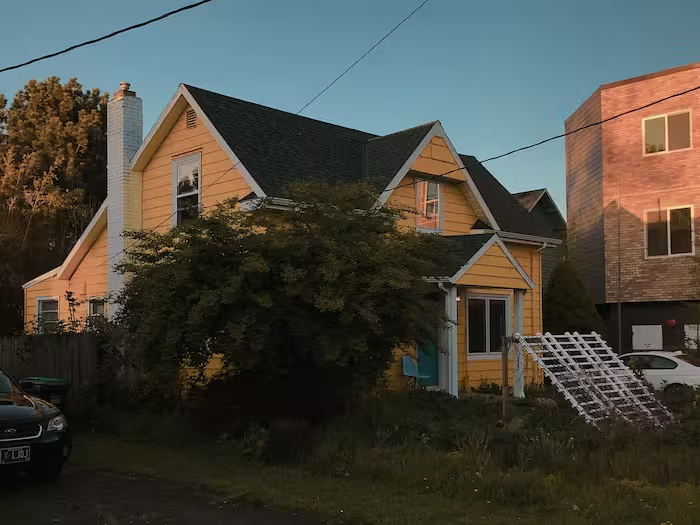
We can make low risk, high returning investments in our cities while improving the quality of life for people, particularly those who are not benefiting from the current approach.
Problems have solutions. Predicaments have outcomes. We're in a predicament.