The latest ideas, insights and action from around the Strong Towns movement.
Featured
Top Stories

Lorem ipsum dolor sit amet, consectetur adipiscing elit. Suspendisse varius enim in eros elementum tristique. Duis cursus, mi quis viverra ornare, eros dolor interdum nulla.
Lorem ipsum dolor sit amet, consectetur adipiscing elit. Suspendisse varius enim in eros elementum tristique. Duis cursus, mi quis viverra ornare, eros dolor interdum nulla.
Lorem ipsum dolor sit amet, consectetur adipiscing elit. Suspendisse varius enim in eros elementum tristique. Duis cursus, mi quis viverra ornare, eros dolor interdum nulla.
.webp)
Lorem ipsum dolor sit amet, consectetur adipiscing elit. Suspendisse varius enim in eros elementum tristique. Duis cursus, mi quis viverra ornare, eros dolor interdum nulla.

Lorem ipsum dolor sit amet, consectetur adipiscing elit. Suspendisse varius enim in eros elementum tristique. Duis cursus, mi quis viverra ornare, eros dolor interdum nulla.
Latest Podcasts
(Transcripts Included)

From Biostatistics to Better Streets in Fayetteville
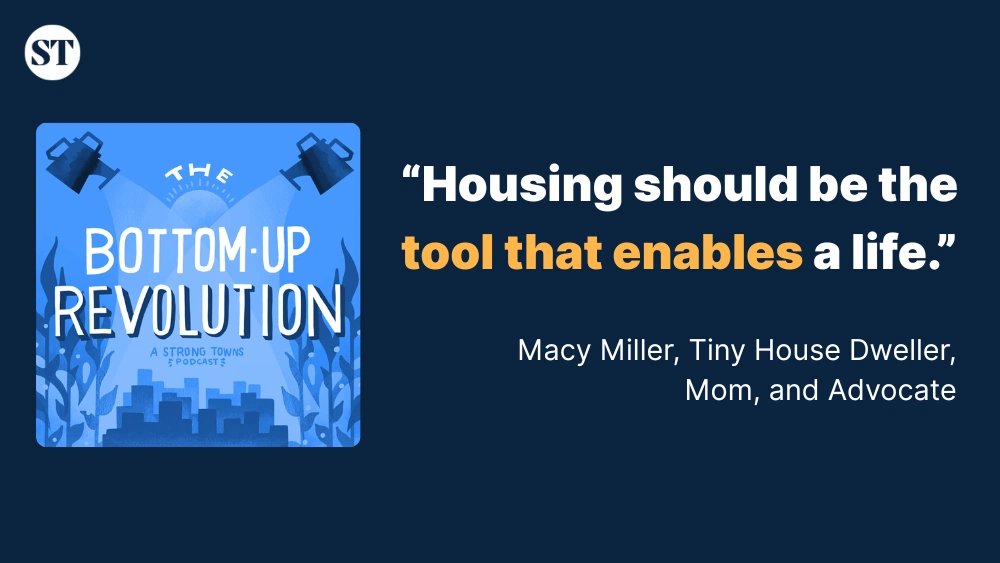
How One Tiny House Helped Shift Boise’s Housing Rules

Walking, Visibility, And One Mom’s Fight For Safer Streets

Latest Stories

We often get questions about our hiring process, so we’ve laid it all out here so that others can put it to use in building their own teams.
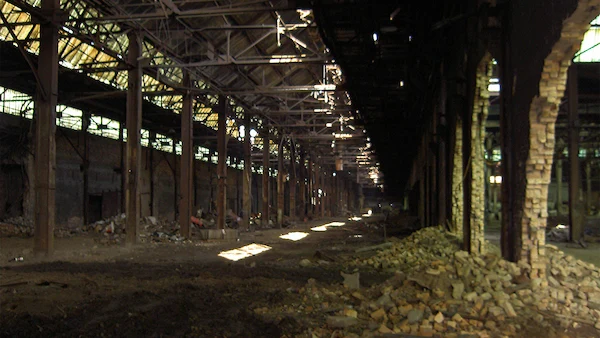
Engineers are great at building roads, but we should never ask them to build our streets.

Calgary — like so many North American cities — is like an intergenerational dine-and-dash. Our children will get the bill.

You don’t have to be a math wizard to figure out if your town or city has more infrastructure than it can afford. Just follow these 5 simple steps.
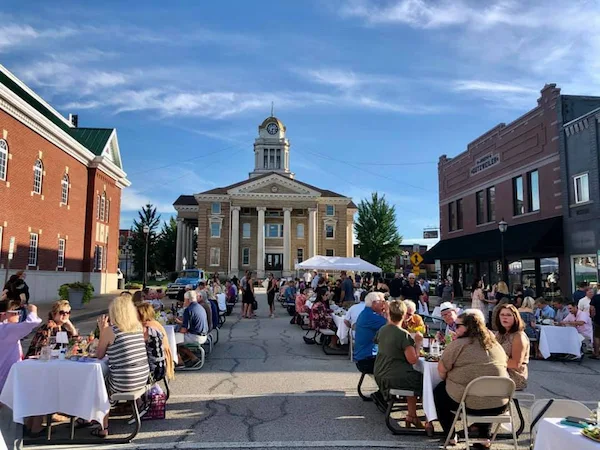
"We have to give up on on the delusion that we can have a place that is both great for business, and great at moving cars quickly."

Rural places can be walkable. But we shouldn’t have to go on vacation to find a walkable town.
.webp)
What can grandma's cookie recipe tell us about inflation?
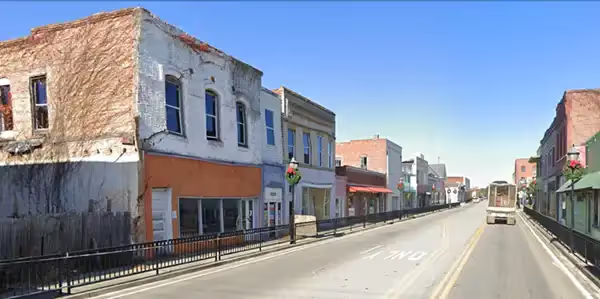
How one small town in South Carolina destroyed everything that makes their downtown...a downtown.
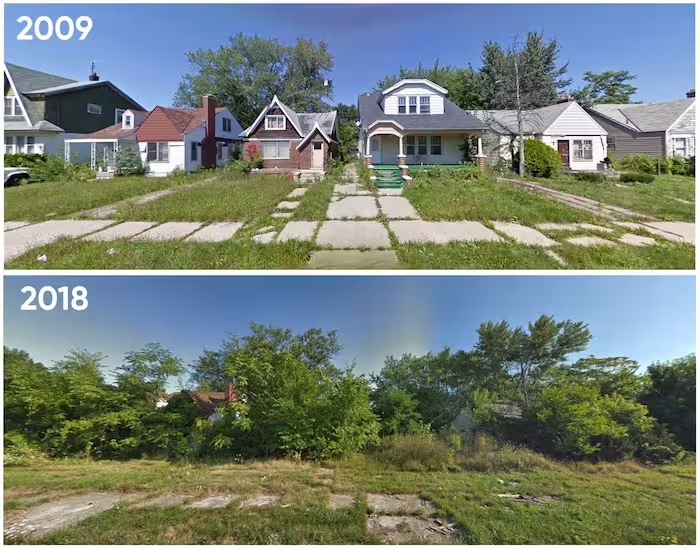
How one Detroit resident used Google Maps to chronicle the accelerating disappearance of its neighborhoods.

Ponzi schemes fail because they are built on illusions: there is no there there. So what happens when an entire continent of towns and cities is caught up in a kind of Growth Ponzi Scheme? We are finding out.
A detailed analysis of 12 cul-de-sacs show the Suburban Experiment is a dead end. What will it take to make this city solvent?
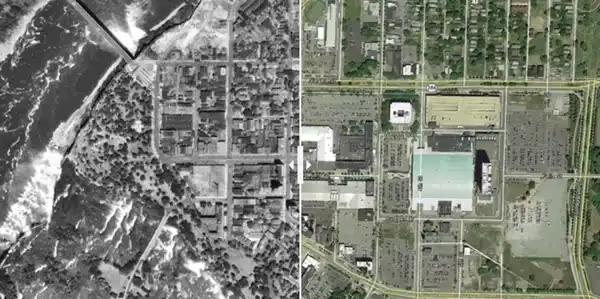
70 years ago, these two historic cities were on a similar path. Then one fell into debt while the other was swimming in money. You might be surprised by what they each look like today.

This observation of human behavior has long been a source of frustration for safety advocates, but that doesn’t make it wrong.
The choice to carve up Kansas City with freeways ranks among the worst planning mistakes in the region's history. Many decades later, the city is still is suffering the consequences.
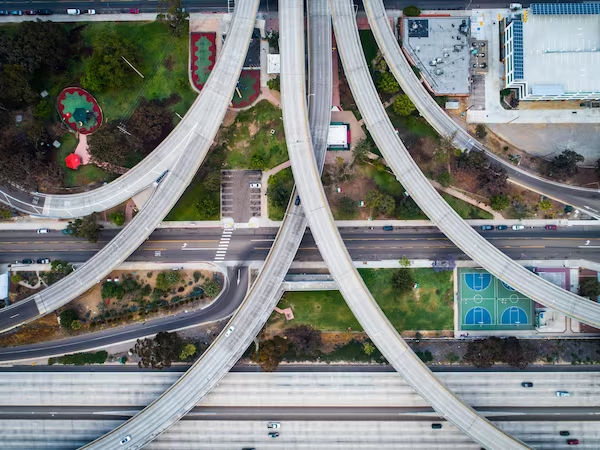
The American pattern of development creates the illusion of wealth. Today we are in the process of seeing that illusion destroyed…and with it the prosperity we have come to take for granted.
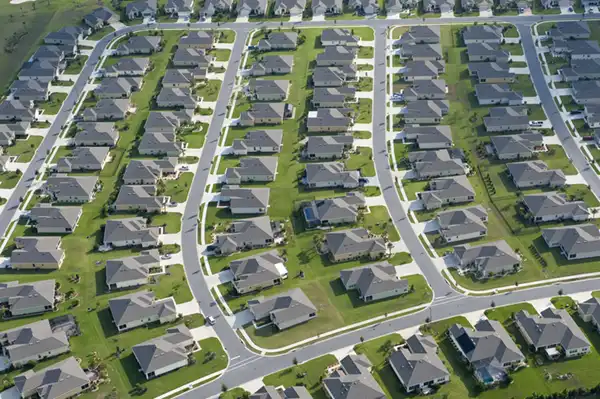
Contrary to what has been asserted elsewhere, the suburbs are not about to have a renaissance. In fact, there are many reasons to believe we are nearing the end.

Kansas City, Missouri, has a serious infrastructure problem. But an emerging conversation is charting a path toward greater strength and financial resilience.
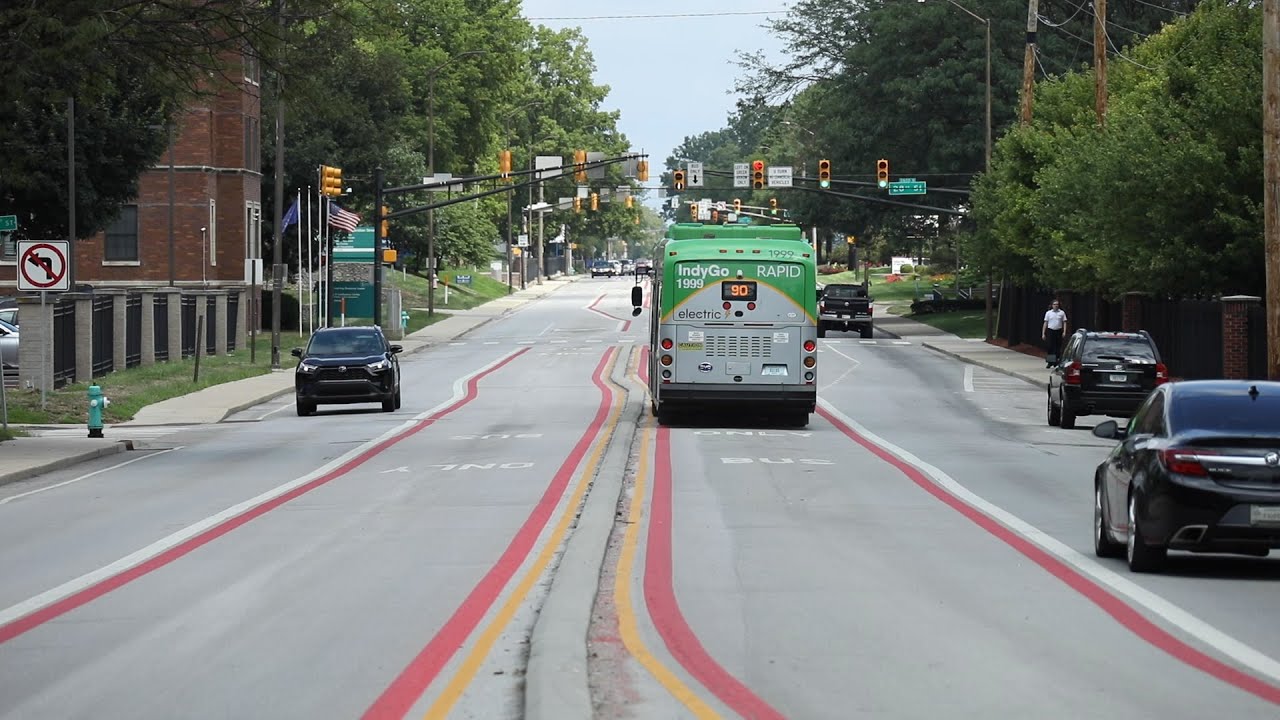
Indianapolis proves you don’t need billions—or rail—to build transit people actually use.
Two simple photos show the difference between a street simply designated 20 miles per hour, and one actually designed to be safe. We can't regulate our way to safety.

Connected streets + varied houses = better trick-or-treating and financially stronger neighborhoods.
We used to have a different name for the modest dwellings that now get labeled “tiny houses.” For most of history, this was simply a house—a low-cost way for people to put down roots in a place and begin to grow some wealth for themselves and the neighborhood.

The problem with new American suburbs isn’t a "lack of planning" or “uncontrolled growth” or “inadequate infrastructure.” The problem is a lack of basic financial solvency.