The latest ideas, insights and action from around the Strong Towns movement.
Featured
Top Stories
.webp)
Lorem ipsum dolor sit amet, consectetur adipiscing elit. Suspendisse varius enim in eros elementum tristique. Duis cursus, mi quis viverra ornare, eros dolor interdum nulla.
.webp)
Lorem ipsum dolor sit amet, consectetur adipiscing elit. Suspendisse varius enim in eros elementum tristique. Duis cursus, mi quis viverra ornare, eros dolor interdum nulla.
Lorem ipsum dolor sit amet, consectetur adipiscing elit. Suspendisse varius enim in eros elementum tristique. Duis cursus, mi quis viverra ornare, eros dolor interdum nulla.
Lorem ipsum dolor sit amet, consectetur adipiscing elit. Suspendisse varius enim in eros elementum tristique. Duis cursus, mi quis viverra ornare, eros dolor interdum nulla.
.webp)
Lorem ipsum dolor sit amet, consectetur adipiscing elit. Suspendisse varius enim in eros elementum tristique. Duis cursus, mi quis viverra ornare, eros dolor interdum nulla.
Latest Podcasts
(Transcripts Included)
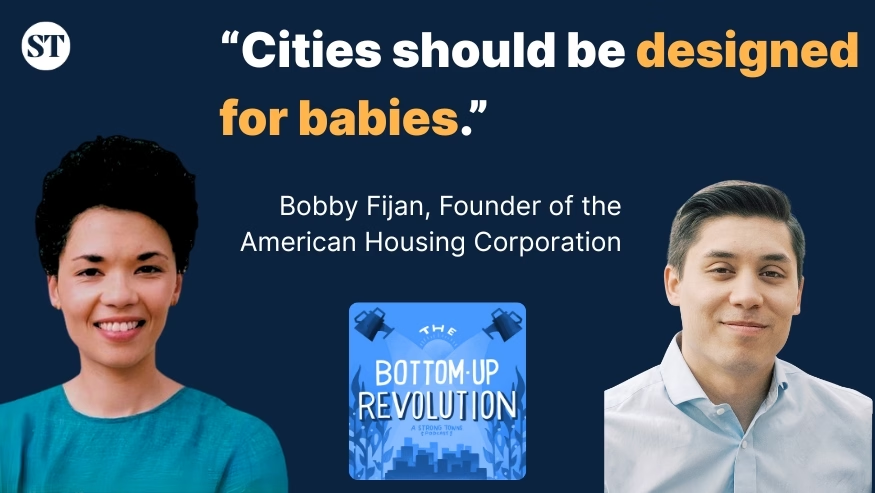
How Floor Plans Drive Families from Cities (and What Helps Them Stay)
Bringing the Strong Towns Conversation to a Growing City

Is Crowdfunding A Good Way To Fund Local Projects?

Latest Stories
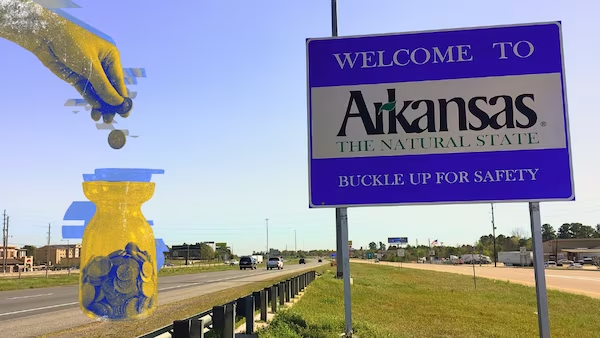
What the Finance Decoder revealed about Fayetteville, Springdale, and Siloam Springs—through the eyes of a local Strong Towns member.
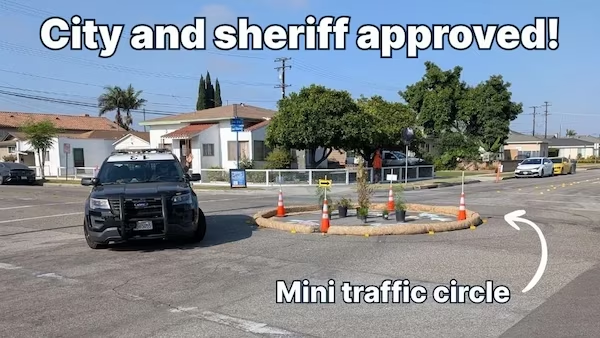
The city of Artesia, California, has been struggling with a speeding problem. Instead of just blaming drivers, city staff teamed up with local advocates to address the root problem: the street design.
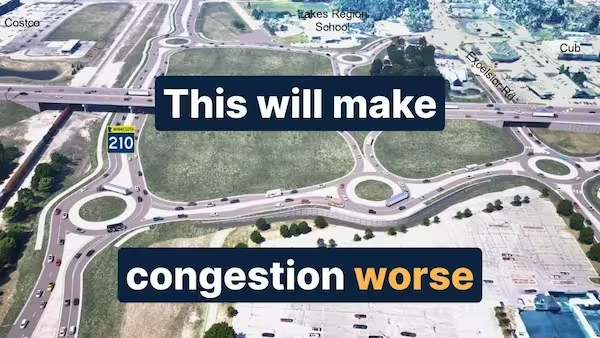
In Baxter, “fighting congestion” is the sales pitch, but corporate subsidy is the goal.
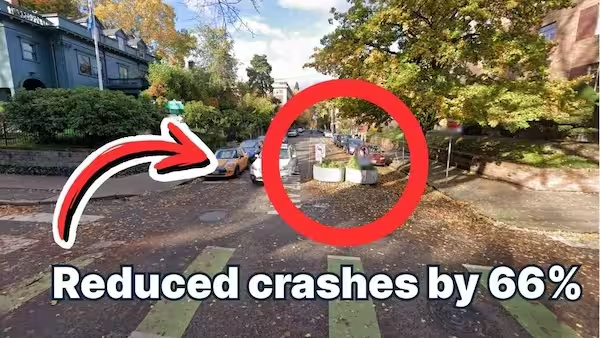
A 66% decrease in crashes wasn’t enough to protect these traffic diverters, but the unified efforts of local advocacy groups and city officials might be.
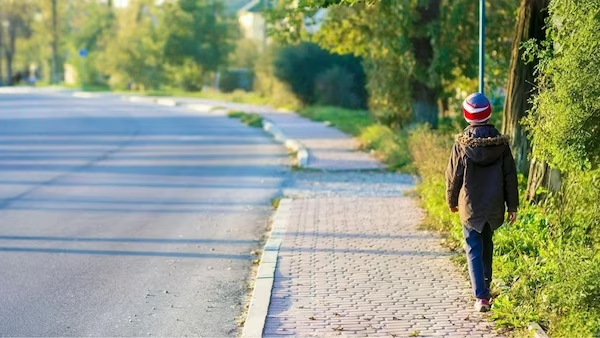
When our infrastructure makes normal childhood behavior life-threatening, allowing kids to do typical childhood activities becomes reckless endangerment.
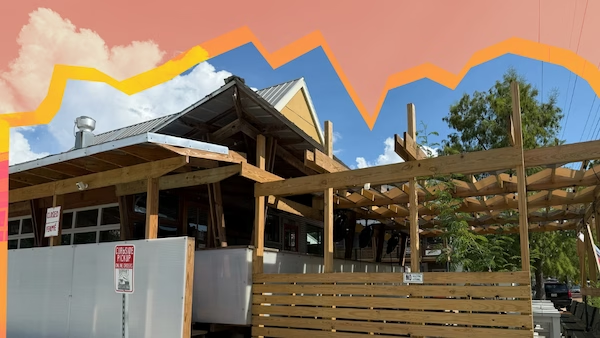
Slow permitting, shifting utility requirements, and inconsistent rules threaten the small-scale development that cities rely on. Here’s one developer’s story.

Design doesn’t just reflect our values — it forms them. If we want citizens who are engaged, generous, and resilient, we need places that cultivate those virtues.
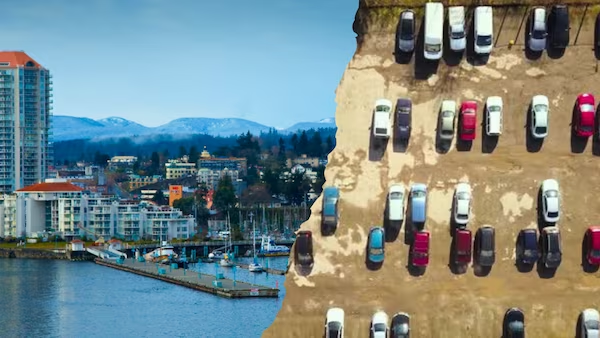
How a passionate group of locals cracked Nanaimo’s stubborn parking rules—and unlocked new possibilities for housing and community.
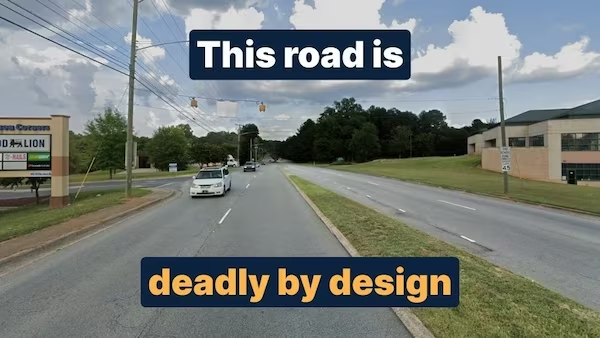
When a child is killed on a street like West Hudson Boulevard, it’s not a tragic fluke. It’s the outcome we designed for.
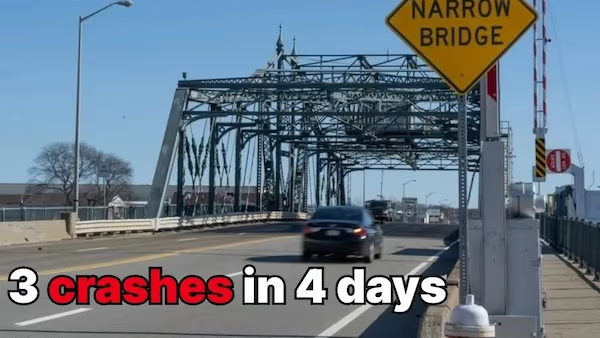
Four days. Three crashes. Two lives lost. One life changed forever. For residents of Fairhaven and New Bedford, this wasn’t just a bad weekend; it was a turning point.
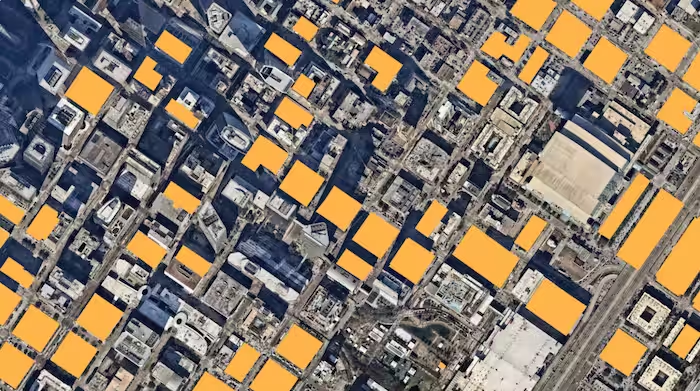
Chicago and Denver just joined a growing list of cities including Anchorage, Minneapolis, and Austin in rethinking how city space is used, and what we pay for.
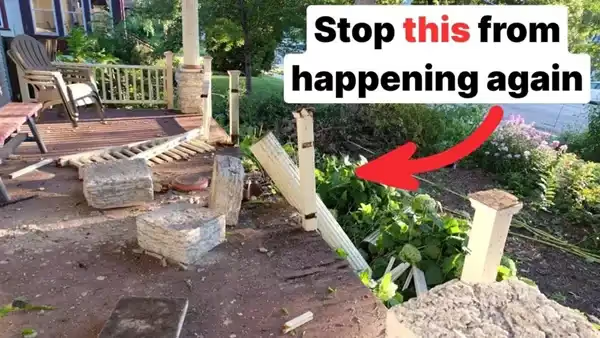
After a car crash damaged three houses, these Minneapolis residents are done waiting for officials to act. They're demonstrating a better way of responding to crashes.

Los Angeles is desperate to rebuild after the wildfires that destroyed nearly 60,000 acres back in January. So why is it that 6 months later, not much has changed?
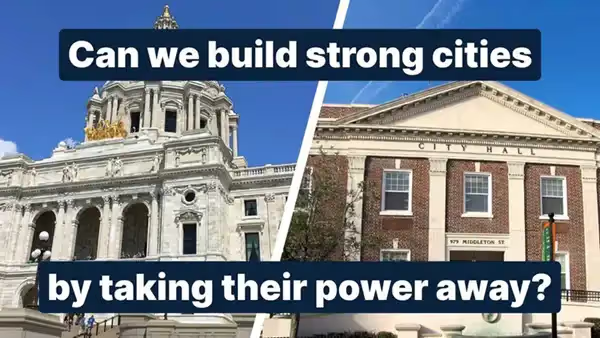
State preemption can remove obstacles, but it can’t build the local capacity that's required for lasting reform.
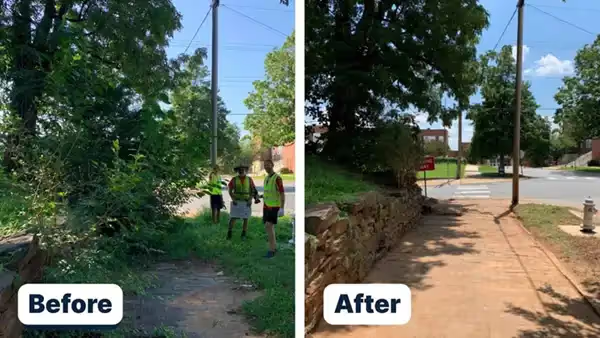
Advocates in Lynchburg, Virginia, are proving that you don't need an official task force to make your city stronger. You just need to care enough to show up.
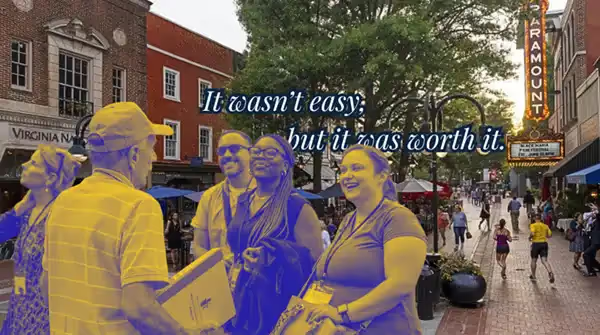
Charlottesville’s political wounds ran deep. Now, the city is turning to bikes, sidewalks, and street-level trust to chart a new course.
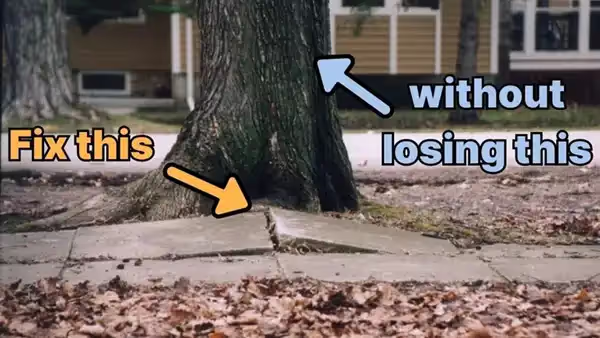
Here are six proven techniques that allow communities to preserve mature trees while restoring sidewalks to safe, walkable condition.
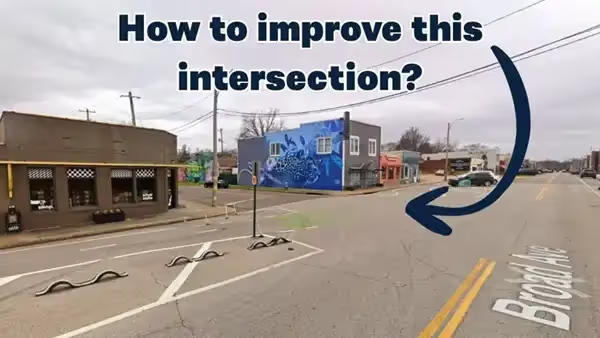
In 2010, this community in Memphis, Tennessee, showed how resident-led, city-backed change can transform a place. That pattern is still playing out today.

Every town will be asked to grow. Maybe not today, maybe not all at once. But when that moment comes, how will yours go about it?
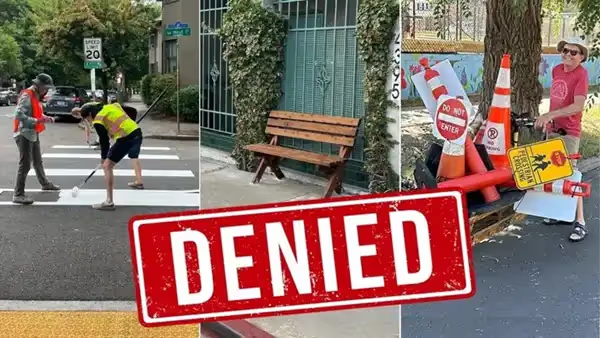
When tension builds between grassroots action and bureaucratic boundaries, cities must choose: partnership or pushback.
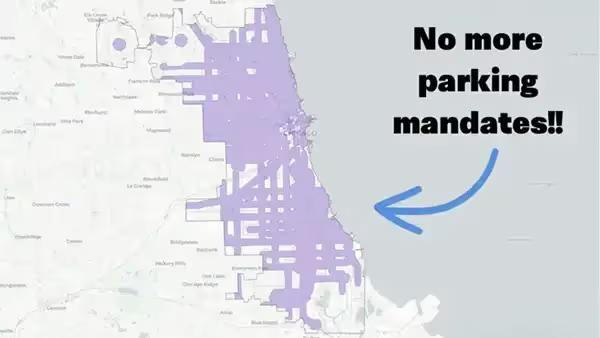
A new ordinance removes costly parking requirements across most of Chicago, clearing the way for more affordable housing and business development.

On Ash Wednesday, 1966, a highway carved up New Orleans, taking families, flowers, and futures with it. Today, the attempts to rectify those wrongs stop short of actually treating the wound.
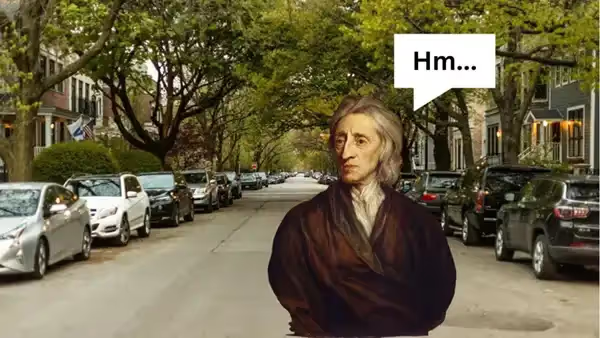
John Locke’s 17th-century proviso can help us understand the tangled web of private property rights, public space, and parking rules in North America today.
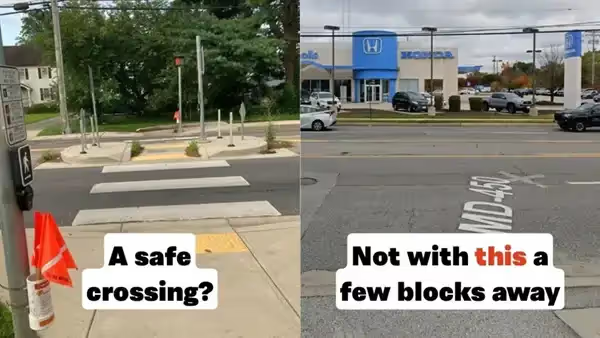
In April, a child was hit in a crosswalk outside a library in Annapolis, MD. The official response? Orange flags that put responsibility on people walking, not on the street design that enabled the crash.